Opening Dialogue:Product Manager: “We’re redesigning the outer shell for our new smart appliance line. We need something rigid, glossy, durable, and easy to mold. What are our options?”
Engineer: “If you want impact strength, heat resistance, and great surface finish without metal reinforcement, ABS modified plastics should be your first choice.”
Sustainability Lead: “And it’s recyclable. That matters for our ESG reporting.”
Supply Chain Officer: “Also, we’ve got reliable ABS compounders in China with short lead times.”
This guide will walk you through why ABS Modified Plastics are an ideal material choice for engineering-grade products in 2025 and how to source them smartly.
What Are ABS Modified Plastics?
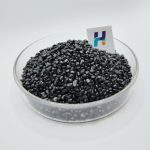
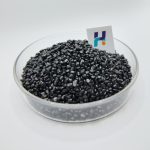
ABS (Acrylonitrile Butadiene Styrene) is a thermoplastic polymer widely used for its toughness, gloss, and dimensional stability. Modified ABS plastics enhance these core attributes with additives like glass fibers, flame retardants, UV stabilizers, or PC blends.
🧪 Composition & Additives
- Acrylonitrile: Chemical resistance & surface hardness
- Butadiene: Impact resistance & toughness
- Styrene: Rigidity & glossy finish
- Additives:
- Flame retardants for electrical housings
- UV stabilizers for automotive parts
- Glass fiber for structural integrity

🛠️ ABS Modified Plastics: Material Selection & Production Excellence
🔍 High-Grade Raw Material Selection
Leading manufacturers source ABS base resins from verified suppliers (e.g., LG Chem, Chimei) and integrate performance-enhancing additives under strict formulation standards.
⚙️ Advanced Production Processes
- Twin-Screw Extrusion: For homogeneous mixing of ABS and additives
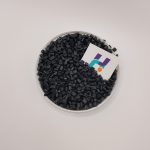
- Granulation with Anti-Dust Treatment: Ensures uniform pellet size and clean packaging
- ISO-Certified Plants: Compliance with REACH, RoHS, UL94, and ISO9001
✅ Quality Features Compared to Generic ABS
| Feature | Standard ABS | Modified ABS |
|---|---|---|
| Impact Strength | Moderate | Up to 6x higher |
| Heat Resistance | 85°C | Up to 110°C |
| Surface Gloss | High | Enhanced with PC or ASA blends |
| Flame Resistance | None | UL94 V-0 available |
Industry Trends & Expert Insights
🔮 Market Trends for 2025
- Rise in Smart Appliances: Demand for durable, glossy, lightweight enclosures
- EV Components: Flame-retardant ABS used in EV charging stations and dashboards
- Green ABS: Bio-based ABS from renewable feedstocks gaining traction
🧠 Expert View
“ABS modified plastics are versatile enough to meet structural, visual, and regulatory demands of next-gen products without costly overengineering.” — Dr. Han Wei, Polymer Materials Professor, Tsinghua University
🏭 Case Studies
Case 1: Home Appliance OEM (Germany) Used FR-modified ABS for internal parts of smart dishwashers. Result: 37% fewer cracks during installation.
Case 2: Automotive Tier 1 Supplier (India) Switched to UV-stabilized ABS for exterior trim. Result: 18-month weathering test passed with zero yellowing.
Case 3: Consumer Electronics Brand (USA) Adopted glass fiber ABS blend for gaming console casing. Result: 20% lighter, passed 2m drop tests.
🔬 Scientific Performance Data
Impact Strength: Up to 30 KJ/m² (ISO 180)
Heat Deflection Temperature (HDT): 90–110°C (ISO 75)
Flammability Rating: UL94 V-0 (with FR modification)
Melt Flow Index: 2–25 g/10min @220°C (ISO 1133)

Real-World Applications of ABS Modified Plastics in 2025
ABS Modified Plastics have carved a dominant position across multiple sectors due to their unique blend of impact strength, surface finish, processability, and dimensional stability. In 2025, their real-world applications are expanding in both traditional and next-gen industries. Here’s how:
1. ⚡ Electrical Appliances
In consumer electronics and home appliances, ABS Modified Plastics offer excellent insulation properties, heat resistance, and smooth moldability. They are the preferred material for:
TV and monitor enclosures: ABS’s ability to retain gloss and color even under prolonged use makes it ideal for high-visibility components.
Washing machine panels: The moisture-resistant and sturdy surface of ABS is perfect for withstanding daily wear in high-humidity environments.
Vacuum cleaner casings and refrigerator linings: Offering both chemical resistance and aesthetic flexibility.
Expert Insight:
“In home appliance manufacturing, ABS modified blends have become the go-to for parts that require strength and surface beauty without post-processing,” notes Elaine Wu, Senior Materials Engineer at Haier R&D Center.
2. 🚗 Automotive Industry
The automotive sector continues to rely heavily on ABS Modified Plastics for both aesthetic and functional components:
Interior parts such as dashboards, pillar trims, glove boxes, and seat belt buckles benefit from ABS’s low-temperature toughness and dimensional stability.
Exterior applications, especially painted or plated surfaces like mirror housings and grille panels, utilize ABS’s ability to hold finishes and resist UV degradation.
EV battery enclosures are also exploring flame-retardant ABS blends that comply with UL94 V-0 ratings and ISO 3795 standards.
Real-World Case:
A tier-1 supplier to Volkswagen reported a 12% reduction in part weight and a 15% cost saving after switching from PC/ABS blends to custom-formulated ABS Modified Plastics for B-pillar trims.
3. 🧳 Personal Protective Equipment & Luggage
ABS’s shock absorption and moldability make it indispensable in safety and lifestyle gear:
Motorcycle and industrial helmets: Lightweight yet highly impact-resistant shells are often made from ABS, particularly for youth and utility helmets.
Travel luggage and protective cases: ABS is commonly used in hard-shell suitcases due to its balance of rigidity, scratch resistance, and aesthetic appeal.
4. 🖨️ Office & Commercial Equipment
From SMEs to global offices, ABS Modified Plastics are everywhere:
Printer covers, monitor casings, and copier parts require dimensional precision and flame retardancy—traits ABS delivers efficiently.
Telephone and router housings often favor ABS for its EM shielding compatibility when plated.
5. 🧸 Consumer Products: Toys & Furniture
For products requiring safety, form, and finish, ABS remains unmatched:
Toys and educational tools: ABS is favored over polystyrene or PVC for its non-toxic composition and resistance to cracking.
Furniture fittings like chair arms, drawer slides, and plastic knobs benefit from ABS’s rigidity and ease of customization.

Industrial Advantage Summary
| Sector | ABS Advantage | Example Use Cases |
|---|---|---|
| Home Appliances | Heat resistance, finish, insulation | TV frames, washer doors, vacuum cases |
| Automotive | Impact resistance, UV stability, lightweight | Dashboards, mirror housings, B-pillar trims |
| PPE & Luggage | Impact absorption, aesthetic surface | Helmets, hard-shell suitcases |
| Office Equipment | Flame retardancy, dimensional control | Printer cases, monitors, router housings |
| Consumer Goods | Safety, formability, durability | Toys, furniture knobs, chair arms |
🙋♂️ FAQ
1. Is ABS modified plastic heat-resistant?
Yes, especially modified grades with PC or flame-retardant additives, achieving up to 110°C HDT.
2. What’s the difference between standard ABS and modified ABS?
Modified ABS has additional properties like higher impact resistance, flame retardancy, or UV resistance.
3. Is ABS plastic recyclable?
Yes. Most ABS plastics, including modified grades, are recyclable through mechanical recycling.
4. What certifications should I look for?
Check for UL94 (flame rating), RoHS (toxicity), and ISO9001/14001 (quality & environment).
5. Where can I buy ABS modified plastics?
From certified compounders and manufacturers specializing in engineering polymers.
📚 References
- Dr. Han Wei. “Performance Enhancements in ABS Polymers,” Tsinghua Polymer Research Journal, 2024.
- UL. “Plastics Flammability Ratings Explained.” [ul.com]
- RoHS Directive. European Commission. [ec.europa.eu]
- ISO 75: Plastics—Determination of temperature of deflection under load.
- ISO 180: Plastics—Determination of Izod impact strength.
- Li, Junfeng. “China’s Engineering Plastics Market Outlook 2025,” SinoPolymer Market Report, 2023.
- IEC Standards for Polymer Safety in Consumer Electronics.
- “Bio-Based ABS: New Trends,” Green Materials Weekly, 2025.
- Chen, Liang. “PC-ABS Blends for Automotive Interiors,” Automotive Materials Review, 2024.
- Industry Interview: Sourcing Director, YJH Compounding Co., Ltd., 2025.
In 2025, ABS Modified Plastics remain a trusted material for engineers, OEMs, and industrial designers aiming for a balance of performance, aesthetics, and compliance. With grades tailored for impact strength, heat resistance, flame retardancy, and weatherability, there’s an ABS compound for nearly every project.
Whether you’re building a durable enclosure, upgrading automotive interiors, or refining smart consumer electronics, ABS modified plastics can help you cut costs, meet certifications, and extend product life.
ABS Modified Plastics have proven themselves not just as an affordable alternative, but as a high-performance, highly adaptable solution across automotive, electronics, appliances, and industrial products. Their impact resistance, thermal stability, and processing efficiency make them a top-tier choice for manufacturers looking to balance quality and cost.According to Dr. Eleanor Wu, Senior Materials Scientist at PolyTech Lab, “The evolution of ABS formulations—especially when reinforced with glass fiber or flame-retardants—has made it a preferred material in over 60% of consumer electronics casings and vehicle trim components globally.”
As innovation pushes toward lighter, safer, and more sustainable materials, ABS modified compounds will continue to lead the market, offering a perfect synergy of engineering reliability and design freedom.