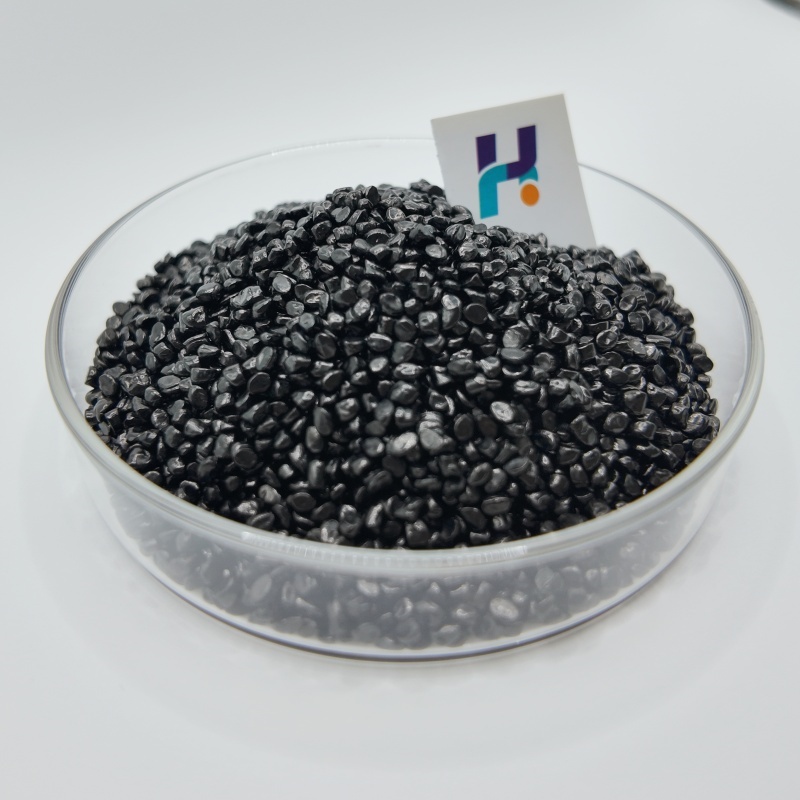
Technical Introduction & Market Positioning
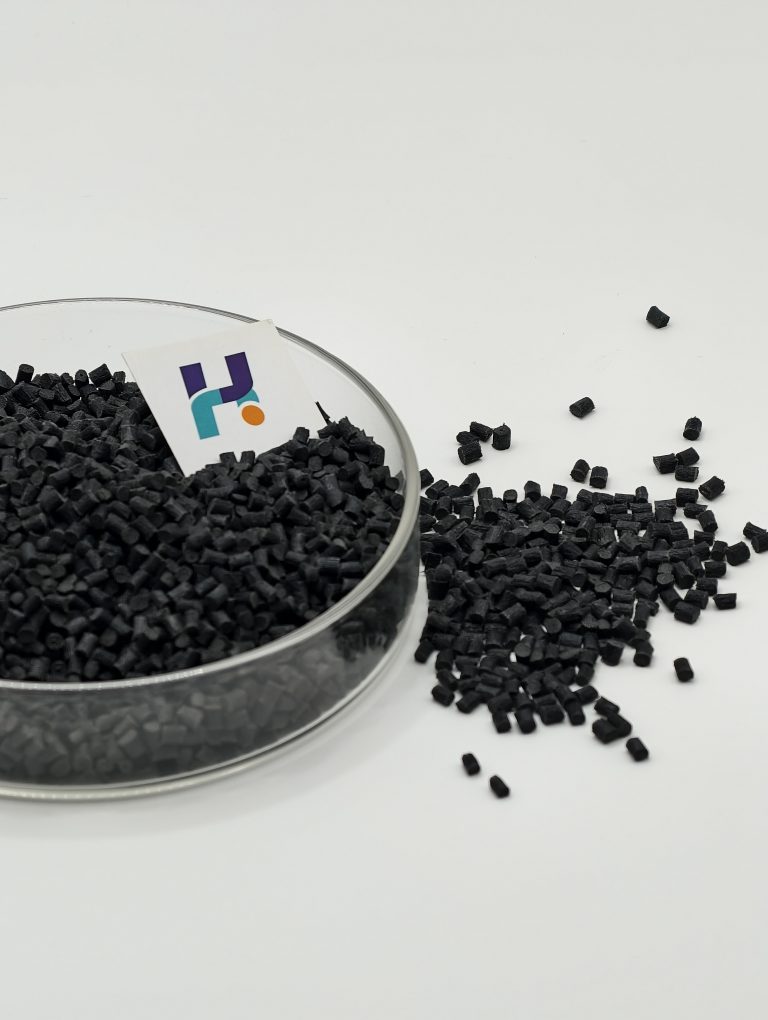
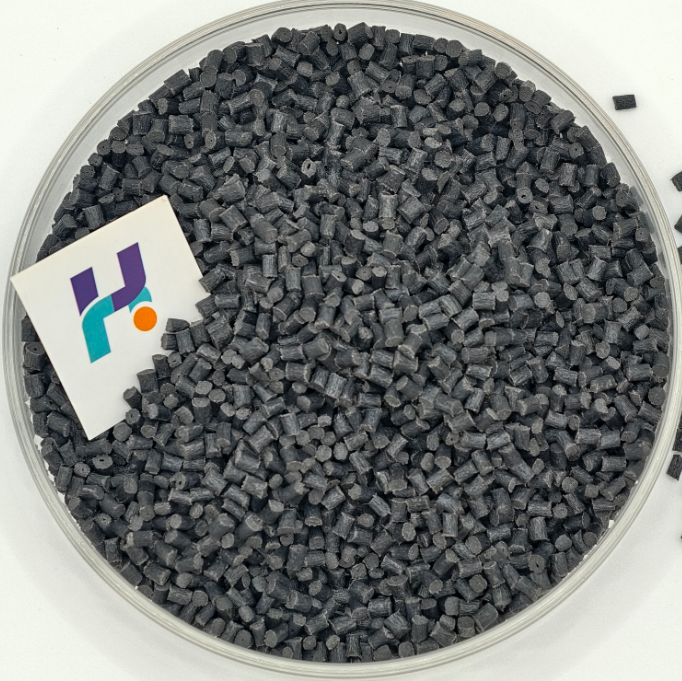
PBTGF15 is a modified engineering-grade PBT compounded with 15% high-performance chopped glass fibers, designed to enhance stiffness, reduce deformation under heat, and improve long-term structural reliability.
In the global engineering plastics market, PBTGF15 is considered a mid-strength reinforcement grade, positioned between unfilled PBT and high-loading grades such as GF30 or GF50. It offers:
-
Lower warpage compared to pure PBT
-
Improved tensile strength & heat distortion
-
Better dimensional control for thin-wall products
-
Stable performance under automotive and appliance operating environments
Its balanced mechanical properties, competitive cost, and strong processing stability make it an ideal choice for OEM manufacturers seeking consistent, scalable, and versatile polymer solutions.
Glass Fiber Reinforcement Structure Explained
PBTGF15 integrates short chopped glass fibers (~3–4 mm) into the PBT matrix. These fibers are chemically bonded through a coupling agent, enabling enhanced load transfer and mechanical durability.
How the structure works:
-
Fiber Network: Forms a micro-reinforced skeleton inside the polymer.
-
Improved Load Path: Helps distribute mechanical stress along fiber orientation.
-
Shrinkage Reduction: Limits isotropic contraction during injection molding.
-
Thermal Stability: Glass fibers increase resistance to deformation at elevated temperatures.
This structural reinforcement creates a stronger, tougher, and more dimensionally stable polymer suitable for precision applications.
Material Advantages
Engineering Advantages
-
Enhanced Rigidity: Higher modulus compared to pure PBT.
-
Low Warpage: Suitable for complex or tight-tolerance parts.
-
Stable Heat Resistance: HDT improvement supports 120–150°C environments.
-
Good Chemical Resistance: Performs well against automotive fluids, detergents, oils, and common household chemicals.
-
Excellent Flowability: Easy to process using standard PBT injection parameters.
Marketing / Value Benefits
-
Cost-effective upgrade from unfilled PBT.
-
Optimized for OEM manufacturers requiring quality consistency.
-
Ideal for mass-production applications with strict dimensional needs.
-
Balanced performance = fewer part failures, fewer rejects, and more stable production efficiency.
-
Customizable based on brand, color, and mechanical requirements.
In-Depth Performance Characteristics
Mechanical Properties Overview
| Property | Typical Value | Notes |
|---|---|---|
| Tensile Strength | 75–85 MPa | Increased due to GF reinforcement |
| Flexural Modulus | 3.0–3.5 GPa | High rigidity at normal operating temperatures |
| Impact Strength (notched) | 6–8 kJ/m² | Balanced strength vs. cost |
| Shrinkage | 0.5–1.0% | Much lower than unfilled PBT |
Thermal Performance
-
HDT: 120–150°C
-
Melting Point: 223–225°C
-
Stable for continuous use around 100–120°C
Processing Characteristics
-
Compatible with most injection molding machinery
-
High flowability for thin-wall or complex molds
-
Recommended drying: 120°C for 3–4 hours
Industry Applications

PBTGF15 is widely used across multiple manufacturing categories:
Automotive Interior Components
-
Switch frames
-
HVAC components
-
Sensor housings
-
Connector bodies
-
Seat or dashboard brackets
Why suitable:
Excellent dimensional stability + heat resistance for interior environments.
Household Appliances
-
Motor housings
-
Coffee maker components
-
Air conditioner connectors
-
Microwave internal brackets
Why suitable:
Chemical resistance to detergents, oils, and moisture.
Production Process & Quality Assurance
Your PBTGF15 is manufactured under strict industrial-quality systems, with real-time monitoring from raw materials to finished pellets.
Production Workflow
-
High-precision feeding & mixing
-
Twin-screw extrusion compounding
-
Online strand cooling & pelletizing
-
Automated drying system
-
Quality inspection & packaging
Quality Certifications
-
ISO-based production environment
-
In-house mechanical testing
-
Batch-to-batch color & property consistency testing

OEM Customization
We offer full OEM formulation customization:
Customizable Options
-
Fiber loading: 10%–50%
-
Color matching (RAL/Pantone)
-
Heat resistance upgrades
-
UV stabilization
-
Hydrolysis-resistant grades
-
Flame-retardant versions (UL94 V0/V2)
OEM Business Advantages
-
Fast sampling
-
Low MOQ acceptable
-
Stable long-term supply capability
- Technical engineering
Product Technical Specifications
| Category | Specification |
|---|---|
| Material | PBT + 15% GF |
| Reinforcement Type | Chopped Glass Fiber |
| Melt Index | 10–20 g/10min |
| Tensile Strength | 75–85 MPa |
| Flexural Modulus | 3.0–3.5 GPa |
| HDT | 120–150°C |
| Density | 1.45 g/cm³ |
| Processing Method | Injection Molding |
| OEM Customization | Yes |
Buyer-focused Commercial FAQ
Q1: Can you adjust the glass fiber percentage?
Yes. Custom GF loading from 10% to 50% is available.
Q2: Is this material suitable for automotive components?
Absolutely. It meets common automotive interior requirements, including heat and dimensional stability.
Q3: Do you support color customization?
Yes, we provide full color matching for brand or assembly needs.
Q4: Can you improve hydrolysis or flame resistance?
Yes, both hydrolysis-resistant and FR versions can be customized.
Q5: What is your delivery time?
Standard delivery is 7–15 days depending on order quantity and customization level.
Marketing-Driven Conclusion
PBTGF15 delivers the ideal balance between cost, performance, and manufacturability. Whether you produce automotive interior components or precision appliance parts, this grade ensures lower warpage, higher rigidity, and stable processing performance trusted by global OEM manufacturers.
Choose PBTGF15 if you need a reinforced engineering polymer that performs reliably in every production cycle—with the flexibility to customize it to your exact needs.