Technical Overview & Market Context
Glass fiber reinforced plastics are essential materials for automotive, electrical, appliance, and industrial components.
Among them, PBT GF (Glass Fiber Reinforced Polybutylene Terephthalate) and PA GF (Glass Fiber Reinforced Polyamide / Nylon) are the two most commonly specified materials.
Although both are classified as high-performance engineering plastics, their internal polymer chemistry leads to very different real-world behavior, especially under humidity, temperature cycling, and long-term load conditions.
Polymer Structure & Reinforcement Logic
PBT GF – Polyester-Based Reinforcement
PBT is a semi-crystalline polyester with inherently low moisture absorption.
When reinforced with glass fiber, it delivers:
-
Stable fiber-matrix bonding
-
Predictable shrinkage behavior
-
Excellent surface finish and moldability
PA GF – Polyamide-Based Reinforcement
PA (Nylon) is a polyamide polymer known for toughness and fatigue resistance.
Glass fiber reinforcement improves stiffness but:
-
Moisture absorption significantly affects dimensions and properties
-
Electrical insulation performance varies with humidity
Core Property Comparison
| Property Category | PBT GF | PA GF |
|---|---|---|
| Moisture Absorption | Very Low | Medium to High |
| Dimensional Stability | Excellent | Moderate (humidity dependent) |
| Electrical Insulation | Excellent & Stable | Good but moisture-sensitive |
| Heat Resistance | High | High |
| Mechanical Strength | High | Very High (especially impact) |
| Surface Finish | Smooth, aesthetic | More fiber-read-through |
| Warpage Control | Easier | More challenging |
| Chemical Resistance | Excellent (oils, fuels) | Good |
Performance Behavior in Real Applications
Moisture Sensitivity
One of the most critical differences lies in moisture behavior.
-
PBT GF maintains stable dimensions and mechanical properties even in humid environments.
-
PA GF absorbs moisture, which can lead to:
-
Dimensional changes
-
Reduced stiffness
-
Variation in electrical performance
-
This makes PBT GF especially suitable for precision electrical and connector components.
Processing & Manufacturing Considerations
| Aspect | PBT GF | PA GF |
|---|---|---|
| Injection Molding Stability | Very Stable | Sensitive to drying |
| Drying Requirement | Moderate | Strict |
| Mold Shrinkage Control | Predictable | More variable |
| Surface Quality | Excellent | Moderate |
| Tool Wear | High (due to GF) | High (due to GF) |
Typical Industry Applications
Where PBT GF Performs Best
-
Electrical connectors & housings
-
Automotive sensor housings
-
Power modules & relay components
-
Precision structural parts
Where PA GF Excels
-
Mechanical load-bearing brackets
-
Gears and moving parts
-
Snap-fit structures requiring toughness
-
High-impact automotive components
Electrical Performance Comparison
| Electrical Property | PBT GF | PA GF |
|---|---|---|
| Dielectric Strength | High & Stable | Variable with humidity |
| CTI Performance | Excellent | Good |
| Insulation Reliability | Long-term stable | Environment-dependent |
This makes PBT GF the preferred choice for E&E and high-voltage applications.
OEM Customization & Material Selection Strategy
Both PBT GF and PA GF can be OEM-customized, including:
-
Glass fiber content (15%–55%)
-
Flame retardant grades (UL94 V-0)
-
Heat-stabilized formulations
-
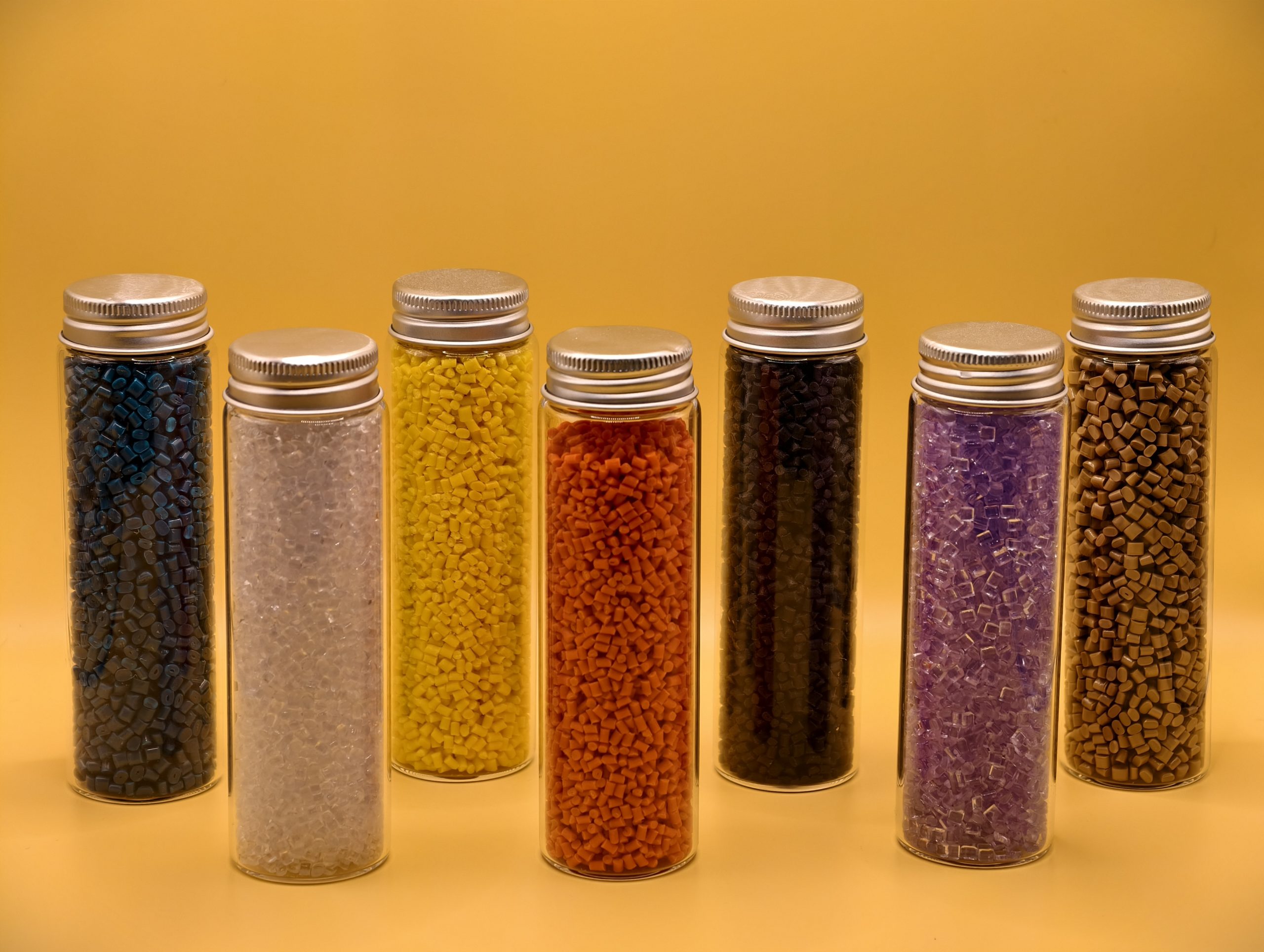
Color and processing optimization
Material selection should be driven by:
-
Environmental conditions (humidity, heat)
-
Electrical vs mechanical priorities
-
Dimensional tolerance requirements
-
Long-term reliability expectations
Quick Selection Guide
| Application Priority | Recommended Material |
|---|---|
| Electrical insulation stability | PBT GF |
| Low warpage & tight tolerances | PBT GF |
| High impact resistance | PA GF |
| Moisture-resistant precision parts | PBT GF |
| Mechanical toughness | PA GF |
Strategic Conclusion
Choosing between PBT GF and PA GF is not about which material is “better”—it’s about which material performs better in your specific application.
For electrical stability, dimensional precision, and long-term consistency, PBT GF offers clear advantages.
For impact strength and mechanical toughness, PA GF remains a strong solution.
A well-informed material choice leads to lower failure rates, reduced warranty risk, and optimized total system cost.