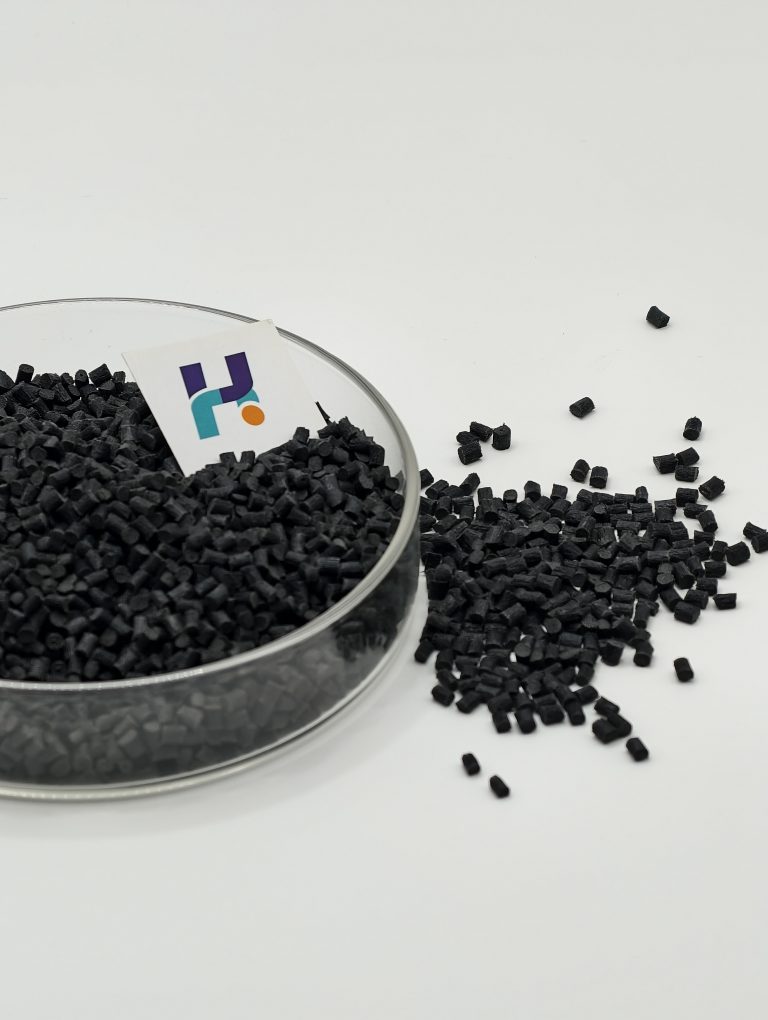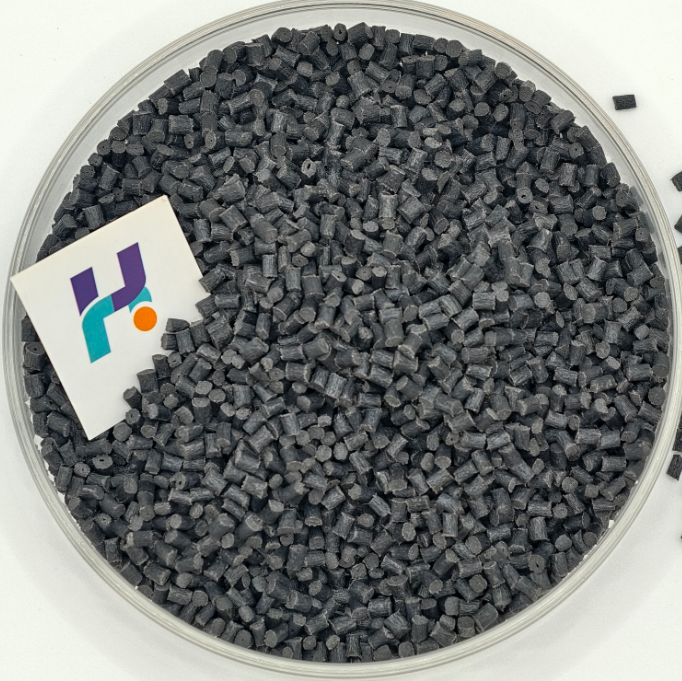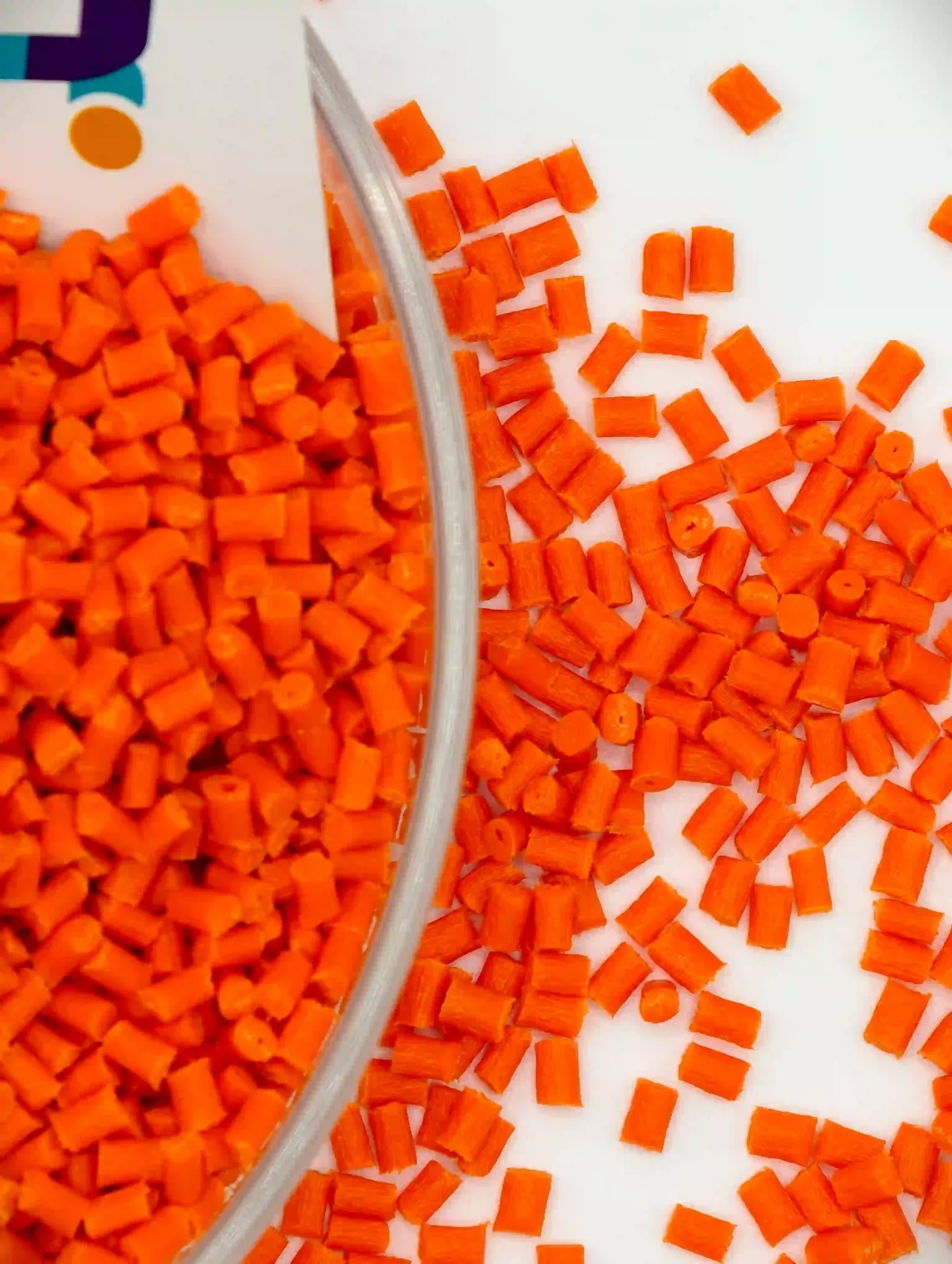
PA66 GF15 is a glass fiber reinforced engineering thermoplastic engineered for high-temperature stability, superior rigidity, and long-term mechanical reliability. Compared with PA6 materials, it delivers higher strength, improved stiffness retention, and excellent resistance to gasoline and lubricants—making it ideal for automotive, electrical, and industrial components operating under thermal and mechanical stress.
Technical Introduction & Market Positioning
PA66 GF15 (15% Glass Fiber Reinforced Polyamide 66) is a high-performance engineering plastic designed for components requiring mechanical strength, dimensional stability, and heat resistance over a wide temperature range.
Compared with PA6-based materials, PA66 GF15 offers:
-
Higher melting point
-
Superior stiffness retention at elevated temperatures
-

PA66GF15-YJH Lower creep under continuous load
-
Better resistance to fuels, oils, and lubricants
These characteristics position PA66 GF15 as a preferred material for structural and semi-structural components in automotive, electrical & electronic, and industrial mechanical systems.
Market Positioning:
A cost-effective, medium glass fiber reinforced PA66 grade for OEMs seeking a balance between performance, processability, and long-term reliability.
Glass Fiber Reinforcement Structure
PA66 GF15 is compounded with short glass fibers uniformly dispersed within the polyamide 66 matrix. This reinforcement structure significantly enhances load-bearing capability while maintaining good flowability during injection molding.
Structural Benefits of 15% Glass Fiber Content:
-
Increases tensile and flexural modulus
-
Improves dimensional stability under heat
-
Reduces shrinkage and warpage
-
Enhances fatigue resistance in dynamic applications
The optimized fiber-to-matrix bonding ensures effective stress transfer, allowing molded parts to maintain shape and mechanical integrity even under prolonged thermal and mechanical loads.
Core Material Advantages
PA66 GF15 delivers a reliable upgrade path from PA6 materials, especially in applications exposed to heat, fuel, or continuous mechanical stress.
Key Advantages:
-
High rigidity across a wide temperature range
-
Superior dimensional stability compared to PA6
-
Higher strength and stiffness than unreinforced and PA6 GF grades
-
Excellent heat resistance for under-the-hood environments
-
Outstanding resistance to gasoline, oils, and lubricants
-
Good balance between mechanical performance and moldability
From an OEM perspective, this translates into longer service life, reduced part deformation, and improved system reliability.
In-Depth Performance Characteristics
| Property Category | Performance Description |
|---|---|
| Thermal Stability | Maintains stiffness and strength at elevated temperatures |
| Mechanical Strength | High tensile and flexural strength due to GF reinforcement |
| Dimensional Control | Low shrinkage, excellent shape retention |
| Chemical Resistance | Resistant to fuels, oils, greases, and lubricants |
| Creep Resistance | Reduced deformation under continuous load |
| Processability | Suitable for standard injection molding processes |
PA66 GF15 is particularly suited for functional parts exposed to heat cycles, vibration, and chemical contact.
Industry Applications
Automotive Components
Designed for under-the-hood and exterior structural parts:
-
Intake manifolds
-
Cylinder head covers
-
Cooling fan blades
-
Mirror brackets
-
Gears and bearing housings
Electrical & Electronic Components
Ideal for parts requiring mechanical stability and insulation:
-
Circuit breaker housings
-
Electrical sockets
-
Connector frames
-
Coil bobbins
Industrial & Mechanical Parts
Reliable for continuous-duty mechanical systems:

-
Gears and pulleys
-
Bearings and housings
-
Pump casings
-
Tool handles
PA6-GF15 vs PA66-GF15 – Material Performance Comparison
When selecting glass fiber reinforced nylon materials, understanding the performance differences between PA6-GF15 and PA66-GF15 is essential. Although both materials offer high strength and stiffness, PA66-GF15 is preferred for applications requiring higher heat resistance, dimensional stability, and superior chemical resistance.
PA6-GF15 and PA66-GF15 Comparison Table
| Property | PA6-GF15 | PA66-GF15 | Comparison Notes |
|---|---|---|---|
| Tensile / Flexural Strength | High | Higher | PA66 typically provides 5–15% higher strength at the same glass fiber content |
| Stiffness (Modulus) | High | Higher | The PA66 polymer structure results in a higher intrinsic stiffness |
| Impact Resistance | Higher | High | PA6 generally exhibits better notched impact performance |
| Melting Point | ~220 °C | ~260 °C | PA66 offers a significantly higher melting point, enabling higher continuous service temperatures |
| Moisture Absorption | Relatively High | High | PA66 absorbs slightly more moisture; PA6 shows less property loss in wet conditions |
| Dimensional Stability | Good | Better | PA66-GF15 demonstrates more uniform and predictable molding shrinkage |
| Fuel and Oil Resistance | Good | Excellent | PA66 shows clearly superior resistance to fuels, oils, and lubricants |
| Relative Material Cost | Lower | Higher | PA66 raw material cost is typically 10–25% higher than PA6 |
Manufacturing Process & Quality Control
PA66 GF15 is produced through controlled twin-screw compounding, ensuring consistent fiber dispersion and stable material properties.
Process Highlights:
-
Precise glass fiber content control
-
Stable melt flow for injection molding
-
Consistent batch-to-batch performance
-
Compatibility with automated molding systems
Quality assurance typically includes:
-
Mechanical property verification
-
Dimensional stability testing
-
Thermal aging evaluation
-
Chemical resistance assessment
This ensures PA66 GF15 meets OEM-level consistency requirements.
OEM Customization Capabilities
PA66 GF15 can be customized to match specific application needs:
-
Glass fiber content adjustment
-
Color customization
-
Heat stabilization
-
UV resistance options
-
Lubricated or wear-resistant variants
-
Flame-retardant versions (on request)
OEM customization enables customers to optimize cost, performance, and processing efficiency for their specific projects.
Technical Specifications Overview
| Item | Description |
|---|---|
| Polymer Base | Polyamide 66 (PA66) |
| Reinforcement | 15% Glass Fiber |
| Processing Method | Injection molding |
| Heat Resistance | High |
| Chemical Resistance | Fuels, oils, lubricants |
| Typical Applications | Automotive, E&E, industrial |
Commercial FAQ
Q1: Is PA66 GF15 stronger than PA6 GF materials?
Yes. PA66 GF15 provides higher stiffness and better strength retention at elevated temperatures compared to PA6-based grades.
Q2: Can this material be used in fuel-contact applications?
Yes. PA66 GF15 shows excellent resistance to gasoline, oils, and lubricants.
Q3: Is OEM formulation customization available?
Yes. Material properties can be tailored according to application and processing requirements.
Q4: Is PA66 GF15 suitable for injection molding?
Yes. It is designed for standard injection molding processes with good flowability.
Value-Oriented Conclusion
PA66 GF15 offers OEMs and engineers a dependable engineering plastic solution where heat resistance, mechanical strength, and dimensional stability matter most.
By upgrading from PA6 to PA66 GF15, manufacturers gain:
-
Longer part lifespan
-
Improved performance under thermal stress
-
Greater design confidence in demanding environments
It is a smart material choice for automotive, electrical, and industrial systems built to last.
In real-world OEM applications, PA66 GF15 consistently demonstrates superior stiffness retention and dimensional control in high-temperature and fuel-exposed environments. This makes it a trusted material for engineers seeking long-term reliability without excessive material cost escalation.