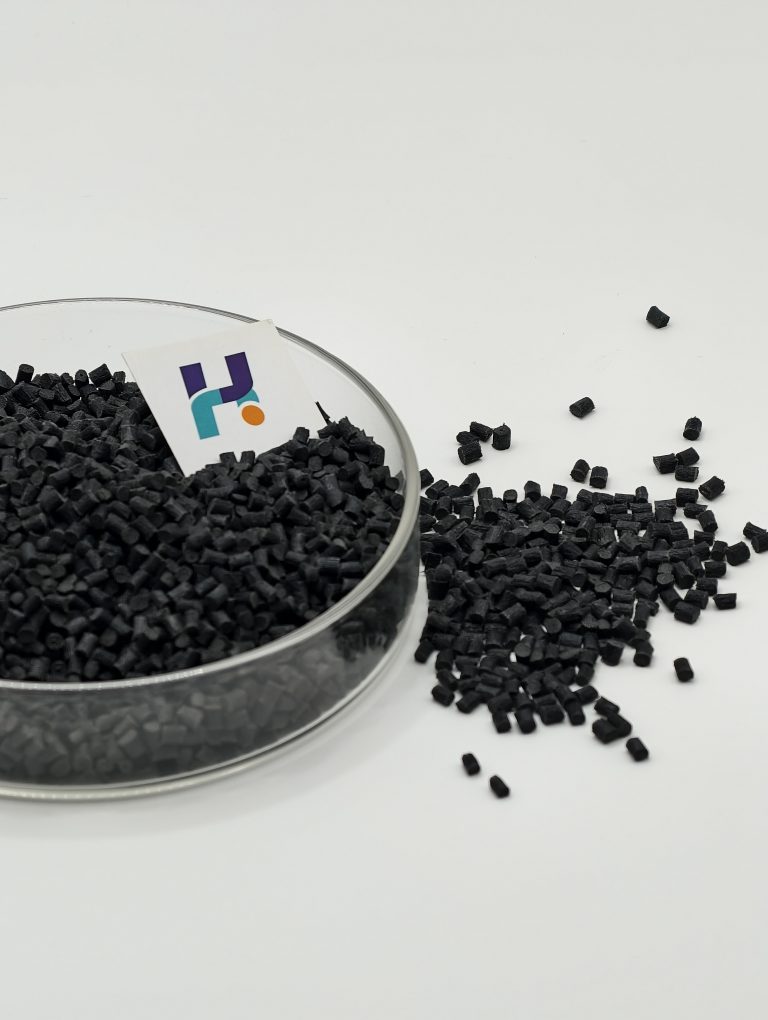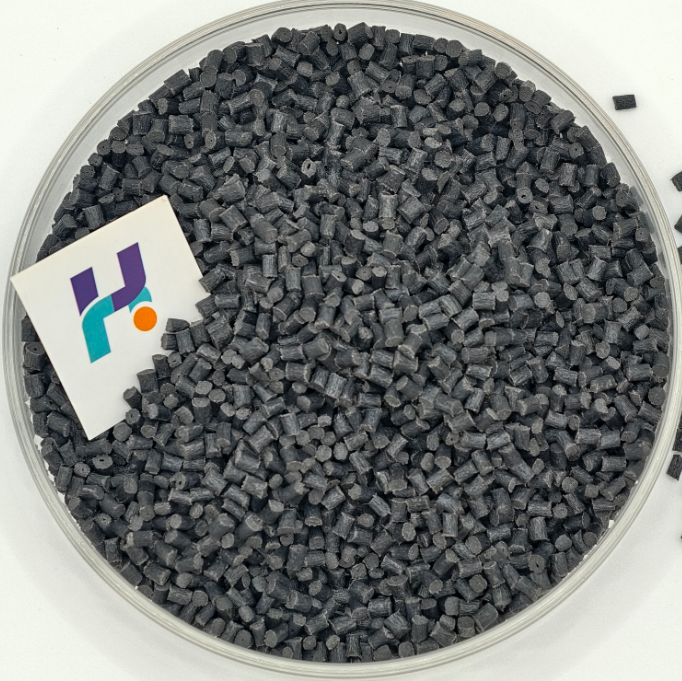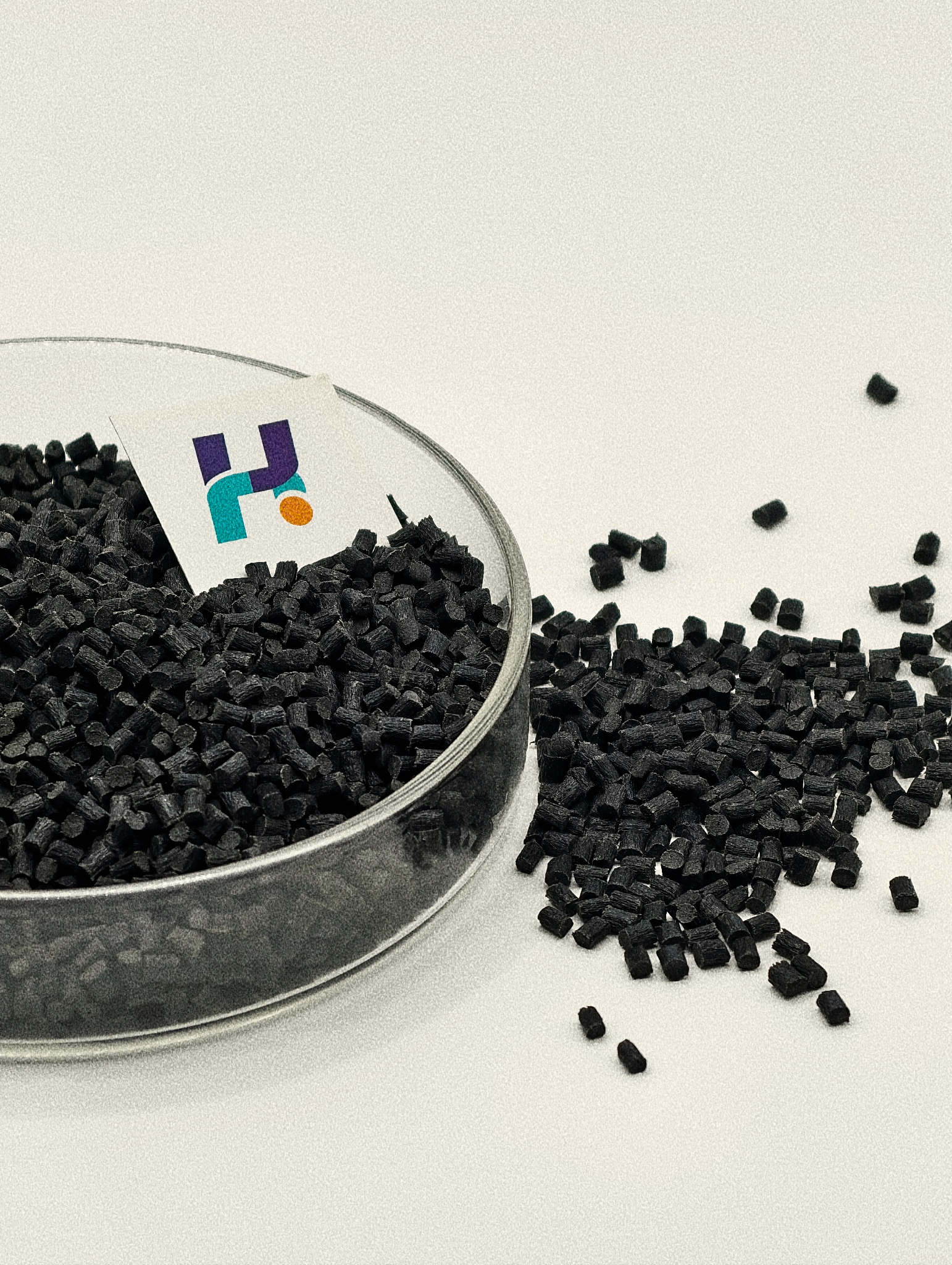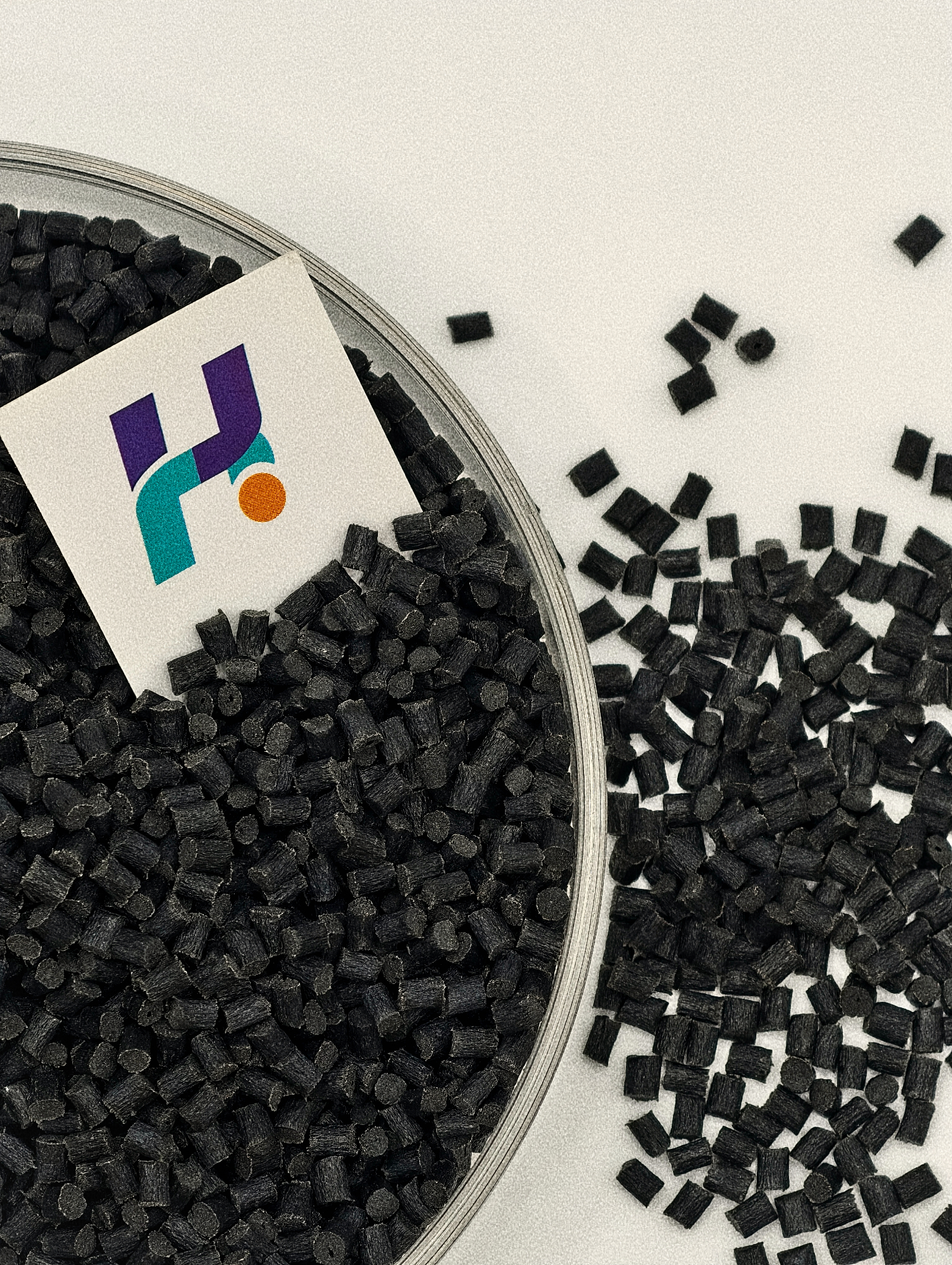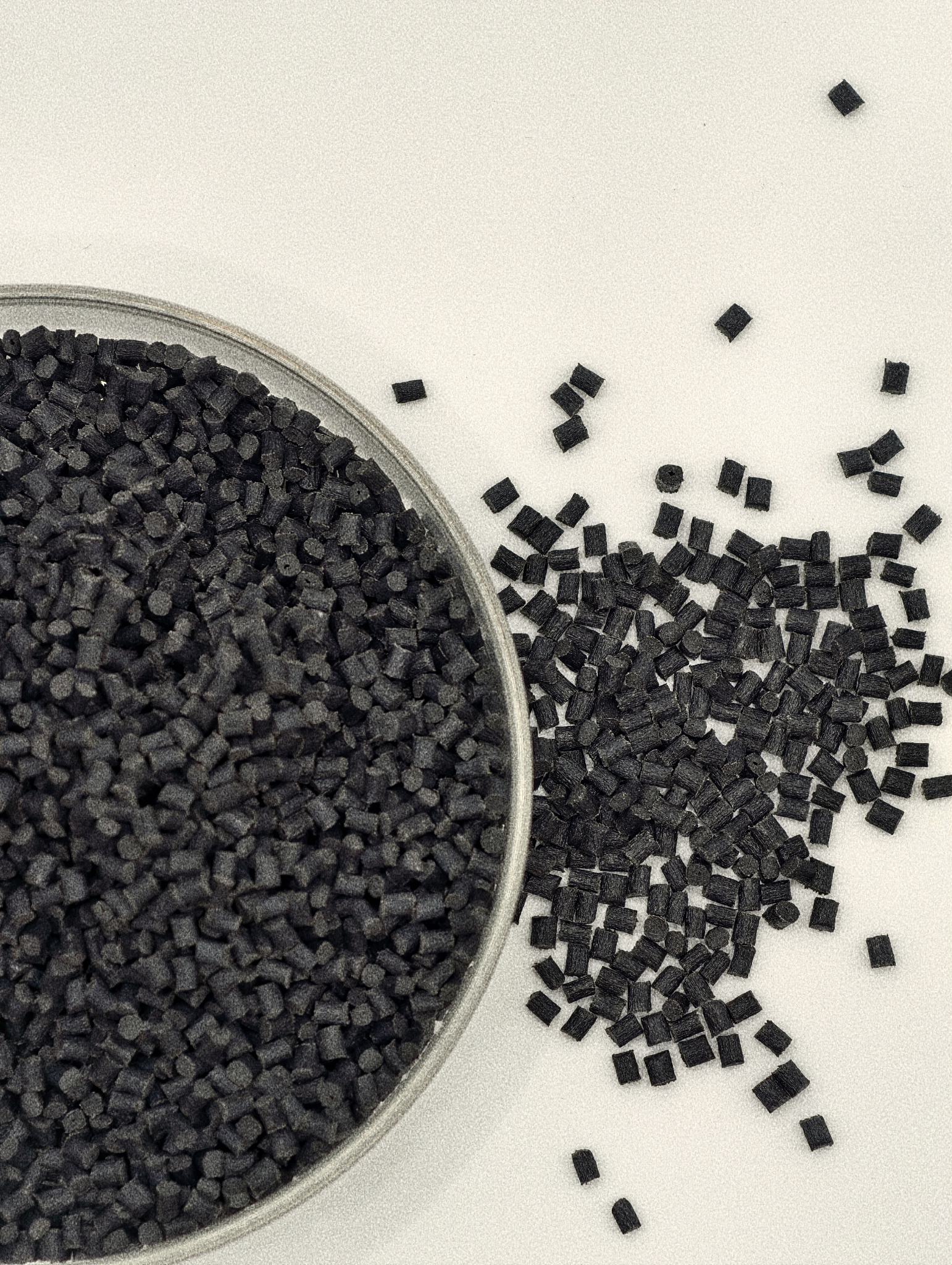
High rigidity. Better heat stability. Lower warpage for dimensional-critical injection parts.
When an ABS part “looks fine” in the first trial but starts drifting in mass production, the root cause is usually not the mold—it’s the material’s stiffness/heat balance, shrink behavior, and fiber dispersion consistency. ABS GF15 is built for that exact pain: hold shape, hold fit, hold output.
Materials & Formulation Options
ABS GF15 is an ABS base matrix reinforced with ~15% glass fiber and a controlled additive package. The default focus is rigidity + heat resistance + low warpage, but your part may need a different “triangle” depending on geometry and appearance needs.
Common tunable options (OEM / custom compounding):
-
Heat package: improved high-temperature dimensional stability / heat aging resistance
-
Low warpage package: optimized shrink balance for long-flow or asymmetrical ribs
-
Surface & appearance: matte / low gloss, reduced fiber read-through (application-dependent)
-
Color system: custom black/gray or specified shades; color stability across lots
-
Weathering (optional): UV package for exterior exposure scenarios
-
Automotive compliance support: low odor/low VOC additive routes (based on target standard)
OEM Customization Note: Tell us the part name + resin usage environment + key failure mode (warpage, cracks, heat sag, squeak/rattle, poor paint adhesion). We’ll propose a target formulation route and verification list for molding trials.
Yongjinhong ABS GF15
1) High rigidity (stays stiff where unfilled ABS “gives”)
Engineering angle: Glass fiber increases modulus and creep resistance, helping parts maintain bracket stiffness, reduce micro-movement, and prevent “slow deformation” under load.
Buyer value: fewer fit issues after assembly, less squeak/rattle risk, more stable torque retention in fastened areas.
2) Better heat resistance (reduces hot-soak deformation)
Engineering angle: Reinforcement improves resistance to heat-related deflection (HDT improvement depends on formulation + part design).
Buyer value: less rework and fewer “summer failure” complaints in automotive interiors/exteriors near heat sources or hot-soak cycles.
3) Lower warpage (more predictable shrink behavior)
Engineering angle: Fiber reinforcement plus shrink-balance control reduces the tendency to “banana” on long parts, especially with ribs, bosses, and thickness transitions.
Buyer value: faster PPAP-like validation cycles, less mold tuning time, higher first-pass yield.
ABS GF15 Practical Applications
|
|
|


Automotive Sunroof Brackets / Structural Supports
Sunroof modules demand stable geometry: bracket distortion can cause noise, misalignment, sealing issues, or assembly interference. ABS GF15 helps maintain stiffness + dimensional repeatability across production.
C-Pillar Exterior Trim / Outer Decorative-Structural Panels
Trim parts are often thin-wall with long flow length. ABS GF15 is chosen when you need shape retention plus reasonable processability. With the right surface strategy, it can balance structure and appearance.
Piano Key Skeleton / Keybed Structural Frames
Keys require repeatable geometry and stable feel. ABS GF15 supports rigidity and reduced creep, helping maintain key alignment and structure over repeated cycles and varying indoor temperatures.
Performance Targets
Below is a practical target map often requested by buyers for ABS GF15. Actual values vary by formulation, color, fiber type, and test standard—so we treat these as targets, not promises.
| Property | ABS (Unfilled) | ABS GF15 (Typical Target) | What it means for your part |
|---|---|---|---|
| Rigidity / Modulus | Medium | High | Less flex, improved assembly stability |
| Heat deformation resistance | Medium | Improved | Better hot-soak shape retention |
| Warpage control | Part-dependent | Improved | More consistent flatness / fit |
| Impact resistance | High | Moderate–Good (trade-off) | Can be tuned with impact modifiers |
| Dimensional stability | Medium | High | Tighter tolerance capability |
If your part needs both high stiffness and higher impact, we can discuss impact-modified ABS GF15 routes or alternative blends (e.g., PC/ABS reinforcement options).
Injection Molding Guidance
ABS GF15 molds well, but to get consistent dimensions and surface, you need stable processing.
Typical starting window (for trials):
-
Drying: recommended (even though ABS is less hygroscopic than PA); aim for stable moisture for appearance consistency
-
Melt temperature: ~220–260°C (optimize for flow vs. fiber integrity)
-
Mold temperature: ~60–90°C (affects gloss, shrink, weld line strength)
-
Injection speed: medium-to-high (helps flow and weld lines; avoid over-shear)
-
Gate & runner: consider balanced flow; long thin parts benefit from controlled shear and venting
Warpage control tips (highly practical):
-
Keep packing/holding consistent (pressure/time stability > “high pressure”)
-
Avoid large thickness jumps; use rib design rules
-
Use good venting to reduce burn marks and inconsistent shrink
-
For long trim, review fiber orientation vs. part warpage direction (gate strategy matters)
OEM / Customization
If you’re launching a series of grades, ABS GF15 is a solid “middle anchor” between GF10 (more appearance-friendly) and GF20/GF30 (more stiffness, higher fiber signature). We can support a product family strategy such as:
ABS GF10 / GF15 / GF20 (Series)
-
GF10: better surface, easier gloss control
-
GF15: stiffness + warpage balance (recommended general structural trim)
-
GF20: higher stiffness for load-bearing features, higher fiber-read risk
Common OEM custom items for this grade:
-
Color matching (Pantone / RAL / sample match)
-
Low-odor / low-VOC route (automotive interior requirements)
-
UV/weathering package (exterior exposure scenarios)
-
Surface/texture optimization (fiber read-through mitigation strategies)
-
Processability tuning (flow improvement for thin-wall, long-flow parts)
What to send us to speed up selection (no sensitive info needed):
-
Part name + application (sunroof bracket / trim / keyboard frame)
-
Wall thickness range + critical tolerance points
-
Key failure mode: warpage, heat sag, cracks, appearance, weld-line weakness
-
Required standards (if any): VOC/odor, RoHS/REACH, UL rating, etc.
-
Your molding machine tonnage + gate type (hot runner/cold runner)
Quality & Compliance Support
For overseas buyers, documentation and traceability often matter as much as the resin itself. Depending on your target market, we can support packages such as:
-
RoHS / REACH support documentation
-
IMDS/ELV submission assistance (automotive supply chain needs)
-
COA by lot, key indicators tracking (MFR, density, mechanical targets)
-
Incoming inspection recommendation (to reduce molding surprises)
(Availability depends on project requirement; we align the paperwork to your customer’s audit expectations.)
Buying Notes
If you want one ABS GF15 that works across multiple parts, prioritize:
-
Low warpage baseline (reduces project firefighting)
-
Stable heat performance (hot-soak cycles expose weak formulations)
-
Color + process window stability (keeps your production predictable)
If you want the best grade per part, split the targets:
-
Sunroof bracket: stiffness + heat + torque retention
-
C-pillar trim: warpage + surface + weathering (if exterior exposure)
-
Piano key skeleton: rigidity + fatigue + low creep + dimensional repeatability