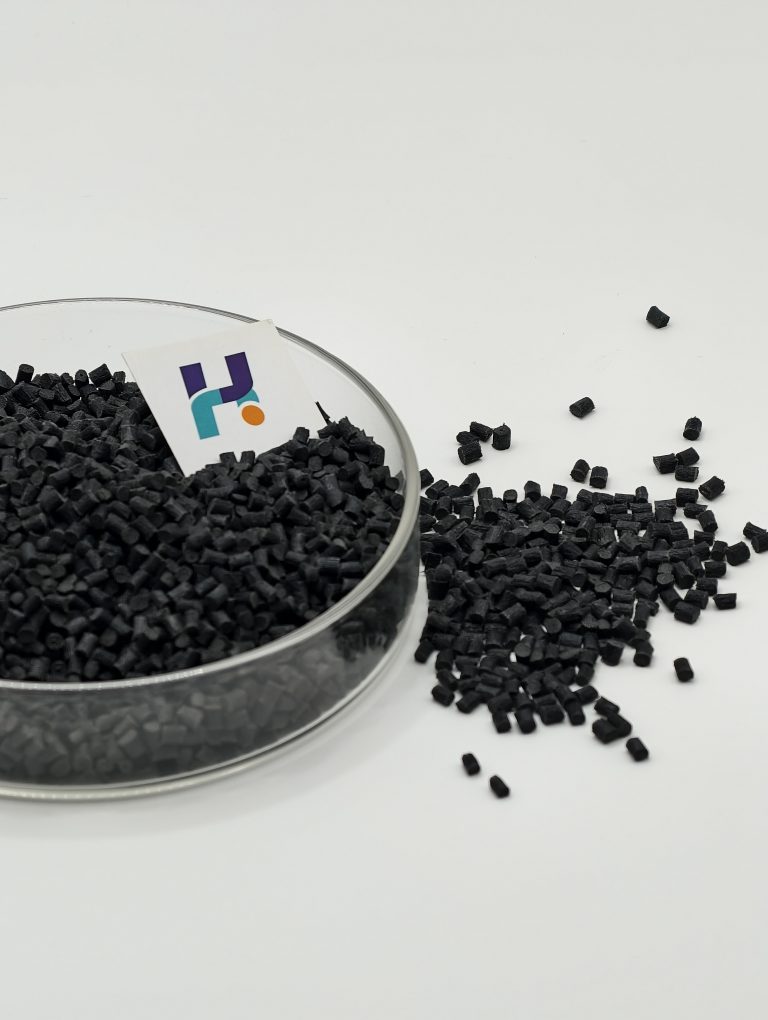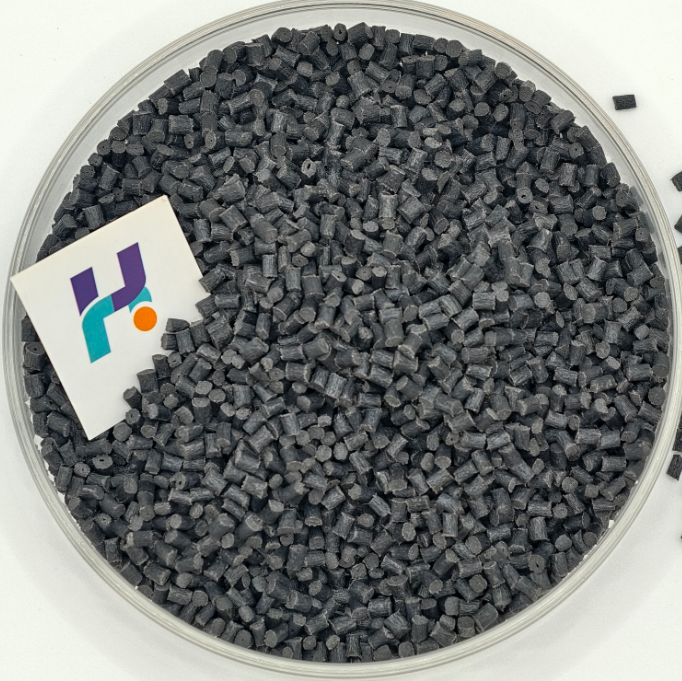
YongJinHong POM GF15 Exists (Engineering Positioning)
Glass Fiber Reinforced POM GF15 is intended for designs where standard POM shows noticeable elastic deflection, but higher glass fiber contents (GF25 / GF30) would introduce unnecessary brittleness, anisotropy, or tooling sensitivity.
Unlike PP GF15, which primarily improves stiffness for lightweight structures, POM GF15 focuses on precision stability, creep control, and dimensional accuracy.
GF15 is chosen when standard POM is “almost enough,” but reliability margins are required.
Material Composition & Reinforcement Strategy
Material Overview
-
Base Polymer: Polyoxymethylene (POM / Acetal)
-
Glass Fiber Content: 15%
-
Reinforcement Type: Short glass fiber
-
Optional Additives:
-
Heat stabilizers
-
Impact modifiers
-
Processing lubricants
-
UV stabilizers
-
-
Color Options: Natural, black, customized
This formulation targets precision reinforcement, not structural extremity.
Core Performance Advantages
Engineering Advantages
Moderate Stiffness Increase
Reduces elastic bending and torsional deflection compared with unfilled POM.
Improved Creep Resistance
Better long-term shape retention under continuous mechanical load.
Excellent Dimensional Stability
Very low moisture absorption preserves tight tolerances.
Balanced Toughness
Maintains better impact resistance than higher-GF POM grades.
Chemical Resistance
Resistant to fuels, oils, greases, and industrial cleaning agents.
Manufacturing & Production Advantages
Stable Injection Molding Window
Processing behavior remains close to standard POM.
Lower Anisotropy vs High-GF Grades
More predictable shrinkage and mechanical response.
Reduced Mold Wear
Glass fiber level remains tool-friendly.
Reliable Mass Production
Well-suited for long-term serial manufacturing.
Typical Application Areas
Automotive Components
-
Structural brackets
-
Precision mounting components
-
Interior mechanical supports
Industrial & Mechanical Equipment
-
Precision frames
-
Structural housings
-
Functional supports
Electrical & Precision Assemblies
-
Structural elements with tight tolerances
-
Lightly moving or intermittently loaded components
|
|
|
|


Processing Guidelines (Injection Molding)
Typical Processing Parameters
-
Melt Temperature: 190–215 °C
-
Mold Temperature: 80–110 °C
-
Drying: 80 °C for 2–4 hours
-
Injection Speed: Medium
-
Shrinkage: ~1.5–2.0%
Fiber orientation effects are manageable at 15% reinforcement.
OEM / Customization Capabilities
Customization Options
-
Heat-stabilized grades
-
Impact-modified formulations
-
UV-resistant versions
-
Color matching
OEM Support
-
Structural performance evaluation
-
GF15 vs GF25 selection guidance
-
Prototype sampling
-
Long-term supply assurance
Typical Technical Data (Reference Values)
| Property | Test Standard | Typical Value |
|---|---|---|
| Density | ISO 1183 | 1.43–1.48 g/cm³ |
| Tensile Strength | ISO 527 | 65–80 MPa |
| Flexural Strength | ISO 178 | 95–115 MPa |
| Flexural Modulus | ISO 178 | 3,500–4,500 MPa |
| Notched Izod Impact | ISO 180 | 4–7 kJ/m² |
| Heat Deflection Temp. | ISO 75 | 155–170 °C |
| Moisture Absorption | — | Very Low |
FAQ
Q1: When should POM GF15 be selected instead of standard POM?
When moderate stiffness and improved deformation control are needed without moving to high-GF grades.
Q2: How does POM GF15 differ from POM GF25?
GF15 offers better toughness and processing stability, while GF25 provides higher stiffness.
Q3: Is POM GF15 suitable for moving parts?
Yes, for lightly moving or intermittently loaded components.
Q4: Does 15% glass fiber significantly increase mold wear?
No. Tool wear remains moderate at this reinforcement level.
Q5: Can POM GF15 replace glass fiber reinforced PA?
Yes, in precision applications where moisture stability and dimensional accuracy are critical.