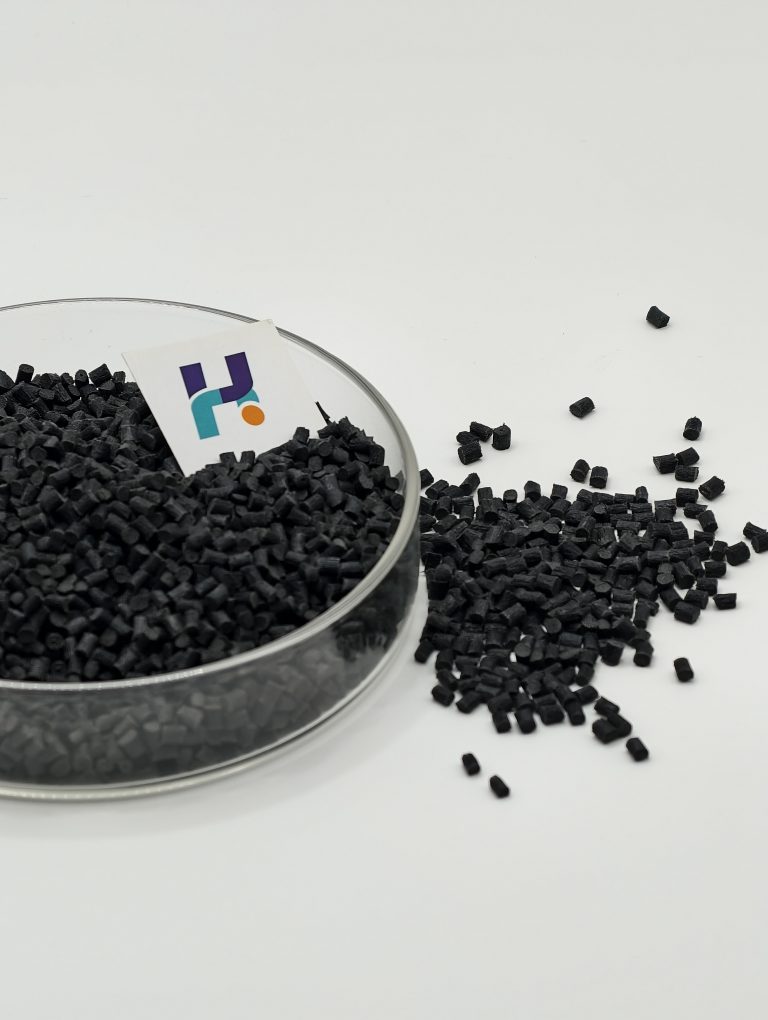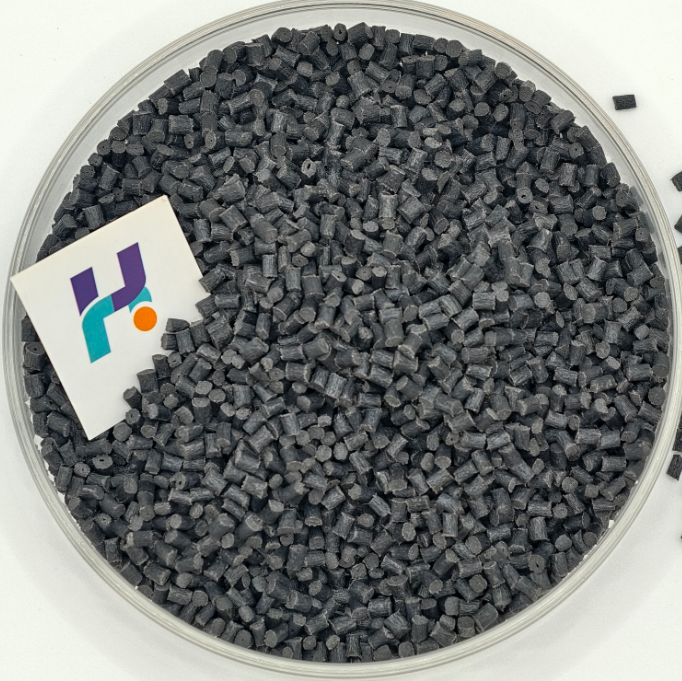
YongJinHong Compare PC GF15 and PC GF30?
Glass Fiber Reinforced PC grades differ mainly in mechanical strength, rigidity, and heat resistance due to increasing fiber content.
Choosing the wrong grade can lead to:
-
Insufficient stiffness
-
Poor dimensional control
-
Excessive cost or processing challenge
-
Surface finish and appearance issues
This comparison highlights the key differences in performance and recommended application scenarios.
Performance Comparison Table
| Property | PC GF15 | PC GF30 |
|---|---|---|
| Glass Fiber Content | 15% | 30% |
| Tensile Strength | 85–100 MPa | 120–140 MPa |
| Flexural Modulus | 4,000–5,000 MPa | 9,000–11,000 MPa |
| Impact Resistance | Higher | Moderate |
| Heat Deflection Temp. | 135–150°C | 180–200°C |
| Surface Quality | Better | Good |
| Processability | Easier | Moderate |
When to Choose YongJinHong PC GF15
✔ Balanced Strength + High Impact
-
PC GF15 maintains relatively higher impact strength due to lower fiber content.
-
Ideal when impact tolerance and toughness outweigh stiffness.
✔ Easier Processability
-
Better flowability than higher fiber content grades — supports complex thin-wall parts.
✔ Better Surface Quality
-
Less fiber exposure → smoother surface finish.
Recommended for:
-
Electronic housings
-
Consumer product internal supports
-
Functional parts requiring balanced toughness
When to Choose YongJinHong PC GF30
✔ Higher Modulus & Load Capacity
-
PC GF30 delivers significantly higher stiffness and load-bearing performance.
✔ Improved Dimensional Stability
-
More predictable part behavior under mechanical stress and elevated temperatures.
✔ Thermal Performance
-
Higher heat deflection temperature enables use in warmer environments.
Recommended for:
-
Structural brackets and frames
-
Automotive interior functional parts
-
Industrial housings requiring rigidity
Engineering Selection Decision Flow
👉 Step 1 – Load Requirements
-
High impact + moderate stiffness → PC GF15
-
High stiffness + load-bearing → PC GF30
👉 Step 2 – Thermal Environment
-
<150°C use → PC GF15 / PC GF30
-
>150°C exposure → PC GF30 preferred
👉 Step 3 – Surface & Appearance Priority
-
Visible surfaces & smooth finish → PC GF15
-
Structure-focused parts → PC GF30
Application Scenarios & Examples
Automotive
-
PC GF15: Interior attachments, snap-fit supports
-
PC GF30: Dashboard frames, mounting brackets
Electronics
-
PC GF15: Consumer device housings
-
PC GF30: Power module shells, load-bearing internal mounts
Industrial
-
PC GF15: Functional covers
-
PC GF30: Structural machine housings


FAQ
Q1: Which grade has better impact resistance?
PC GF15 generally offers higher impact resistance due to lower fiber content.
Q2: Which grade has better heat performance?
PC GF30 provides higher heat deflection temperature and better thermal stability.
Q3: Does PC GF30 surface finish differ from PC GF15?
Yes. Higher fiber content may slightly increase surface texture; PC GF15 yields smoother surfaces.
Q4: Are both grades available with flame retardancy?
Yes. HB and UL94 V0 flame-retardant variants are available for both PC GF15 and PC GF30.
Q5: Can PC GF15 be used for heavy structural parts?
PC GF15 can be used for moderate structural parts, but PC GF30 is preferred for higher rigidity and load-bearing applications.