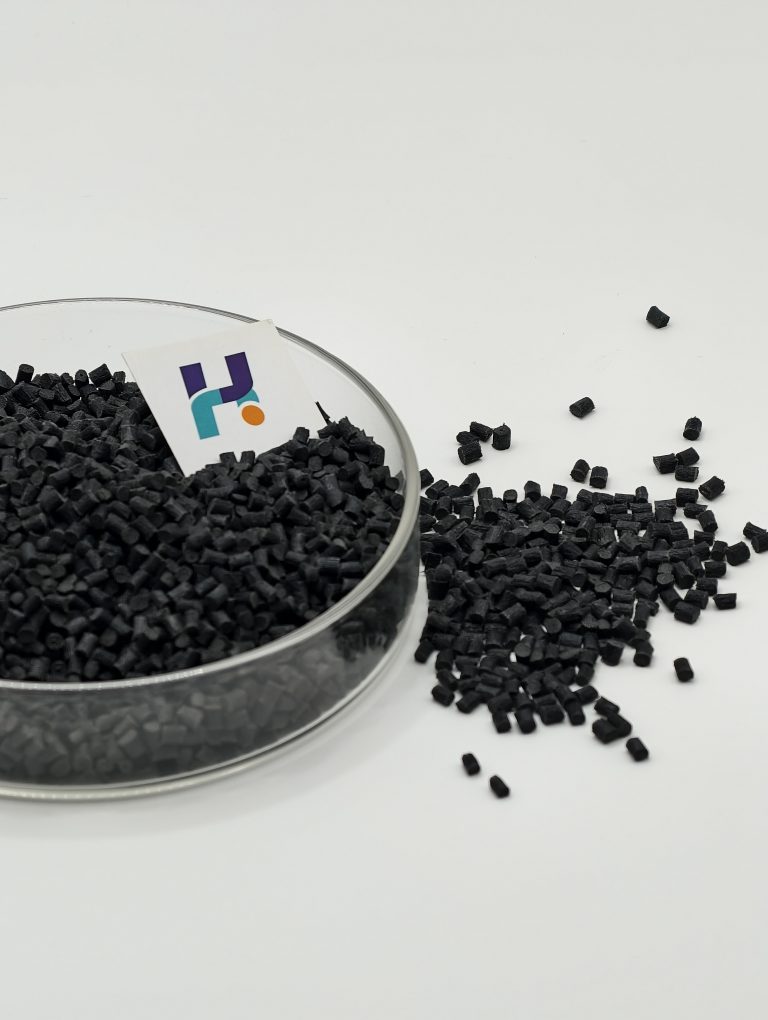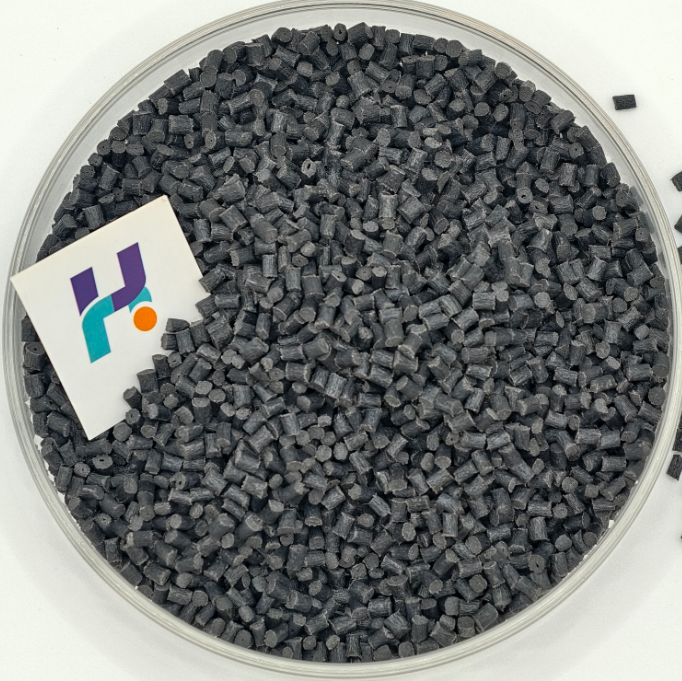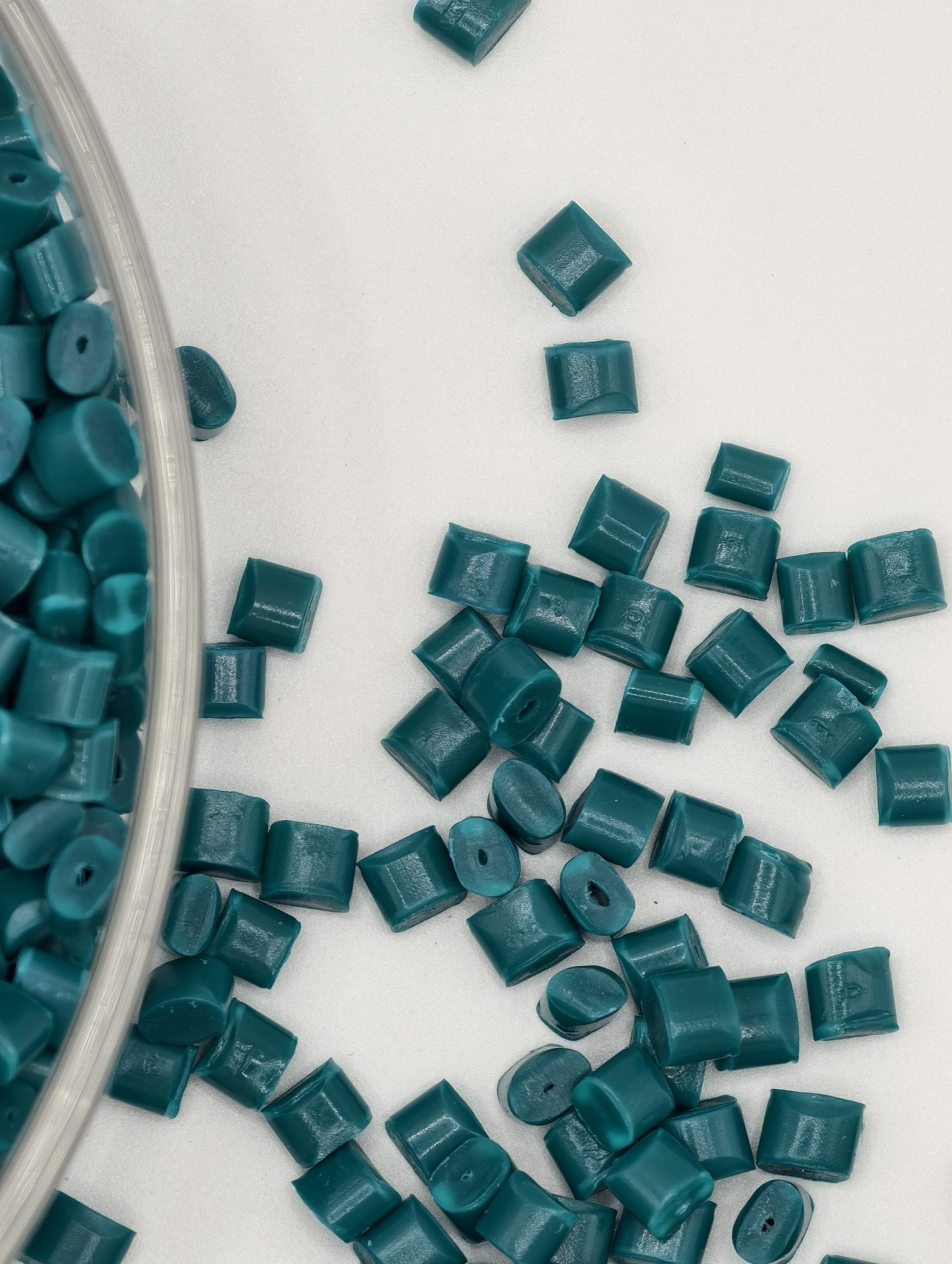
FR Nylon 6 pellets for safe, stable, mass-production breaker shells—built to meet flame targets without sacrificing assembly reliability.
A breaker housing is a “quiet” safety part: customers never notice it—until something goes wrong. In real programs, the pain rarely comes from raw tensile strength. It comes from these production killers:
-
the housing passes UL94 once, but mass production shows warpage near terminals
-
snap-fits break at weld lines during assembly
-
boss cracking after screw fastening or torque cycling
-
thin walls cause short shots / burn marks / unstable fill
-
heat exposure leads to fit drift that breaks creepage/clearance geometry
That’s why a dedicated FR PA6 for breaker housings should be positioned as a system solution: flame performance + mechanical reliability + process stability.
YONGJINHONG Flame-Retardant PA6
FR PA6 is Nylon 6 compounded with a flame-retardant system (and stabilizers) for injection molding electrical housings.
PA6 works well in breaker housings
-
Balanced toughness (helps clips, bosses, and assembly features survive)
-
Good processability for complex geometries
-
Cost-effective vs many higher-end electrical polymers
-
Can be tuned for thin-wall flow and dimension repeatability
Note: final compliance (UL94 class, thickness rating, glow-wire, etc.) depends on the exact grade and formal testing. The job of the material is to give you a stable path to pass—without creating new mechanical problems.
Where breaker housings fail
1) “Passed V-0” but warps in production
Large flat walls + ribs + uneven cooling = dimensional drift. Warpage can affect:
-
terminal alignment
-
assembly fit between half shells
-
creepage/clearance control in critical areas
2) Brittle snaps and weak weld lines
Some FR systems can reduce ductility if not balanced. Breaks often show up at:
-
snap roots

-
knit/weld lines
-
sharp corners near gates
3) Boss cracking under screw torque
Bosses fail when resin is too brittle, or when stress is locked in by over-packing / poor cooling.
4) Thin-wall instability: short shots, burn, inconsistent fill
Breaker housings are trending smaller, thinner, and more complex. A production-grade FR PA6 must be flow-stable and vent-friendly.
Core Selling Points
A) High flame performance
Engineering: FR package tailored for flame targets (e.g., UL94 V-0 thickness goals).
Value: smoother certification path, fewer late-stage surprises.
B) Strong assembly reliability 
Engineering: balanced toughness + controlled melt stability helps prevent brittle assembly breaks.
Value: fewer line stoppages, fewer rejects, lower warranty risk.
C) Dimensional stability you can mass-produce
Engineering: stabilized formulation + predictable shrink behavior supports repeatable fit.
Value: less parameter chasing, more consistent cavity-to-cavity output.
D) Process stability
Engineering: stable flow and compounding consistency reduce lot-to-lot drift.
Value: approved samples stay consistent when you scale.
Typical Applications
-
miniature circuit breaker (MCB) housings
-
power-cut / disconnector device housings (outer shells)
-
electrical insulation covers and structural housings (design-dependent)
Selection Table
| Requirement | Recommended Direction (FR PA6 options) | Why it matters |
|---|---|---|
| Target UL94 rating & thickness | FR system tuned to your thickness (e.g., 0.8 / 1.6 / 3.2 mm targets) | flame pass depends on thickness |
| Thin-wall filling | Flow-optimized FR PA6 | fewer short shots & burn |
| Snap/boss durability | Toughness-balanced FR PA6 | prevents assembly cracking |
| Warpage control | Low-warpage formulation route + molding discipline | stable terminal geometry |
| Long-term heat exposure | Heat-aging stabilized FR PA6 | reduces fit drift |
Engineering Notes
1) Flame performance is not the only acceptance gate
Breaker housings must keep:
-
boss geometry under fastening load
-
snap integrity at weld lines
-
stable wall flatness around terminals
A grade that’s only optimized for flame can fail mechanically.
2) Moisture control matters for PA6
PA6 is hygroscopic. Moisture affects flow and properties. For stable breaker production:
-
drying is mandatory
-
define dimensional checks under consistent conditioning (as-molded vs conditioned)
3) Weld-line strength is a design + material + process result
To reduce weld-line breaks:
-
avoid gate layouts that place knit lines at snap roots
-
ensure proper venting and stable packing
-
choose a grade tuned for weld-line durability (OEM option)
Processing Notes
A production-grade FR PA6 should run stable—but only if you run it like PA6:
Practical manufacturing checklist
-
Drying: required (prevents splay, instability, property loss)
-
Melt temperature: keep controlled (avoid overheating that can reduce FR efficiency and toughness)
-
Mold temperature: stable for consistent shrink and weld-line quality
-
Injection speed: medium-to-high for thin-wall continuity; avoid hesitation
-
Venting: critical to prevent burn and weak knit zones
-
Packing: consistent and repeatable; over-packing can lock in stress and cause boss cracks
QC points that catch problems early
-
terminal-area critical dimensions
-
snap feature pull / flex check
-
boss crack screening after torque
-
lot-to-lot: flow index (MFR) + key shrink indicators
OEM Customization
For breaker housings, the OEM options that convert best are:
-
UL94 thickness-target route (your design thickness drives the formulation direction)
-
Thin-wall flow tuning (compact housings, complex runners, multi-cavity tools)
-
Low warpage route (flatness + terminal geometry priority)
-
Weld-line toughness focus (snaps and stress zones)
-
Color control (black/gray; lot-to-lot stability targets)
-
Compliance package (RoHS/REACH document support as needed)
Product Details
| Item | Description |
|---|---|
| Product name | FR PA6 for Circuit Breaker / Power-Cut Device Housings |
| Material type | Flame-retardant Nylon 6 (PA6) |
| Form | Injection molding pellets |
| Key strengths | flame performance, good toughness, stable molding, dimensional repeatability |
| Optional focus | V-0 thickness target route, thin-wall flow, low warpage, weld-line durability, color control |
| Typical parts | breaker shells, insulation housings, electrical covers |
| Supply model | standard grade + OEM custom compounding |
What you should provide
You don’t need to share any sensitive customer info. Send any 3–5 items:
-
UL94 target + thickness (critical)
-
wall thickness range and part size (long walls? rib density?)
-
key stress zones: snaps, bosses, inserts, terminal windows
-
current pain point: warpage, snap break, boss crack, short shot, burn marks
-
cavity count + gate constraints (if fixed)
-
color requirement (black/gray/custom)
If you only provide UL94 thickness target + part thickness + failure mode + a photo, that’s enough to start.
FAQ
Q1: Is FR PA6 suitable for circuit breaker housings?
Yes. FR PA6 is commonly used for electrical housings when you need flame-retardant performance plus a practical balance of toughness and process stability.
Q2: What matters most for UL94 success in breaker housings?
Thickness target and grade selection. UL94 outcomes are thickness-dependent, so the grade should be selected or tuned for your actual wall thickness.
Q3: How can we reduce snap-fit breakage with FR PA6?
Use a toughness-balanced grade, avoid placing weld lines at snap roots through gating strategy, and keep venting/packing stable to protect knit-line strength.
Q4: Can FR PA6 be tuned for thin-wall breaker shells?
Yes. OEM compounding can focus on flow stability for thin walls, while balancing flame performance and mechanical durability.
Q5: What information do you need to recommend a grade quickly?
UL94 target + thickness, wall thickness range, key stress features (snaps/bosses), current failure mode, cavity count/gate constraints, and color requirement.