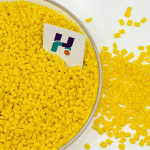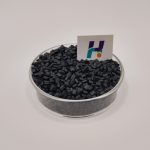
PA6 GF30 (30% glass fiber reinforced Nylon 6) is widely used in mechanical engineering gear components where stiffness, creep control, and dimensional stability are critical to maintaining gear mesh quality over time.
This article explains the engineering logic behind selecting PA6 GF30 for gears, focusing on geometry retention under load, moisture/temperature effects, tribology risks, and production-ready injection molding controls.

What Is PA6 GF30 Used For? Engineering Selection Logic for Gear Components in Mechanical Engineering
PA6 GF30 (30% glass fiber reinforced Nylon 6) is used for gear components when the design needs higher stiffness and better creep control than unfilled nylon can provide, while still keeping weight and part integration advantages versus metal.
In mechanical engineering gear trains, “fit” is rarely about a single datasheet value; it is about controlling geometry drift, tooth contact stability, and noise over time because humidity, temperature cycling, and load history change nylon behavior.
PA6 GF30 typically works best for structural gears, hubs, carriers, and actuator gearsets where deformation, torque retention, and assembly stability dominate the risk.
It can fail when moisture-driven dimensional change, weld-line weakness, or fiber-orientation warpage is ignored—therefore processing and part design must be treated as part of the material decision.
The practical conclusion: choose PA6 GF30 when you can engineer moisture control + orientation-aware design + a verified molding window, and avoid it for ultra-quiet precision gears without a full NVH and conditioning strategy.
What Is PA6 GF30 Used For? Engineering Selection Logic for Gear Components in Mechanical Engineering
Introduction. Small gear components often sit inside “big assemblies” that customers expect to be silent, repeatable, and maintenance-free.
When a gear tooth profile drifts by fractions of a millimeter, you can get noise, heat, backlash change, and premature wear—so material choice becomes a risk decision, not a catalog choice.
PA6 GF30 is popular because it reduces deflection and creep that gradually destroys gear mesh stability, but it also introduces orientation, moisture, and processing sensitivities that must be engineered.
What Makes Mechanical Engineering Structural Parts Demanding
Mechanical engineering parts fail in ways that look “random” unless you track load path + environment + time.
For gears and their surrounding structures, the demanding part is not peak strength; it is maintaining alignment and tooth contact under temperature cycles, lubrication exposure, and long-term stress.
Three realities drive the selection logic: (1) polymer properties are time- and moisture-dependent, (2) glass fiber makes behavior anisotropic, and (3) molding history becomes part of the final performance.
Why PA6GF30 Fits Mechanical Engineering Structural Requirements
PA6GF30 is chosen when the dominant requirement is to keep geometry stable under load because glass fiber increases rigidity and reduces creep-driven deflection.
That matters for gear components because tooth contact is unforgiving: small elastic or viscoelastic movement becomes noise, localized wear, and heat, therefore accelerating failure modes.
Typical Property Uplift: Unfilled PA66 vs PA66 GF30 (Typical Values)
| Property | Unfilled PA66 | PA66 GF30 | Relevance to Mechanical engineering Structural Parts |
|---|---|---|---|
| Tensile Strength | ~75 MPa (Typical; varies by grade and test method) | ~120 MPa (Typical; varies by grade and test method) | Higher margin against crack initiation at bosses, splines, and tooth-root transitions |
| Flexural Modulus | ~2,500 MPa (Typical; varies by grade and test method) | ~8,000 MPa (Typical; varies by grade and test method) | Lower deflection → better gear mesh stability and less backlash drift |
| HDT | ~70°C (Typical; varies by grade and test method) | ~180°C (Typical; varies by grade and test method) | Resists softening near motors, housings, or enclosed gearboxes under heat soak |
| Creep Resistance | Moderate (Typical; varies by grade) | High (Typical; varies by grade) | Controls long-term torque loss and alignment drift under sustained load |
| Dimensional Stability | Limited (Typical; varies by grade) | Excellent (Typical; varies by grade) | Helps maintain center distance, tooth engagement, and bearing seat geometry |
The table above uses PA66 as a familiar reference to show the typical “glass fiber uplift.” The same direction of improvement usually motivates PA6 GF30 selection, even though exact values vary by grade, conditioning, and method.
In practice, engineers pick PA6 GF30 when they want nylon’s toughness and manufacturability but need a structural step-up to limit deformation in gears, hubs, carriers, and actuator assemblies.
For Yongjinhong’s PA6 GF30 portfolio, you can review product-oriented details here:
PA6 GF30 30% glass fiber reinforced Nylon 6 structural material
and here:
glass fiber reinforced PA6 GF30.
PA6GF30 in Mechanical engineering Clips
Clips sound simple, but in gear-driven assemblies they often become “alignment keepers.”
In actuator housings, gearboxes, and mechatronic modules, clips may lock bearings, retain shafts, or stabilize wiring and sensor elements near rotating parts.
PA6 GF30 fits when clip stiffness prevents micro-movement because micro-movement becomes fretting, noise, and tolerance stack drift.
The risk is brittle behavior at weld lines or sharp notches, especially where fibers align unfavorably—therefore clip root radii, gate location, and weld-line placement must be controlled.
For gear components, clips are also used as secondary retainers (anti-backout, anti-rattle). If a clip relaxes by creep, backlash increases; PA6 GF30 is often selected specifically to slow that relaxation.
PA6GF30 in Mechanical engineering Brackets
Brackets around gear systems carry loads indirectly: motor mounts, bearing carriers, and gearbox covers all set the geometry that gears must respect.
PA6 GF30 is used for these brackets when weight reduction and part integration (ribs, bosses, ducts, mounting features) outperform metal at system cost.
The engineering logic is to treat the bracket as a “center-distance protector.” If the bracket creeps, the gear mesh changes; if it warps, tooth contact becomes edge-loaded; if it cracks, the whole module fails.
PA6 GF30 helps because the stiffness uplift reduces deflection under bolt preload and operating loads.
The main risk is anisotropic shrinkage leading to warp, which shifts bearing seats or mounting faces. The practical mitigation is orientation-aware rib design, symmetric gating when possible, and mold temperature uniformity.
PA6GF30 in Mechanical engineering Connectors
Even in mechanical engineering assemblies, connectors sit near gear components because sensors, motors, and controls are tightly integrated.
When a connector housing distorts, pins misalign; when tracking or creep occurs, electrical reliability degrades; when heat soak softens the polymer, latch retention falls.
PA6 GF30 is used where the connector must stay rigid and keep latch geometry under vibration and thermal cycling.
The failure mode to watch is stress concentration at latch windows and weld lines; fiber-filled nylon can crack there if the design is notch-sensitive and the process window is not stable.
If the connector is inside a lubricated enclosure, chemical compatibility with oils/greases must be verified because swelling or stress cracking can amplify dimensional drift and latch failure.
Expert Insights: Why Engineers Trust PA6GF30 in Structural Components
Engineers trust PA6 GF30 when the performance target is “geometry over time,” because creep and deflection are what quietly destroy gear mesh stability. The risk is that glass fiber makes the part directional, so stiffness improvements can come with warp, local stress peaks, and tooth contact pattern shift. The engineering recommendation is to validate the gear’s contact pattern after conditioning (humidity/temperature) and to lock gate strategy early so fiber orientation is repeatable.
Design teams succeed with PA6 GF30 when they treat tooth-root and hub transitions as fatigue-critical, not as cosmetic geometry. The failure mode is typically crack initiation at a notch (sharp fillet, ejector mark, knit line) that becomes a propagating fracture under cyclic torque reversal. The engineering recommendation is to enforce generous radii, keep knit lines away from tooth roots and key load paths, and use conservative safety factors until molded-part microscopy confirms fiber distribution.
Manufacturing teams keep PA6 GF30 reliable when “moisture + drying + residence time” are managed as a single control loop. The risk is hydrolysis and molecular weight loss if wet resin is processed hot, leading to brittle parts and unexpected gear tooth chipping. The engineering recommendation is to set a measurable drying target (moisture limit), keep regrind disciplined, and audit melt temperature and residence time because fiber-filled nylon can hide degradation until field failures appear.
 Thermal & Environmental Stability in Real Mechanical engineering Conditions
Gears rarely see a clean laboratory environment.
They see heat soak from motors, humidity cycles from daily operation, and chemical exposure from oils, greases, cleaners, or coolants.
PA6 absorbs moisture more readily than some alternatives, and moisture changes both dimensions and mechanical response.
That is not “good or bad” by itself; it becomes a risk when the design assumes dry-as-molded dimensions while the part lives at conditioned equilibrium.
For gear components, moisture can reduce stiffness and change backlash, therefore altering noise behavior and contact stress.
The engineering approach is to define the working state (dry, conditioned, or fully saturated) and validate critical dimensions and NVH in that state, not only at incoming inspection.
Thermal cycling adds another layer: repeated expansion/contraction and preload changes can drive micro-motion at shafts and bearings.
PA6 GF30 helps by limiting deformation, but the design must still prevent stress accumulation at corners and around inserts where differential expansion concentrates load.
Finally, tribology matters. PA6 GF30 gears may run against metal or polymer counterparts, and the wear outcome depends on surface finish, lubrication regime, and fiber exposure at the surface.
When quiet operation is the requirement, surface strategy (mold polish, post-processing, pairing material, lubrication choice) often matters as much as tensile strength.
Processing Considerations for Mechanical engineering-Grade PA6GF30
PA6 GF30 performance is strongly process-dependent because fiber orientation, crystallinity, and moisture state are “built in” during molding.
Therefore, a robust process window is not an optimization—it is a reliability requirement.
Drying. Dry resin before molding; typical practices include drying around ~80°C for several hours, with the exact time and target moisture varying by grade and dryer efficiency.
The risk is hydrolytic degradation if wet resin is processed at high melt temperatures; that often shows up later as brittle tooth chipping or unexpected cracking.
Melt and mold temperatures. Typical melt temperatures for PA6 GF30 often fall roughly in the ~260–290°C range, and mold temperatures often run higher than commodity plastics to stabilize crystallization; exact settings vary by grade, part thickness, and machine.
The risk is that “too cold” promotes poor weld strength and surface issues, while “too hot” plus long residence time accelerates degradation.
Gate strategy and flow length. Gate placement dictates fiber alignment, which dictates stiffness direction and warpage tendency.
For gear components, prioritize repeatable fiber patterns around hubs and tooth rings; avoid gate-induced weld lines at tooth roots or heavily loaded splines.
Pack/hold and shrink control. Fiber-filled nylon shrinks anisotropically; pack pressure that looks “right” by weight can still leave ovality or face runout.
Use metrology that matches function (runout, pitch diameter stability, bearing-seat concentricity), not only overall dimensions.
Post-mold conditioning. Decide whether parts will be shipped dry or conditioned, and make that consistent.
The risk is field drift if customer environment conditions the part differently than the validation state; gears are sensitive to that mismatch.
PA6GF30 vs Alternative Materials in Mechanical engineering Structures
Material comparisons only help when tied to the dominant failure mode.
If your dominant risk is creep-driven misalignment, fiber-filled nylons rise quickly in the decision tree; if your dominant risk is moisture-driven dimensional change or extreme quietness, you may need a different strategy.
| Material | Thermal Stability | Structural Rigidity | Typical Automotive Use |
|---|---|---|---|
| PA66 GF30 | High (Typical; varies by grade and conditioning) | High | Under-hood brackets, load-bearing housings, high-heat connectors, structural carriers |
| PA6 GF30 | Medium–High (Typical; varies by grade and conditioning) | High | Interior/exterior structural parts, actuator housings, gear-adjacent brackets where stiffness and cost balance |
| Unfilled PA66 | Medium (Typical; varies by grade and conditioning) | Medium | General-purpose housings, clips, parts needing toughness and snap flexibility over rigidity |
If your comparison is actually between glass-fiber PBT and glass-fiber PA systems (often debated in structural and electrically adjacent modules), this reference can help you frame the trade-offs:
PBT GF vs PA GF: choosing the right glass fiber reinforced engineering plastic.
For gear components specifically, a practical rule is: choose PA6 GF30 when stiffness and creep control are needed but the environment is manageable (humidity strategy, validated conditioning), and step up to PA66 GF30 when heat-aging margin and higher thermal stability dominate the risk.
If ultra-low noise and precision are the priority, consider whether a tribology-optimized grade, alternative polymers, or a hybrid design (metal insert, different mating gear material, lubrication strategy) better targets the failure mode.
Typical Mechanical engineering Applications Summary
PA6 GF30 is commonly used in mechanical engineering gear systems when the job is to keep structure stiff and stable, not when the job is purely cosmetic or purely elastic.
It shows up in gear components and their supporting structures where deformation control prevents downstream failures.
- Structural gears and gear carriers: when tooth contact stability and backlash control matter over long service time.
- Hubs, splines, and mounting features: when torque transmission and creep resistance drive reliability.
- Bearing seats and gearbox brackets: when alignment dominates noise, wear, and heat generation risk.
- Clip/latch features near rotating systems: when retention must survive vibration and thermal cycling.
The key decision logic is consistent: define the dominant failure mode (creep drift, warp, cracking, wear, NVH), then select PA6 GF30 only if you can engineer the moisture and processing sensitivities that come with fiber reinforcement.
Frequently Asked Questions (FAQ)
1) Is PA6 GF30 suitable for precision, low-noise gears?
It can be, but it is not automatically a “quiet gear” solution. The risk is that moisture conditioning changes stiffness and backlash, while fiber exposure and surface finish can increase noise. Validate NVH after conditioning and consider tribology-optimized grades or pairing strategies if noise is the primary requirement.
2) How does moisture absorption affect PA6 GF30 gear components?
Moisture typically changes dimensions and reduces stiffness compared with dry-as-molded state (exact behavior varies by grade and conditioning). The failure mode is geometry drift that alters tooth contact and increases wear or noise. Define the target conditioning state and measure critical gear metrology in that state.
3) What temperature range can PA6 GF30 handle in gearboxes?
It generally performs better than unfilled nylon for heat-related deformation due to higher rigidity, but temperature capability depends on grade, load, and conditioning. The risk is heat soak plus stress causing creep or softening near motors. Validate under real duty cycles, not only short-term tests.
4) What are the most important processing controls for PA6 GF30?
Drying, residence time, and gate/orientation control are the big three. The failure mode is hydrolysis (brittleness) from wet processing and warpage from uncontrolled fiber orientation. Use a measurable moisture target, stable melt temperature control, and a gating strategy tied to functional metrology (runout, concentricity).
5) When should I choose PA66 GF30 instead of PA6 GF30?
Choose PA66 GF30 when thermal stability and heat-aging margin dominate the risk (higher temperature exposure, tighter retention over heat, or harsher under-hood-like environments). The failure mode you avoid is excessive drift under heat soak. Still validate warpage and weld-line strength because fiber-filled nylons remain anisotropic.
6) How do I reduce warpage in PA6 GF30 gear-related parts?
Warpage is often fiber-orientation + temperature-uniformity driven. The risk is ovality or misalignment that becomes gear noise and wear. Use symmetric flow when feasible, keep wall transitions smooth, balance ribbing, and control mold temperature uniformity; confirm by measuring functional geometry, not just overall dimensions.
7) Is PA6 GF30 compatible with common oils and greases?
Often yes, but compatibility is formulation-specific (base oil, additives, temperature) and varies by grade. The failure mode is swelling or stress cracking that shifts geometry or weakens latches. Test with the actual lubricant at operating temperature and duration, and inspect for dimensional drift and embrittlement.
Conclusion. PA6 GF30 is used for gear components when your engineering goal is to control deformation over time—because long-term geometry drift is what turns a “working gearbox” into a noisy, wearing, warranty problem.
It is a strong choice when you can define the real operating state (humidity + temperature + lubricant exposure) and validate the molded part in that state, therefore connecting material choice to verified failure-mode control.
If your project sits in electrified or tightly integrated mechatronic systems, align material decisions with the full module environment and validation logic:
new energy solutions.
For background on Yongjinhong’s manufacturing and engineering approach:
about us.
If you want a processing-window review, conditioning plan, or sample request for a gear-component trial, you can reach the team here:
contact.