Why PP TD20 Exists (Engineering Positioning)
PP TD20 is selected when standard PP lacks stiffness, but glass fiber reinforced PP introduces unnecessary warpage, anisotropy, or cost.
It sits in a critical middle zone:
-
Stronger and more dimensionally stable than unfilled PP
-
More isotropic and flatter than PP GF
-
Lighter and more economical than high-mineral PP
PP TD20 is chosen when:
-
Parts must remain flat and dimensionally stable
-
Thermal deformation must be controlled
-
Surface appearance and mold consistency matter
-
Cost sensitivity is high
-
Structural loads are moderate and predictable
PP TD20 is a geometry-control material, not a load-dominant one.
Material Composition & Reinforcement Strategy

Material Overview
-
Base Polymer: Polypropylene (PP)
-
Filler Type: Talc (lamellar mineral)
-
Filler Content: 20%
-
Key Effect: Increased stiffness + reduced shrinkage
-
Optional Additives:
-
Heat stabilizers
-
UV stabilizers
-
Impact modifiers (controlled)
-
Color concentrates
-
-
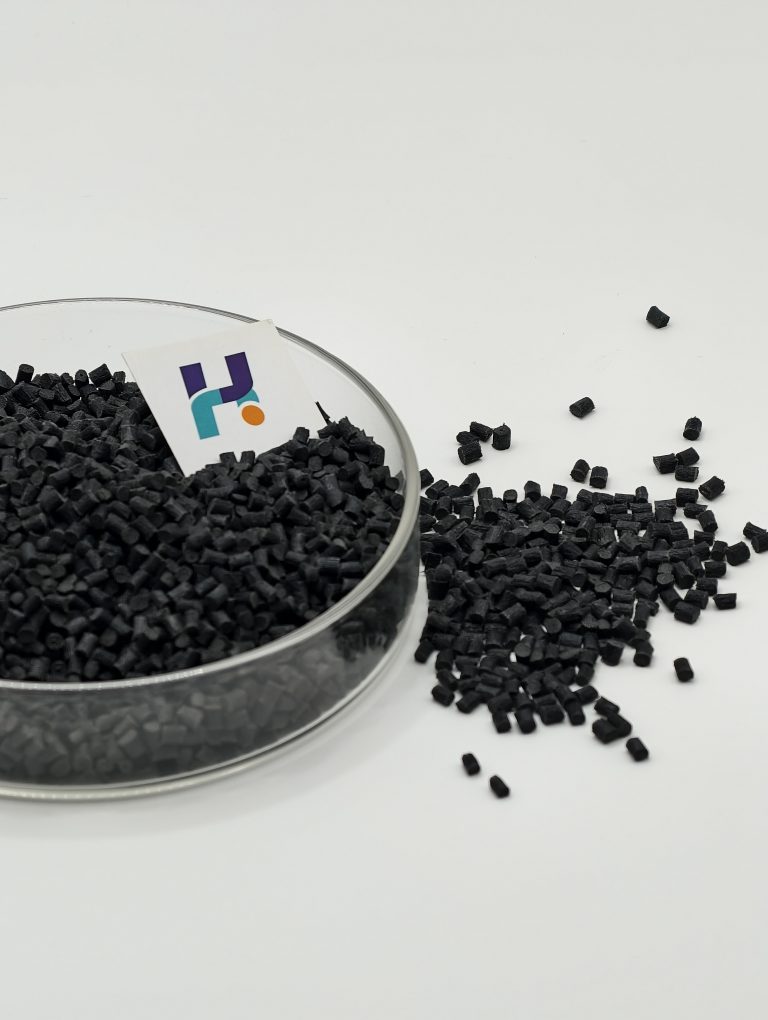
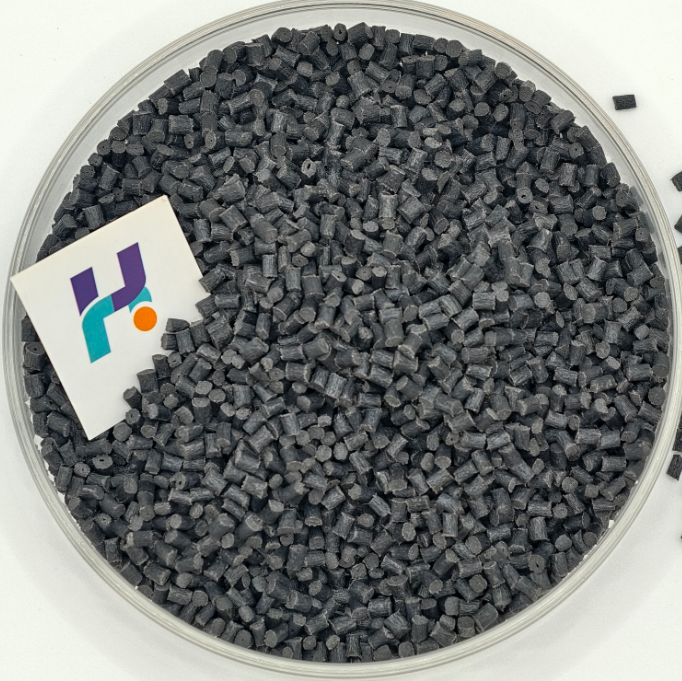
Colors: Natural, black, customized
Talc improves stiffness without creating fiber-direction dependency.
Core Performance Advantages
Dimensional & Thermal Advantages
Improved Rigidity vs Unfilled PP
Higher flexural modulus limits sagging and deformation.
Excellent Flatness & Low Warpage
Talc’s isotropic behavior minimizes differential shrinkage.
Improved Heat Deflection Temperature
Maintains geometry under moderate thermal exposure.
Stable Shrinkage Control
Predictable molding behavior for large parts.
Manufacturing & Cost Advantages
Superior Surface Quality vs PP GF
No fiber read-through or surface roughness.
Lower Tool Wear than GF Systems
Extends mold life.
High Process Stability
Wide molding window, easy flow.
Excellent Cost-to-Performance Ratio
One of the most economical stiffness upgrades for PP.
PP TD20 improves shape control, not tensile dominance.
Typical Application Areas
Automotive
-
Interior trim panels
-
HVAC housings
-
Battery covers (non-load-bearing)
-
Air duct components
Selected where PP GF warps too much.
Home Appliances
-
Washing machine panels
-
Dishwasher inner housings
-
Control enclosures
Used where flatness and appearance dominate.
Industrial & Consumer Products
-
Structural covers
-
Equipment housings
-
Large injection-molded shells
Ideal for medium-rigidity, high-volume parts.

Processing Guidelines (Injection Molding)
Typical Processing Parameters
-
Melt Temperature: 190–230 °C
-
Mold Temperature: 30–60 °C
-
Drying: Not required
-
Injection Speed: Medium to high
-
Shrinkage: ~0.4–0.7% (uniform)
Gate design should prioritize balanced flow, not fiber orientation.
PP TD20 vs Other PP Reinforcement Systems
| Material | Stiffness | Warpage Control | Surface Quality | Cost |
|---|---|---|---|---|
| Unfilled PP | Low | Low | Excellent | Lowest |
| PP TD20 | Medium | Excellent | Excellent | Low |
| PP GF20 | High | Medium–Low | Medium | Medium |
| High-Mineral PP | Medium–High | High | Medium | Medium |
If flatness matters more than strength → PP TD20 wins.
Typical Technical Data (Reference Values)
| Property | Test Standard | Typical Value |
|---|---|---|
| Density | ISO 1183 | 1.05–1.10 g/cm³ |
| Tensile Strength | ISO 527 | 30–38 MPa |
| Flexural Modulus | ISO 178 | 2,200–2,800 MPa |
| Notched Izod Impact | ISO 180 | 3–5 kJ/m² |
| Heat Deflection Temp. | ISO 75 | 120–135 °C |
| Mold Shrinkage | — | 0.4–0.7% |
Frequently Asked Questions
Q1: When should PP TD20 be chosen instead of PP GF20?
When flatness, surface quality, and warpage control are more important than high load-bearing strength.
Q2: Does PP TD20 replace glass fiber reinforced PP?
No. It replaces PP GF only in moderate-load applications where dimensional stability matters more.
Q3: Is PP TD20 suitable for large injection-molded parts?
Yes. It is particularly well suited for large, flat components.
Q4: Does talc reduce impact strength?
Slightly, but impact can be balanced with formulation tuning.
Q5: Is PP TD20 cost-effective for mass production?
Yes. It offers one of the best stiffness-to-cost ratios among PP compounds.