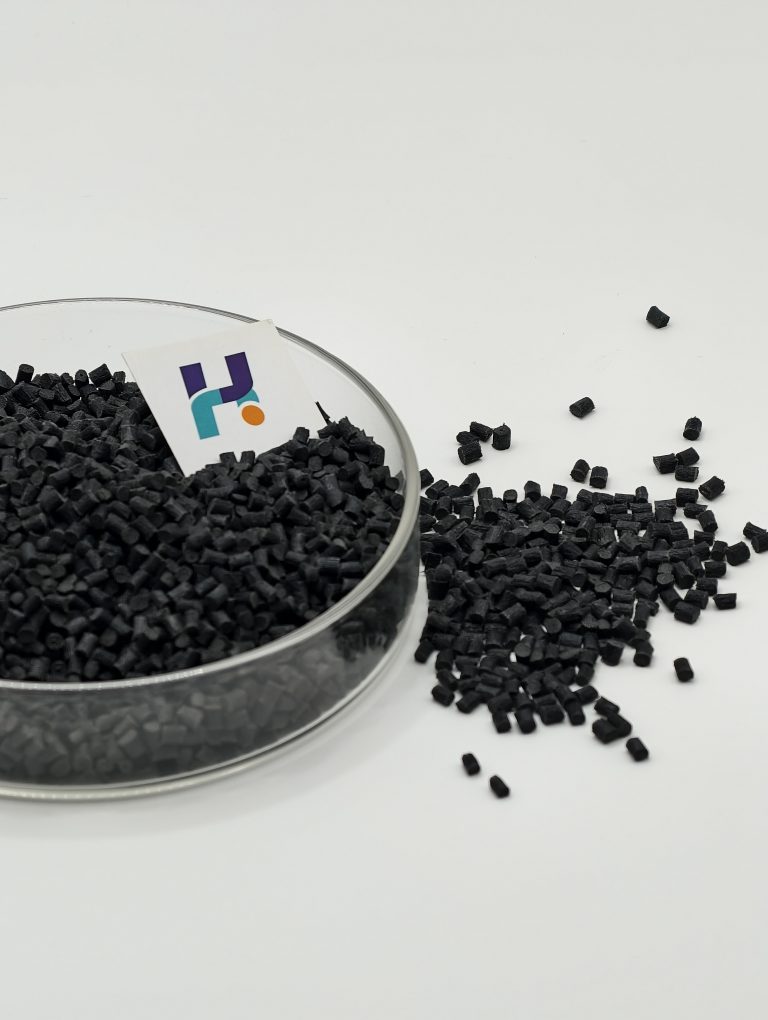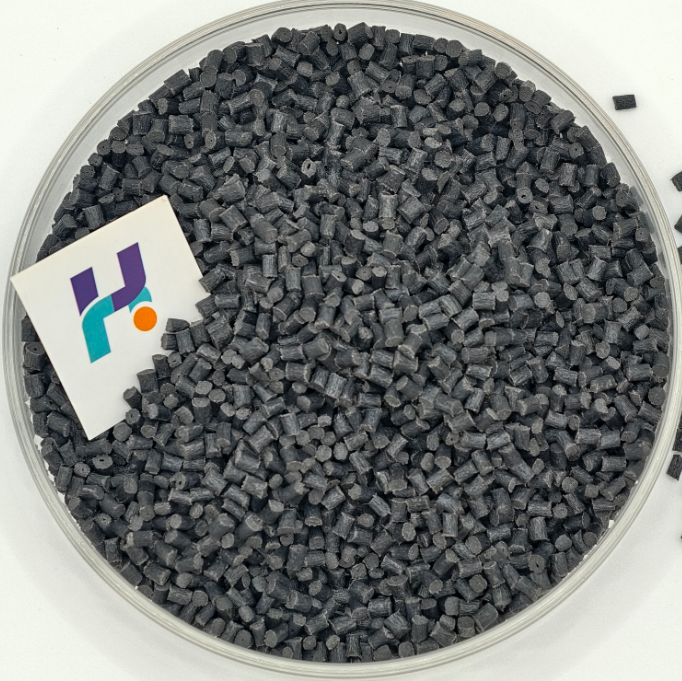
PP TD30 is a polypropylene compound filled with 30% lamellar talc, engineered for applications requiring higher stiffness, superior dimensional stability, and enhanced thermal rigidity compared with PP TD20. It is widely used in automotive interior and appliance components where flatness, shape retention, and long-term geometric stability are more critical than impact-dominated strength.
Why PP TD30 Exists (Engineering Positioning)
PP TD30 exists for designs where PP TD20 reaches its stiffness limit, but glass fiber reinforced PP still introduces unacceptable warpage, anisotropy, surface defects, or processing complexity.
It occupies a higher-control engineering zone:
-
Significantly stiffer than PP TD20
-
More dimensionally stable than PP GF in large flat parts
-
More predictable and isotropic than fiber-reinforced systems
-
More cost-efficient than over-mineralized PP compounds
PP TD30 is chosen when:
-
Flatness tolerance is extremely tight
-
Thermal deformation must be minimized
-
Large or thin-wall parts must hold geometry
-
Surface appearance cannot tolerate fiber read-through
-
Structural loads are moderate but rigidity-driven
PP TD30 is a rigidity- and geometry-control material, not a load-bearing substitute for glass fiber PP.
Material Composition & Reinforcement Strategy

Material Overview
-
Base Polymer: Polypropylene (PP)
-
Filler Type: Talc (lamellar mineral)
-
Filler Content: 30%
-
Key Effect: Maximum stiffness + minimum shrinkage within talc PP systems
Optional Additives
-
Heat stabilizers
-
UV stabilizers
-
Controlled impact modifiers
-
Color concentrates
Colors: Natural, black, customized
At 30% loading, talc platelets form a dense, isotropic reinforcement network that restricts polymer chain mobility more effectively than TD20, while still avoiding fiber-induced orientation effects.
Core Performance Advantages
Dimensional & Thermal Advantages
High Rigidity vs PP TD20
Higher flexural modulus significantly improves shape retention.
Excellent Flatness & Warpage Control
Lamellar talc minimizes differential shrinkage across flow directions.
Improved Heat Deflection Temperature
Maintains geometry under sustained thermal exposure.
Extremely Stable Shrinkage Behavior
Ideal for large, geometry-sensitive components.
Manufacturing & Cost Advantages
Superior Surface Quality vs PP GF
No fiber read-through or surface roughness.
Lower Tool Wear Than Glass Fiber Systems
Reduced abrasion extends mold life.
High Process Stability
Consistent melt flow despite higher filler content.
Optimized Cost-to-Rigidity Ratio
Achieves stiffness targets without fiber reinforcement penalties.
PP TD30 maximizes shape control — not tensile dominance.
Typical Application Areas
Automotive
-
Interior structural panels
-
HVAC housings
-
Console frames and trim carriers
-
Battery covers (non-load-bearing)
Selected where PP GF causes unacceptable warpage.
Home Appliances
-
Washing machine structural panels
-
Dishwasher housings
-
Air purifier and HVAC enclosures
Used where flatness, stiffness, and appearance dominate.
Industrial & Consumer Products
-
Large equipment covers
-
Structural housings
-
Flat-panel injection-molded shells
Ideal for high-rigidity, geometry-driven designs.

Processing Guidelines (Injection Molding)
Typical Processing Parameters
-
Melt Temperature: 200–240 °C
-
Mold Temperature: 30–60 °C
-
Drying: Not required
-
Injection Speed: Medium
-
Shrinkage: ~0.3–0.6% (uniform)
Gate design should focus on balanced flow paths rather than fiber orientation control.
PP TD30 vs Other PP Reinforcement Systems
| Material | Stiffness | Warpage Control | Surface Quality | Cost |
|---|---|---|---|---|
| Unfilled PP | Low | Low | Excellent | Lowest |
| PP TD20 | Medium | Excellent | Excellent | Low |
| PP TD30 | High | Excellent | Excellent | Medium |
| PP GF20 | Very High | Medium–Low | Medium | Medium |
| High-Mineral PP | High | Medium | Medium | Medium |
If rigidity + flatness matter more than load strength → PP TD30 wins.
Typical Technical Data (Reference Values)
| Property | Test Standard | Typical Value |
|---|---|---|
| Density | ISO 1183 | 1.10–1.15 g/cm³ |
| Tensile Strength | ISO 527 | 32–40 MPa |
| Flexural Modulus | ISO 178 | 2,800–3,400 MPa |
| Notched Izod Impact | ISO 180 | 2.5–4.5 kJ/m² |
| Heat Deflection Temp. | ISO 75 | 130–145 °C |
| Mold Shrinkage | — | 0.3–0.6% |
Frequently Asked Questions
Q1: When should PP TD30 be selected instead of PP TD20?
When higher rigidity and tighter flatness control are required.
Q2: Does PP TD30 replace glass fiber reinforced PP?
No. It replaces PP GF only in moderate-load applications where geometry dominates.
Q3: Is PP TD30 suitable for large flat injection-molded parts?
Yes. It is especially effective for large panels requiring dimensional precision.
Q4: Does higher talc content reduce impact strength?
Slightly, but this can be managed with controlled impact modification.
Q5: Is PP TD30 cost-effective for mass production?
Yes. It offers one of the best rigidity-to-cost ratios for non-fiber PP systems.
PP TD30 is often misclassified as “overfilled PP.” In reality, it is a precision rigidity-control material. When flatness, stiffness, and thermal stability define success, PP TD30 frequently outperforms fiber-reinforced alternatives with fewer downstream risks.