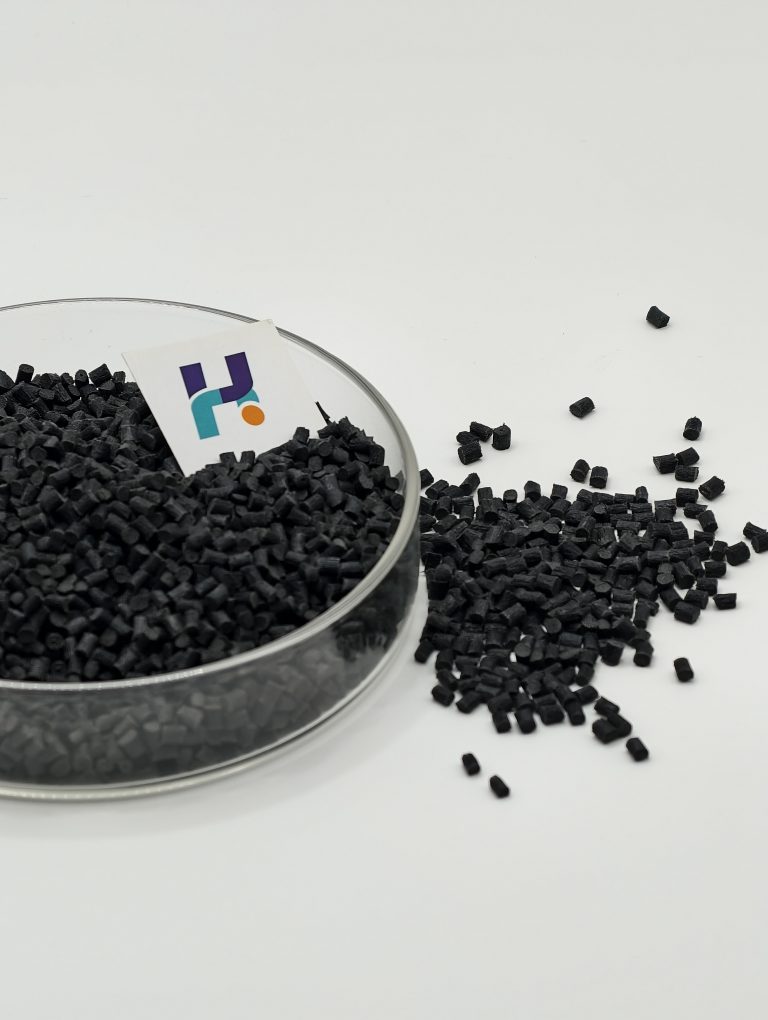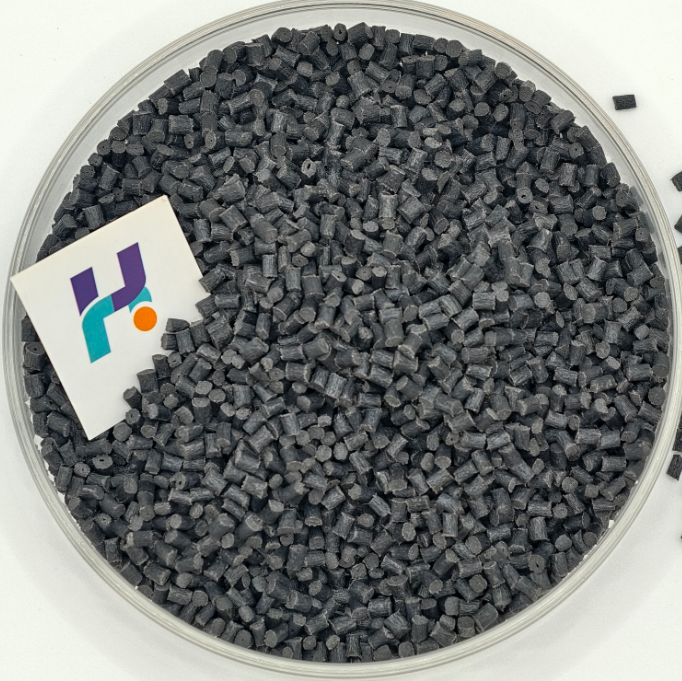
Flame Retardant Polyoxymethylene (POM)
Fire-Resistant Acetal for Precision & Motion Components
Flame Retardant POM is developed for applications where mechanical motion, dimensional precision, and fire safety must coexist. Through the integration of special flame retardant systems, POM gains flame resistance while maintaining its inherent advantages: low coefficient of friction, excellent wear resistance, and high stiffness.
Compared with flame-retardant PP, this material offers far superior mechanical precision and wear behavior. Compared with flame-retardant PA, it provides lower moisture absorption and more stable dimensions, making it suitable for tight-tolerance components.
Material Composition & Flame Retardant System
Material Composition Overview
-
Base Polymer: Polyoxymethylene (POM / Acetal)
-
Flame Retardant System: Halogen-free, low smoke
-
Typical Flame Rating: UL94 V2 / V0 (grade dependent)
-
Optional Additives:
-
Lubricant / low-friction modifiers
-
Heat stabilizer
-
UV stabilizer
-
Impact modifier
-
-
Color Options: Natural, black, customized
This formulation balances motion performance and fire safety.
Core Advantages: Precision, Wear Resistance & Fire Safety
Engineering Advantages
Reliable Flame Retardancy
Meets UL94 V2 or V0 requirements depending on wall thickness and formulation.
Low Friction & Wear Resistance
Maintains excellent sliding behavior and long service life.
High Dimensional Stability
Extremely low moisture absorption ensures tight tolerances.
High Mechanical Strength
Suitable for load-bearing and moving components.
Chemical Resistance
Resistant to fuels, oils, solvents, and cleaning agents.
Manufacturing & Commercial Advantages
Precision Injection Molding
Excellent flow and low shrinkage variation.
Stable Performance in Motion Systems
Consistent friction and wear properties across batches.
Long Service Life
Reduced maintenance and replacement frequency.
Fire Safety without Sacrificing Function
Unlike many FR plastics, key mechanical properties are preserved.
Typical Application Areas
Electrical & Electronic Mechanisms
-
Switch mechanisms
-
Actuator components
-
Internal moving parts
Automotive Components
-
Gear wheels
-
Sliding guides
-
Precision brackets
Industrial & Consumer Equipment
-
Mechanical assemblies
-
Functional moving parts
-
Precision housings

Switch mechanisms |
|
|


Processing Performance & Injection Molding Guidelines
Typical Processing Parameters
-
Melt Temperature: 190–215°C
-
Mold Temperature: 80–110°C
-
Drying: 80°C for 2–4 hours
-
Injection Speed: Medium
-
Shrinkage: 1.8–2.2%
Careful thermal management helps protect both flame retardant system and POM matrix.
OEM / ODM Customization Capabilities
Customization Options
-
Flame rating: UL94 V2 / V0
-
Lubricated or self-lubricating grades
-
Impact-modified grades
-
Enhanced wear-resistant formulations
-
Color customization
OEM Support Services
-
Application-based material selection
-
Wear and lifetime optimization
-
Prototype sampling
-
Long-term supply assurance
Technical Specification – Flame Retardant POM (Typical)
| Property | Test Standard | Typical Value |
|---|---|---|
| Density | ISO 1183 | 1.40–1.45 g/cm³ |
| Tensile Strength | ISO 527 | 60–75 MPa |
| Flexural Strength | ISO 178 | 90–110 MPa |
| Flexural Modulus | ISO 178 | 2,500–3,000 MPa |
| Notched Izod Impact | ISO 180 | 5–8 kJ/m² |
| Heat Deflection Temp. | ISO 75 | 150–165°C |
| Flame Rating | UL94 | V2 / V0 |
| Coefficient of Friction | — | Low |
FAQ
Q1: How does flame retardant POM differ from standard POM?
It adds fire resistance while maintaining low friction and dimensional stability.
Q2: Is flame retardant POM suitable for moving parts?
Yes. It is specifically designed for motion and precision components.
Q3: How does it compare to flame retardant PA?
POM absorbs far less moisture and offers better dimensional stability.
Q4: Can flame retardant POM meet UL94 V0?
Yes, depending on formulation and wall thickness.
Q5: Can it be customized for wear performance?
Yes. Lubrication and wear-resistance can be tailored.