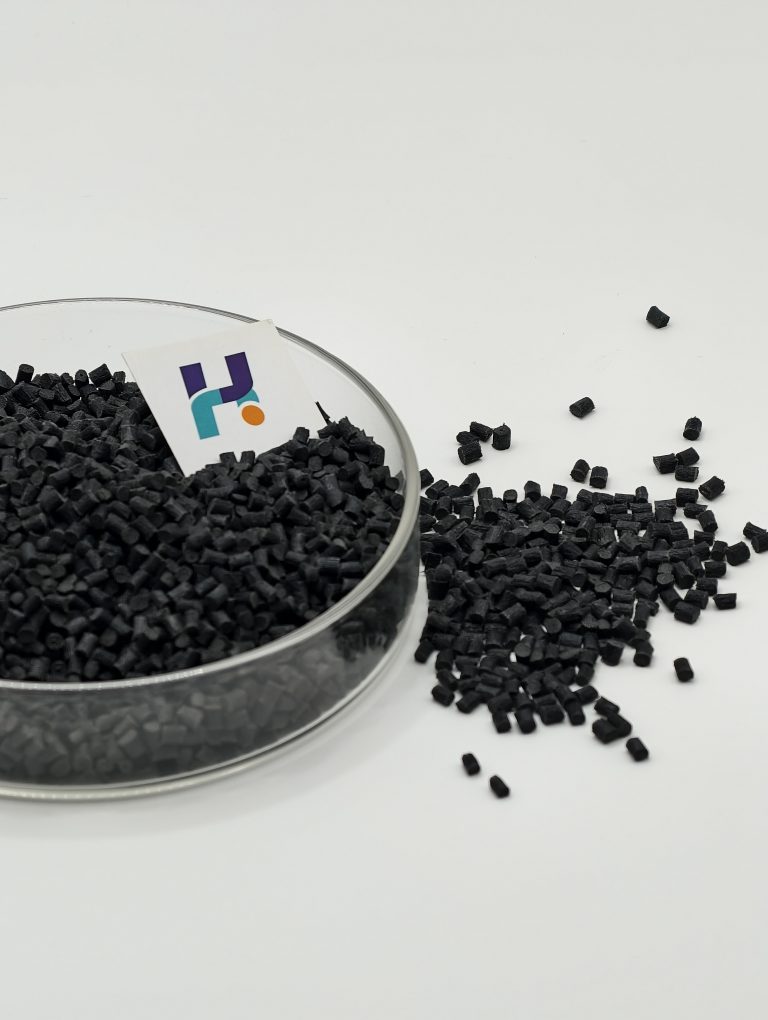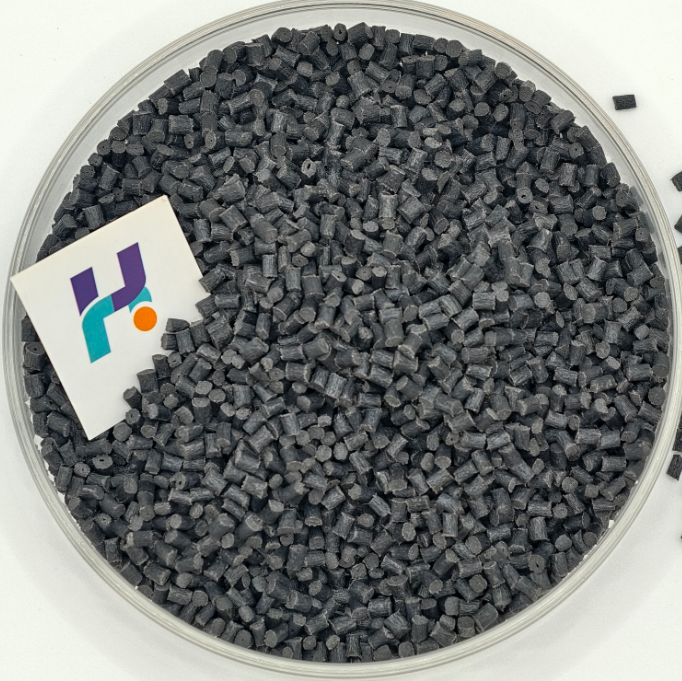
Glass Fiber Reinforced PP GF25
25% Glass Fiber Reinforced Polypropylene for High-Stiffness Structural Parts
PP GF25 represents the upper structural tier within glass fiber reinforced polypropylene. By increasing glass fiber content to 25%, this grade shifts PP from “semi-structural” into rigidity-dominant engineering territory, suitable for components where deflection control, shape retention, and mechanical predictability are more important than impact flexibility.
Compared with PP GF20, GF25 further suppresses creep and elastic deformation under load. Compared with PA-based materials, PP GF25 still offers advantages in weight, chemical resistance, and moisture stability, while approaching nylon-like stiffness in selected applications.
Material Composition & High-Fiber Reinforcement Strategy
Material Composition Overview
-
Base Polymer: Polypropylene (PP)
-
Glass Fiber Content: 25% chopped glass fiber
-
Fiber Type: E-glass
-
Optional Additives:
-
Heat stabilizer
-
UV stabilizer
-
Anti-aging additives
-
Processing lubricants
-
-
Color Options: Natural, black, customized
This formulation pushes PP toward its maximum practical stiffness envelope.
Core Advantages: Rigidity Dominance & Structural Control
Engineering Advantages
Maximum Rigidity within PP Family
Significantly higher flexural modulus than GF20, enabling stronger resistance to bending.
Superior Load Retention
Excellent performance under continuous mechanical load with reduced creep.
Tight Dimensional Stability
Minimal deformation during service life, even in large or thin-walled parts.
Excellent Chemical Resistance
Fully retains polypropylene’s resistance to aggressive chemicals and cleaning agents.
Zero Moisture Sensitivity
Mechanical properties remain stable regardless of humidity or water exposure.
Manufacturing & Commercial Advantages
Designed for Structural-Dominant PP Parts
Used where GF20 begins to show elastic deformation or tolerance drift.
Predictable Mechanical Behavior
More stable stiffness across production batches and operating conditions.
Weight & Cost Advantage over Nylon
Delivers high rigidity without nylon’s moisture sensitivity or higher density.
Design Consolidation Potential
Higher stiffness can allow rib reduction or wall-thickness optimization.
Typical Application Areas
Automotive Applications
-
Structural brackets
-
Battery system carriers
-
Reinforced underbody components
Home Appliances
-
Load-bearing internal frames
-
Structural support panels
-
Reinforced mounting components
Industrial Equipment
-
Structural housings
-
Machine support elements
-
Rigid plastic frames
|
|
|
|


Processing Performance & Injection Molding Guidelines
Typical Processing Parameters
-
Melt Temperature: 220–260°C
-
Mold Temperature: 50–80°C
-
Drying: Not required under normal storage
-
Injection Speed: Medium
-
Shrinkage: 0.3–0.6% (directional)
Gate positioning and flow orientation are critical for optimal fiber alignment.
OEM / ODM Customization Capabilities
Customization Options
-
Glass fiber content: GF20 / GF25 / GF30
-
UV-resistant outdoor grades
-
Heat-stabilized formulations
-
Surface-optimized grades
-
Color customization
OEM Support Services
-
Structural simulation support
-
GF20 vs GF25 selection guidance
-
Prototype sampling
-
Long-term supply assurance
Technical Specification – PP GF25
| Property | Test Standard | Typical Value |
|---|---|---|
| Density | ISO 1183 | 1.13–1.18 g/cm³ |
| Tensile Strength | ISO 527 | 75–90 MPa |
| Flexural Strength | ISO 178 | 115–135 MPa |
| Flexural Modulus | ISO 178 | 5,000–6,200 MPa |
| Notched Izod Impact | ISO 180 | 2.5–4.0 kJ/m² |
| Heat Deflection Temp. | ISO 75 | 150–170°C |
| Shrinkage | — | 0.3–0.6% |
| Chemical Resistance | — | Excellent |
FAQ
Q1: When should PP GF25 be selected over PP GF20?
When stiffness, load retention, and dimensional control are the primary design drivers.
Q2: Does PP GF25 replace nylon materials?
In rigidity-focused applications where moisture resistance and weight matter, yes.
Q3: Is impact resistance lower than GF20?
Slightly, but this trade-off enables higher structural predictability.
Q4: Is PP GF25 suitable for large parts?
Yes, especially for large components requiring tight tolerance control.
Q5: Can PP GF25 be customized?
Yes. Fiber content, UV resistance, heat stability, and surface properties can be adjusted.