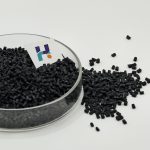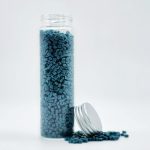
ABS-GF (glass fiber reinforced ABS) is “good” when the design needs more stiffness and dimensional stability than ABS—without moving to higher-cost or higher-moisture materials.
Its value lies in controlling deformation and creep in semi-structural parts, with known trade-offs in impact toughness, surface appearance, and warpage management.
How Good Is ABS-GF?
ABS-GF is best judged by what problem it solves. It is not a universal upgrade over ABS; it is a targeted reinforcement choice. When parts feel too flexible, bosses creep, or tolerances drift with plain ABS, ABS-GF often delivers a practical step up—if the design and process are prepared for fiber effects.
1) Stiffness and Shape Retention: Where ABS-GF Is Strong
The primary improvement from glass fiber is modulus. ABS-GF parts deflect less under load and hold geometry better over time.
- noticeably higher flexural stiffness vs ABS
- improved screw boss and rib performance
- reduced creep under moderate loads
For frames, brackets, and housings that must “feel solid,” ABS-GF is often a good fit.
2) Impact Resistance: The Trade-off You Must Accept
Adding glass fiber generally reduces impact toughness compared with unfilled ABS—especially at weld lines or low temperatures.
- higher stiffness, lower energy absorption
- weld-line sensitivity increases with GF%
- impact-modified ABS-GF grades can mitigate (not eliminate) this
If drop impact or snap resilience is the dominant failure mode, ABS-GF may be the wrong choice.
3) Warpage and Anisotropy: Manageable, Not Free
Glass fibers orient with flow, creating directional shrinkage. This introduces warpage risk if gating and cooling are not balanced.
Engineering controls:
- gate placement to balance flow paths
- uniform wall thickness and rib design
- balanced cooling circuits
ABS-GF can be dimensionally stable when designed correctly—but it is less forgiving than ABS.
4) Surface Quality and Appearance
Compared with ABS, ABS-GF typically shows:
- lower gloss
- possible fiber read-through on thin walls
- less cosmetic flexibility for high-gloss parts
For visible Class-A surfaces, ABS-GF is rarely ideal unless texture/paint is planned.
5) Processing and Production Stability
ABS-GF is widely injection-moldable, but requires tighter discipline than ABS:
- slightly higher melt viscosity
- attention to venting (avoid burn marks)
- controlled shear to limit fiber breakage
Once tuned, ABS-GF can run stably in high-volume production.
6) How ABS-GF Compares to Alternatives
| Material | Best At | Main Limitation |
|---|---|---|
| ABS | Toughness, surface quality | Low stiffness, creep |
| ABS-GF | Stiffness, shape retention | Impact, warpage, surface |
| PC-ABS | Balanced impact & heat | Lower stiffness than ABS-GF |
| PA-GF | Structural load, heat | Moisture sensitivity, cost |
ABS-GF often sits between cosmetic ABS and structural PA-GF—useful for semi-structural roles.
7) Typical Applications Where ABS-GF Is “Good Enough”
- industrial and appliance housings
- frames, brackets, and mounts
- parts requiring strong screw retention
- moderate-load structural covers
ABS-GF shines where stiffness matters more than drop impact or cosmetic gloss.
Material Selection Notes (Internal References)
For comparison or alternatives, engineers commonly evaluate:
For part-specific guidance, contact our engineering team:
https://www.yjhxm.com/contact/
Frequently Asked Questions (FAQ)
Q1: Is ABS-GF stronger than ABS?
It is stiffer and resists deformation better, but impact toughness is usually lower.
Q2: Does ABS-GF warp easily?
It can, due to fiber orientation. Proper gate and cooling design are essential.
Q3: Is ABS-GF suitable for visible parts?
Generally no for high-gloss surfaces, unless textured or painted.
Q4: Can ABS-GF replace metal?
In some low-to-moderate load cases, yes—after creep and temperature validation.
Q5: What GF% is common in ABS-GF?
Typical ranges are GF10–GF30, selected based on stiffness targets and warpage tolerance.
Conclusion
ABS-GF is “good” when the design problem is flexibility and creep—not impact or cosmetics. Used deliberately, it delivers a practical stiffness upgrade over ABS at reasonable cost. Used indiscriminately, it introduces warpage and toughness risks. The right answer depends on which failure mode you are trying to control.
Explore our engineering plastics portfolio:
https://www.yjhxm.com/ ·
About Us ·
Contact