Mineral Reinforced Polypropylene
Dimensionally Stable PP for Flat & Large-Scale Molded Parts
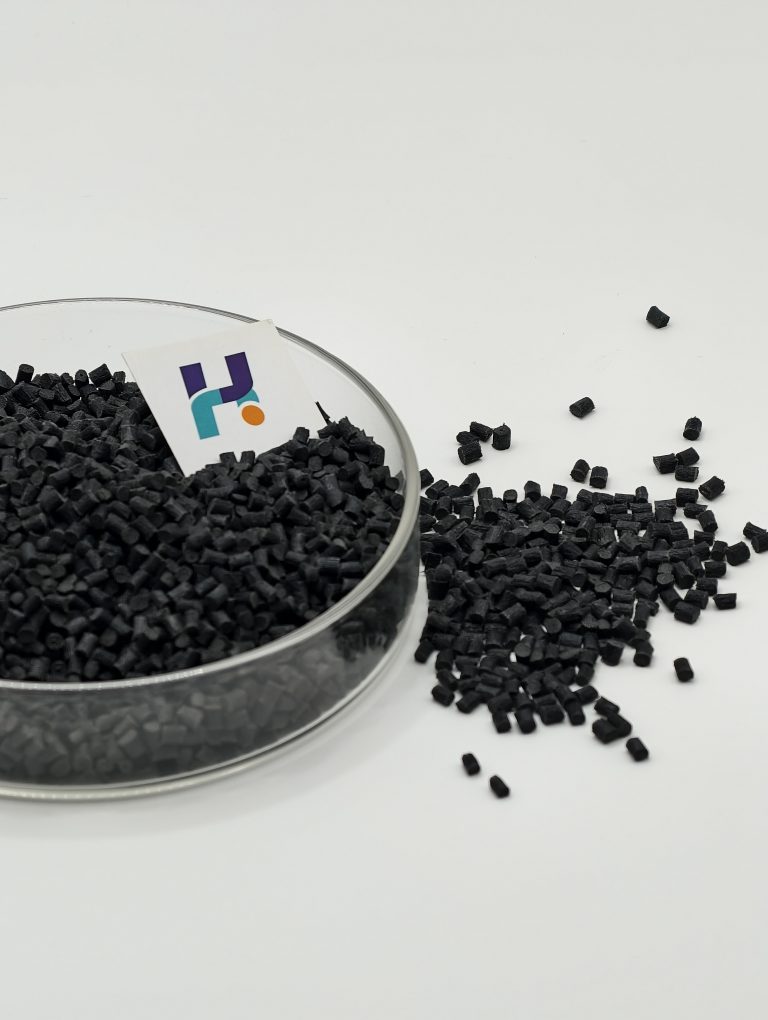
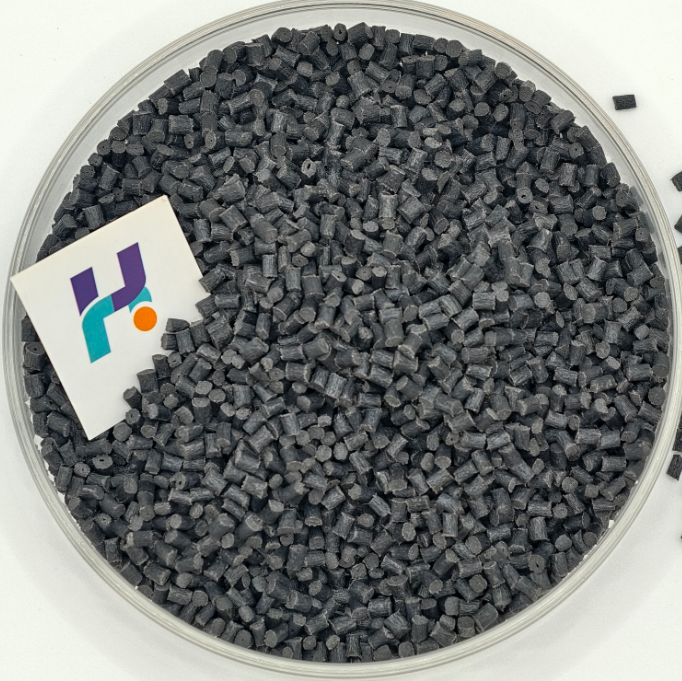
Mineral Reinforced PP is engineered for applications where dimensional control, flatness, and appearance stability are more critical than extreme mechanical strength. By incorporating talc or calcium-based mineral fillers, polypropylene gains significantly improved shrinkage control and warpage resistance, while retaining its inherent chemical resistance, low density, and processing simplicity.
Compared with glass fiber reinforced PP, mineral reinforced PP offers more isotropic shrinkage, smoother surface finish, and lower tooling stress, making it especially suitable for large-area parts, thin-wall designs, and appearance-critical components.
Material Composition & Mineral Reinforcement Strategy
Material Composition Overview
-
Base Polymer: Polypropylene (PP)
-
Reinforcement Type: Mineral fillers (talc / CaCO₃ / blends)
-
Typical Filler Content: 10–40% (grade dependent)
-
Optional Additives:
-
Impact modifier
-
Heat stabilizer
-
UV stabilizer
-
Processing aids
-
-
Color Options: Natural, black, customized
This formulation shifts PP toward a shape-control–oriented engineering plastic.
Core Advantages: Flatness, Stability & Cost Efficiency
Engineering Advantages
Excellent Warpage Control
Mineral fillers reduce differential shrinkage, improving flatness in large parts.
Isotropic Dimensional Stability
More uniform shrinkage than glass fiber reinforced PP.
Improved Surface Appearance
Smooth surfaces without visible fiber patterns.
Good Heat Resistance Upgrade
Higher heat deflection temperature compared to unfilled PP.
Outstanding Chemical Resistance
Maintains PP’s resistance to detergents, acids, and automotive fluids.
Manufacturing & Commercial Advantages
Lower Tooling Stress
Reduced fiber-induced mold wear compared to GF grades.
Cost-Controlled Reinforcement
Lower material cost than glass fiber reinforced PP.
Easy Processing
Stable melt flow and wide processing window.
Ideal for Large & Thin-Wall Parts
Minimizes deformation after demolding.
Typical Application Areas
|
|
|


Automotive Applications
-
Interior trim panels
-
Door modules
-
Instrument panel structures
Chosen for flatness and appearance stability.
Home Appliances
-
Washing machine housings
-
Refrigerator inner panels
-
Large covers and bases
Preferred where low warpage is critical.
Industrial & Consumer Products
-
Equipment covers
-
Storage bins
-
Large molded housings
Used for cost-sensitive, large-area components.
Processing Performance & Injection Molding Guidelines
Typical Processing Parameters
-
Melt Temperature: 190–230°C
-
Mold Temperature: 30–60°C
-
Drying: Not required
-
Injection Speed: Medium
-
Shrinkage: 0.4–0.8% (low differential)
Compared with GF PP, mineral reinforced PP offers more forgiving molding behavior.
OEM / ODM Customization Capabilities
Customization Options
-
Mineral content: Low / Medium / High filling
-
Talc-based or CaCO₃-based systems
-
Impact-modified grades
-
Heat-stabilized formulations
-
UV-resistant outdoor grades
-
Color customization
OEM Support Services
-
Warpage and shrinkage optimization
-
Material selection vs GF PP comparison
-
Prototype sampling
-
Long-term supply assurance
Technical Specification – Mineral Reinforced PP (Typical)
| Property | Test Standard | Typical Value |
|---|---|---|
| Density | ISO 1183 | 1.05–1.25 g/cm³ |
| Tensile Strength | ISO 527 | 35–55 MPa |
| Flexural Strength | ISO 178 | 60–90 MPa |
| Flexural Modulus | ISO 178 | 2,000–3,500 MPa |
| Notched Izod Impact | ISO 180 | 3–6 kJ/m² |
| Heat Deflection Temp. | ISO 75 | 120–150°C |
| Shrinkage | — | 0.4–0.8% |
| Warpage Control | — | Excellent |
FAQ
Q1: How does mineral reinforced PP differ from glass fiber reinforced PP?
Mineral reinforced PP focuses on flatness, isotropic shrinkage, and surface quality, while GF PP focuses on rigidity and load-bearing strength.
Q2: Is mineral reinforced PP suitable for structural parts?
It is suitable for lightly loaded structures where dimensional stability is more important than stiffness.
Q3: Does mineral filler improve surface appearance?
Yes. Mineral reinforced PP typically offers smoother surfaces without fiber read-through.
Q4: Is mineral reinforced PP cost-effective?
Yes. It is generally more cost-efficient than glass fiber reinforced PP.
Q5: Can mineral reinforced PP be customized?
Yes. Filler type, filler content, impact resistance, and heat stability can be tailored.