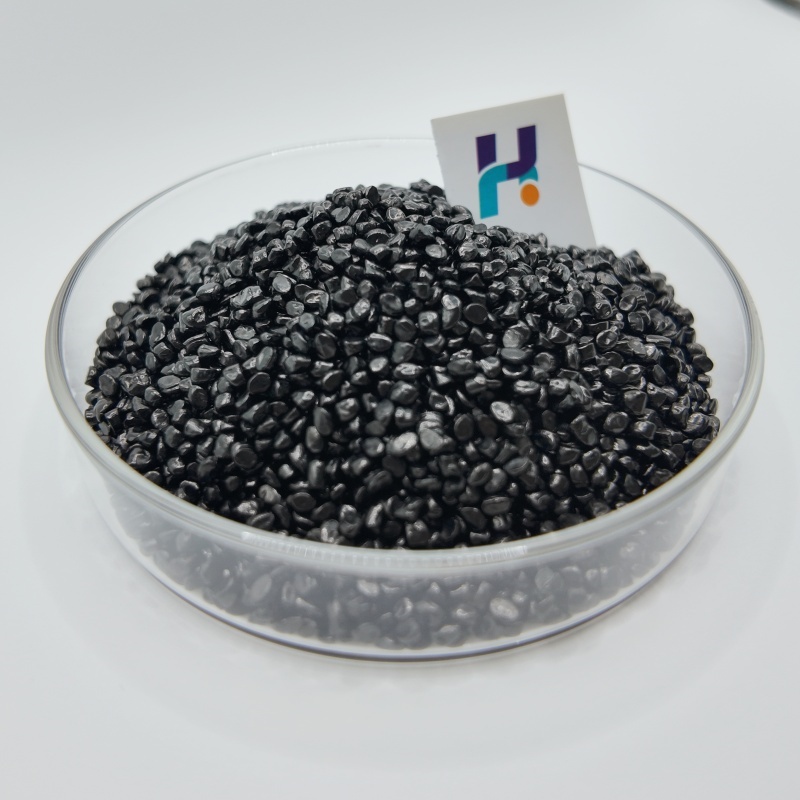
Technical Introduction & Market Positioning
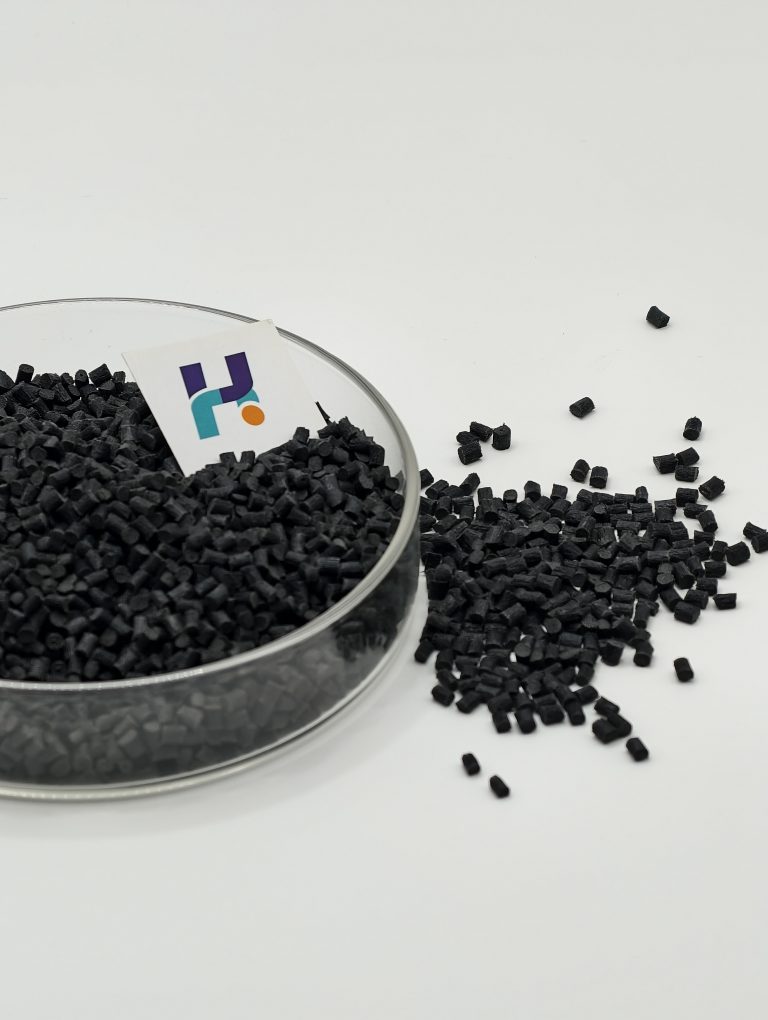
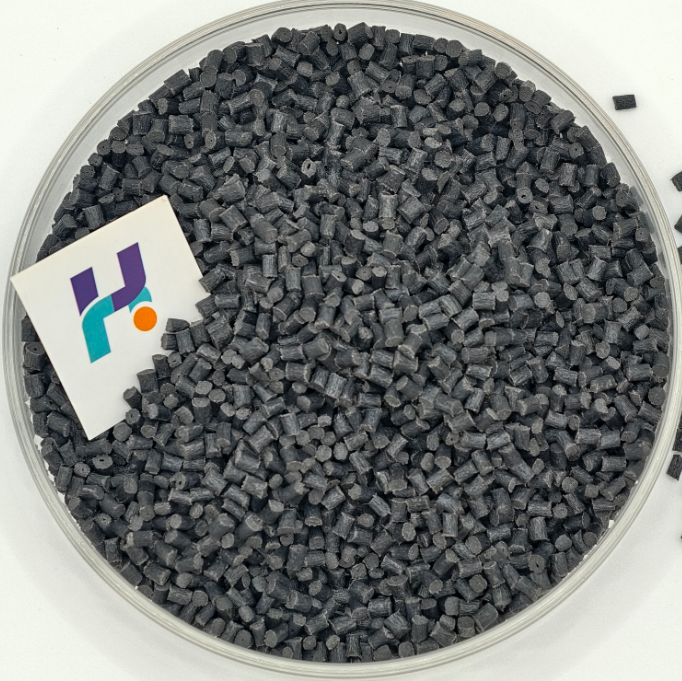
PBT GF55 (55% Glass Fiber Reinforced Polybutylene Terephthalate) is an advanced engineering-grade composite material developed for applications requiring extreme mechanical strength, thermal stability, and long-term dimensional precision.
Compared with conventional PBT GF30 or GF40 materials, GF55 delivers a significant leap in rigidity and load-bearing capability, enabling designers to replace metal or die-cast components while reducing weight and simplifying assembly.
PBT GF55 is widely positioned for:
-
High-load structural parts
-
Precision electrical housings
-
Automotive under-the-hood and body structural components
-
Industrial connectors and frames
Glass Fiber Reinforcement Structure
PBT GF55 is compounded with 55% high-performance chopped glass fibers, uniformly dispersed within the PBT resin matrix using controlled twin-screw extrusion.
This high fiber loading forms a dense internal reinforcement network, delivering:
-
Exceptional tensile and flexural modulus
-
Reduced creep under continuous load
-
Superior dimensional stability across temperature variations
The PBT polymer backbone contributes excellent chemical resistance and electrical insulation, while the glass fiber skeleton ensures mechanical reliability under extreme conditions.
Key Material Advantages

Why Choose PBT GF55?
From an engineering standpoint:
-
Extremely high stiffness and rigidity
-
Excellent heat resistance and thermal aging performance
-
Low moisture absorption compared to PA materials
-
High resistance to fuels, oils, and automotive chemicals
From a commercial & design standpoint:
-
Enables metal replacement for lighter, corrosion-free designs
-
Improves part integration and reduces secondary operations
-
Supports high-precision molding for tight-tolerance components
-
Enhances product lifetime and perceived quality
In-Depth Performance Characteristics
| Property Category | Performance Description |
|---|---|
| Mechanical Strength | Ultra-high tensile and flexural strength suitable for load-bearing parts |
| Thermal Resistance | Maintains structural integrity at elevated continuous temperatures |
| Dimensional Stability | Minimal warpage and shrinkage under complex molding geometries |
| Electrical Properties | Excellent dielectric strength and insulation reliability |
| Chemical Resistance | Resistant to automotive fluids, oils, greases, and solvents |
| Long-Term Durability | Superior creep resistance and fatigue performance |
Industry Applications

PBT GF55 is engineered for structural and functional components where standard engineering plastics are insufficient.
Typical Applications:
-
Automotive:
Structural brackets, sensor housings, motor components, high-load connectors -
Electrical & Electronics:
Power connectors, relay housings, insulating structural frames -
Industrial Equipment:
Mechanical frames, gear housings, load-bearing enclosures -
Appliance & Energy Systems:
Structural supports requiring heat and electrical stability
Manufacturing Process & Quality Control
PBT GF55 is produced using precision twin-screw compounding technology, ensuring:
-
Stable fiber length retention
-
Uniform dispersion
-
Consistent batch-to-batch performance
Key quality controls include:
-
Melt flow stability monitoring
-
Fiber content verification
-
Mechanical property validation
-
Thermal and electrical performance testing
This ensures suitability for high-volume OEM programs and long-term supply agreements.
OEM Customization Capabilities
PBT GF55 is available with full OEM customization, allowing material performance to be tailored to specific project requirements.
Customizable options include:
-
Fiber orientation optimization
-
Flame retardant grades (UL94 V-0 optional)
-
Heat-stabilized and hydrolysis-resistant formulations
-
Color customization
-
Processing optimization for specific molds
OEM support enables shorter development cycles, lower total system cost, and faster time-to-market.
Technical Specifications
| Parameter | Typical Value |
|---|---|
| Glass Fiber Content | 55% |
| Base Polymer | PBT |
| Density | High (typical for GF55 composites) |
| Tensile Modulus | Extremely High |
| Heat Deflection Temperature | High (application dependent) |
| Flammability | Optional UL94 grades |
| Processing Method | Injection molding |
Note: Values may vary based on customized formulations.
Commercial FAQ
Is PBT GF55 suitable for metal replacement?
Yes. Its stiffness and strength make it ideal for replacing aluminum or zinc die-cast parts in many structural applications.
How does it compare with PA GF materials?
PBT GF55 offers lower moisture absorption, better dimensional stability, and superior electrical insulation compared to PA-based composites.
Can properties be customized for my project?
Absolutely. OEM-grade customization is available to match mechanical, thermal, flame-retardant, or processing requirements.
Is it suitable for high-volume production?
Yes. It is engineered for stable, repeatable processing in mass production environments.
Marketing-Oriented Conclusion
PBT GF55 is not just a high glass fiber material—it is a strategic engineering solution for manufacturers seeking stronger, lighter, and more reliable components.
By combining exceptional mechanical performance, process stability, and OEM flexibility, PBT GF55 empowers engineers and product designers to push boundaries while maintaining cost efficiency and production reliability.