Technical Introduction & Market Positioning
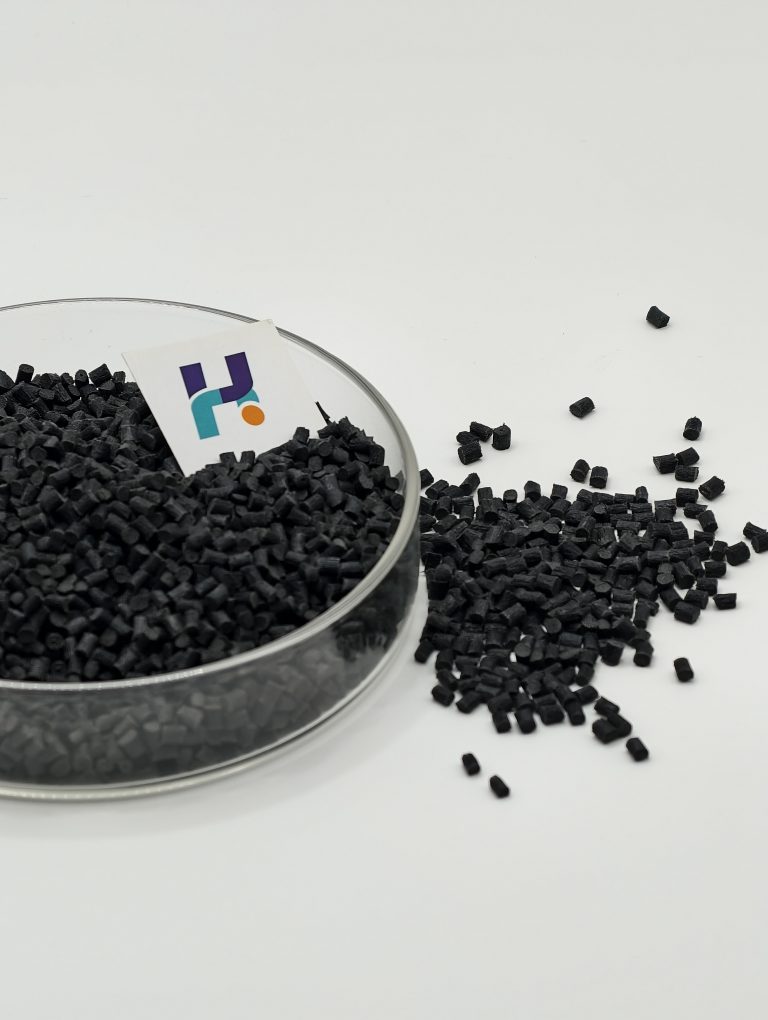
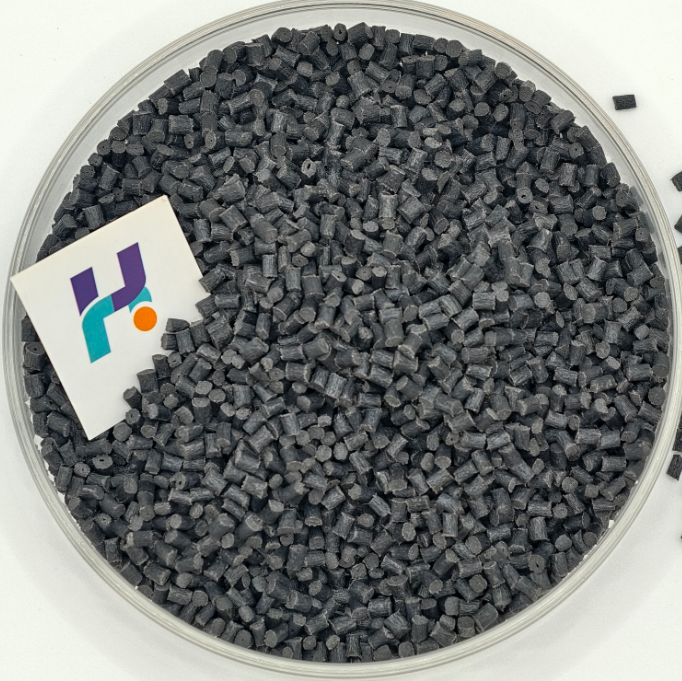
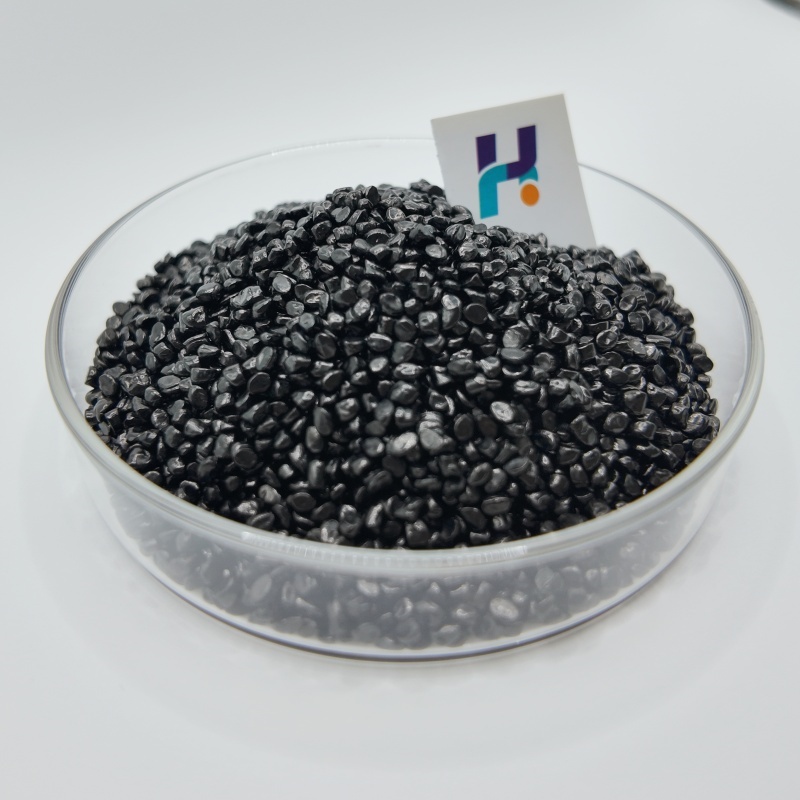
PBTGF50 is a highly glass fiber reinforced engineering thermoplastic developed for demanding applications where conventional plastics fail to meet mechanical and thermal requirements. By incorporating 50% high-strength glass fibers into a PBT matrix, this material delivers metal-like rigidity while maintaining the processing advantages and design freedom of thermoplastics.
From a market perspective, PBTGF50 is positioned as a structural-grade engineering plastic, ideal for OEMs seeking lightweight solutions, cost optimization, and design integration without compromising performance. It is especially suitable for applications where PA6 or PA66 composites face moisture sensitivity or dimensional instability challenges.
Glass Fiber Reinforcement Structure
PBTGF50 is formulated using uniformly dispersed chopped glass fibers, ensuring efficient load transfer between the polymer matrix and reinforcement phase. The high glass fiber content creates a three-dimensional reinforcement network, significantly improving:
-
Tensile modulus
-
Flexural strength
-
Creep resistance
-
Long-term dimensional stability
Compared with lower glass-filled grades (GF15–GF30), PBTGF50 exhibits substantially reduced deformation under continuous mechanical and thermal stress, making it suitable for load-bearing plastic parts.
Material Advantages
PBTGF50 combines engineering-grade performance with commercial practicality, enabling manufacturers to replace metal or over-engineered plastics while simplifying production.
Key Advantages:
-

Comparison diagram – metal vs PBTGF50 lightweight structural component Ultra-High Stiffness & Strength
Suitable for structural housings, brackets, and frames. -
Excellent Heat Resistance
Maintains mechanical integrity under elevated service temperatures. -
Low Moisture Absorption
More dimensionally stable than PA-based composites in humid environments. -
Superior Electrical Insulation
Ideal for electrical and electronic components. -
Chemical & Oil Resistance
Performs reliably in automotive and industrial media exposure.
In-Depth Prformance Characteristics
| Property Category | Performance Description |
|---|---|
| Mechanical | Extremely high tensile and flexural modulus, low creep |
| Thermal | High heat deflection temperature (HDT), stable under thermal cycling |
| Dimensional | Low shrinkage, minimal warpage with proper mold design |
| Electrical | High dielectric strength and insulation stability |
| Chemical | Resistant to oils, fuels, greases, and common solvents |
These characteristics make PBTGF50 particularly suitable for precision-molded, high-load plastic parts where tolerances and long-term reliability are critical.
|
|
|
|


Industry Applications
PBTGF50 is widely adopted across industries requiring structural integrity and thermal stability.
Typical Applications:
-
Automotive: Structural brackets, sensor housings, actuator frames, under-hood components
-
Electrical & Electronics: High-voltage connectors, circuit protection housings, insulation frames
-
Industrial Equipment: Load-bearing enclosures, mechanical supports, gear housings
-
Appliances: Structural parts exposed to heat and mechanical stress
Production Process & Quality System
PBTGF50 is manufactured using advanced twin-screw extrusion compounding, ensuring:
-
Precise glass fiber dispersion
-
Stable fiber length control
-
Consistent batch-to-batch performance
Each production batch undergoes strict quality inspections, including mechanical testing, thermal analysis, and dimensional verification, ensuring suitability for OEM-level mass production.
OEM Customization Capabilities
To support diverse application requirements, PBTGF50 is available with extensive OEM customization options:
-
Glass fiber length & formulation tuning
-
Heat-stabilized or hydrolysis-resistant grades
-
Flame-retardant versions (UL94 optional)
-
Color customization
-
Processing optimization for specific mold designs
This flexibility enables customers to shorten development cycles, reduce secondary operations, and accelerate time-to-market.
Technical Specifications
| Item | Typical Value |
|---|---|
| Reinforcement | 50% Glass Fiber |
| Base Polymer | PBT |
| Density | High (structural grade) |
| Processing Method | Injection molding |
| Shrinkage | Very low |
| Custom Grades | Available upon request |
Note: Typical values are indicative. Final properties depend on formulation and application conditions.
Commercial FAQ
Q1: Is PBTGF50 suitable for metal replacement?
Yes. Its stiffness and strength allow replacement of aluminum or steel in many structural applications.
Q2: How does it compare with PA6 GF50?
PBTGF50 offers better dimensional stability and lower moisture sensitivity.
Q3: Can this material be customized for OEM projects?
Absolutely. Formulation, performance balance, and processing behavior can all be customized.
Q4: Is it suitable for long-term mass production?
Yes. It is designed for stable, repeatable industrial manufacturing.
Marketing-Oriented Conclusion
PBTGF50 is more than a high glass fiber plastic—it is a strategic engineering material that enables manufacturers to rethink structural design, reduce weight, and optimize total system cost. With proven performance, strong OEM support, and flexible customization, it delivers confidence from prototype to mass production.