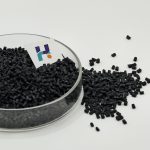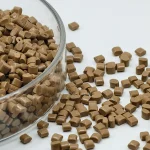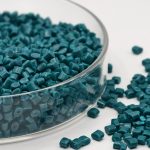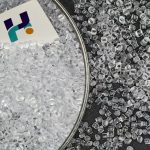
Project Manager: “We need a material for our new appliance housing that can withstand heat and physical stress. Finance says PP Modified Plastics is cheaper. But engineering insists PC is safer. Which one do we choose?”
Materials Engineer: “It depends. PP Modified Plastics is cost-effective and chemically resistant. But if clarity, impact resistance, and heat stability are key, PC Modified Plastics is superior. Let’s compare by application and long-term performance.”
Procurement Lead: “We also need global compliance for FDA and UL standards.”
Engineer: “Then we need to check certifications and supplier data before shortlisting. Let’s evaluate both side-by-side.”

Key Differences: Comparison Table
| Criteria | PP Modified Plastics | PC Modified Plastics |
|---|---|---|
| Chemical Resistance | Excellent (acids, bases, solvents) | Moderate |
| Impact Strength | Good | Excellent |
| Transparency | Opaque (can be modified for translucency) | Naturally transparent |
| Temperature Resistance | ~0°C to 100°C | -40°C to 135°C |
| Stiffness & Dimensional Stability | Moderate | High |
| Cost Efficiency | Lower cost | Higher cost |
| Certifications | FDA, RoHS, ISO | UL94, FDA, RoHS, ISO |
| Use Cases | Containers, furniture, auto trim | Lenses, connectors, electronics |
What Makes PP Modified Plastics a Smart Choice?
Raw Material & Production Process
Based on polypropylene (PP) resin modified with fillers like talc, glass fiber, or elastomers.
Manufactured using melt compounding for enhanced impact strength and temperature resistance.
High recyclability; conforms to eco-friendly packaging and automotive regulations.
Benefits Over Unmodified PP
Increased rigidity with mineral fillers.
Improved thermal stability for automotive under-hood applications.
Greater compatibility with overmolding and other multi-material assemblies.
Ideal Use Cases
HVAC components, dishwasher parts, bumpers, storage containers.
Excellent for consumer goods and automotive interiors.
Strong candidate for cost-driven OEMs seeking a balance of performance and economy.
Why Choose PC Modified Plastics for Performance-Critical Applications?
Raw Material & Production Process
Derived from polycarbonate (PC) blended with ABS, PBT, or silicone modifiers.
Uses co-extrusion or twin-screw compounding to enhance impact and thermal performance.
Known for optical clarity, dimensional precision, and flame retardancy.
Key Advantages Over Traditional PC
Higher flowability for precision molding.
Maintains clarity even after UV exposure with stabilizers.
Enhanced flame resistance (UL94 V-0 rated) when halogen-free FR agents are used.
Best-Fit Applications
LED light covers, helmets, medical housings.
Structural electronic components, automotive instrument panels.
Preferred by industries needing aesthetic + structural performance.

Expert Opinions: Industry Trends & Insights
“PP modified plastics are seeing increased adoption in consumer durables due to regulatory bans on halogenated plastics. Meanwhile, PC modified grades are being used more in medical and electronics because of their dimensional precision and clarity.”
— Dr. Alex Wang, Polymer Scientist, Tsinghua Materials Research Lab
“In hybrid vehicle production, PP-modified components reduced weight by 15% over traditional ABS, while PC blends remained essential for battery casings.”
— Irene Schmitt, Sr. Materials Engineer, Bosch Mobility Solutions
“When clarity and strength are both needed, nothing beats PC. But for volume production, modified PP wins on cost per cycle.”
— Material Selection Whitepaper, Fraunhofer Institute, 2024
Scientific Data You Should Know
- PP Modified GF30 shows impact strength > 60 kJ/m2 and flexural modulus up to 3500 MPa.
- PC/ABS blends demonstrate notched Izod impact resistance > 700 J/m at room temp.
- PC’s Vicat softening point ~145°C vs. PP Modified ~110°C.
- RoHS and FDA-compliant PC modified grades have less than 0.01% heavy metals.
Case Studies: Real-World Use Cases
Case 1: Automotive Console Parts (PP Modified)
- A major Japanese OEM switched from ABS to PP+Talc 20% to save 18% cost and meet VOC emission limits. Result: Lower cabin odor, better recyclability.
Case 2: Medical Equipment Housings (PC Modified)
- A German medtech firm adopted PC/ABS UL94 V0 blends for diagnostic devices. Result: Achieved UL compliance, sterilization compatibility, and long-term clarity.
Case 3: Transparent LED Covers (PC Modified)
- A Taiwanese lighting brand used UV-stabilized PC to ensure clarity over 5 years under outdoor exposure. Result: No yellowing, better customer satisfaction.

FAQs
1. Is PC better than PP for injection molding?
PC offers better precision and stability, while PP is more cost-efficient and has better chemical resistance.
2. Can PP modified plastics withstand UV exposure?
Yes, with the right stabilizers. However, PC performs better for long-term UV stability.
3. Which is safer for food packaging: PP or PC?
Both can be FDA-compliant. PP is more common due to fewer concerns about BPA.
4. Is PC modified plastic recyclable?
Technically yes, but more difficult than PP due to multi-material blends.
5. What are common fillers in PP and PC modified plastics?
PP: Talc, glass fiber. PC: ABS, PBT, silicone, flame retardants.
Which One Should You Choose?
If your application values cost-efficiency, chemical resistance, and lightweight durability, PP Modified Plastics should be your go-to. For projects requiring impact strength, optical clarity, and dimensional precision, PC Modified Plastics offer superior performance.The smart move is to match material properties with performance demands and regulatory need
In today’s complex engineering and manufacturing environments, the material decision isn’t about the “better” plastic overall—it’s about the right one for the job. PP and PC modified plastics cater to distinct performance envelopes.Polypropylene modifications dominate when resistance to chemicals, environmental stress cracking, and recyclability are critical. Their lower density also supports light-weighting initiatives, especially in automotive and consumer goods. Additives like talc, glass fiber, or elastomers offer a wide design space for engineers optimizing cost, strength, and moldability.
Polycarbonate modifications thrive where clarity, toughness, and thermal resistance intersect. Transparent housings, safety shields, and electronics casings require a mix of mechanical integrity and aesthetics. PC modified grades, with their superior UL ratings and impact data, also align with regulatory-heavy sectors such as medical and aviation.
“Think of PP as your adaptable workhorse, especially when regulatory compliance and cost efficiency matter. PC is your performance athlete—high-impact, high-temperature, and visually stunning,” says Dr. Sunil Nair, Lead Polymer Consultant, International Journal of Polymer Engineering (IJPE).
Ultimately, your decision should be application-led. Consider load conditions, environmental exposure, optical needs, and compliance standards. When in doubt, run mechanical tests or consult with your supplier for datasheets.