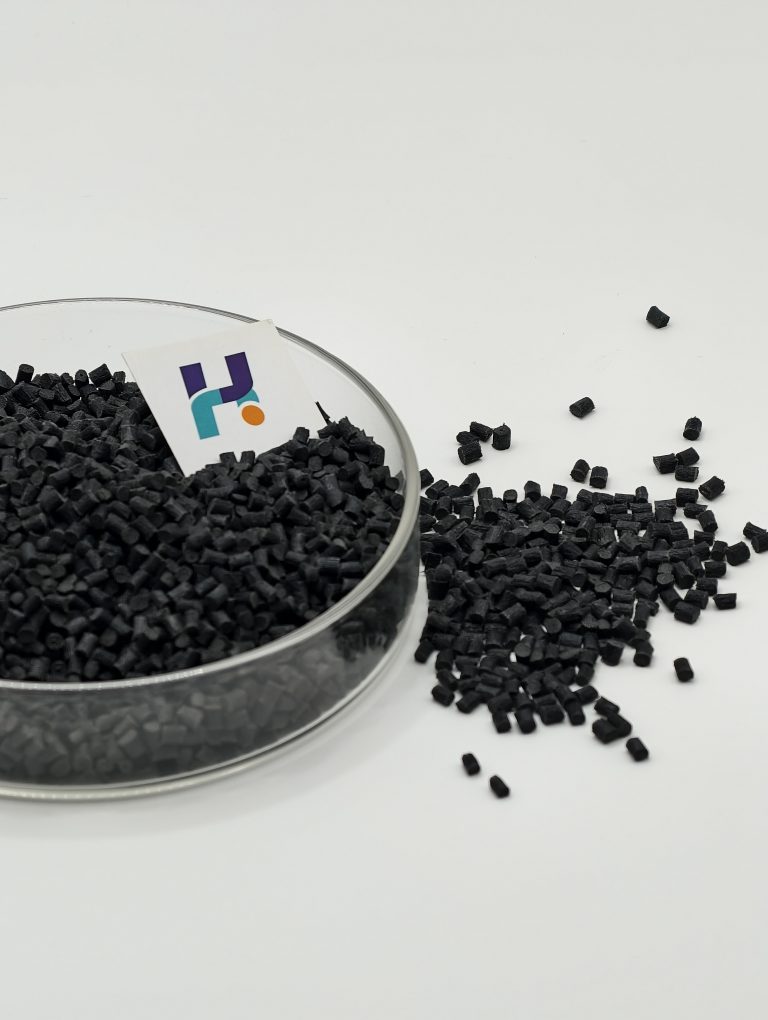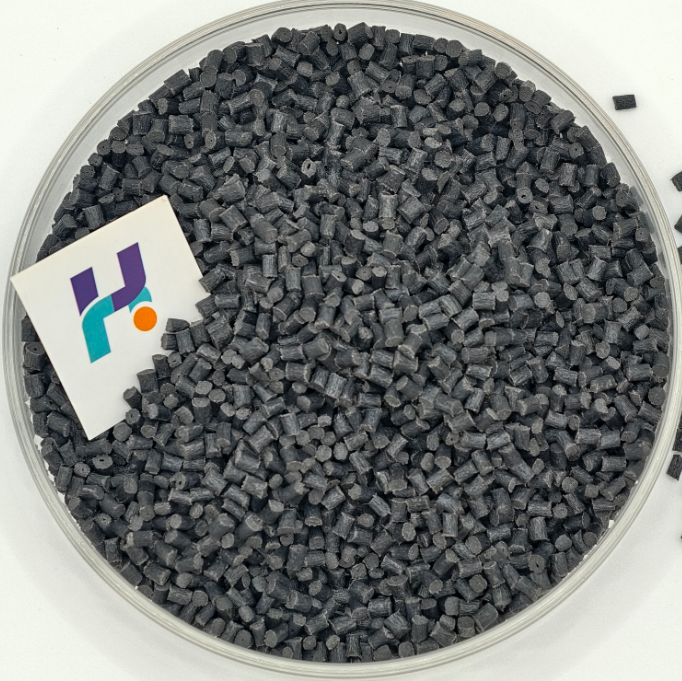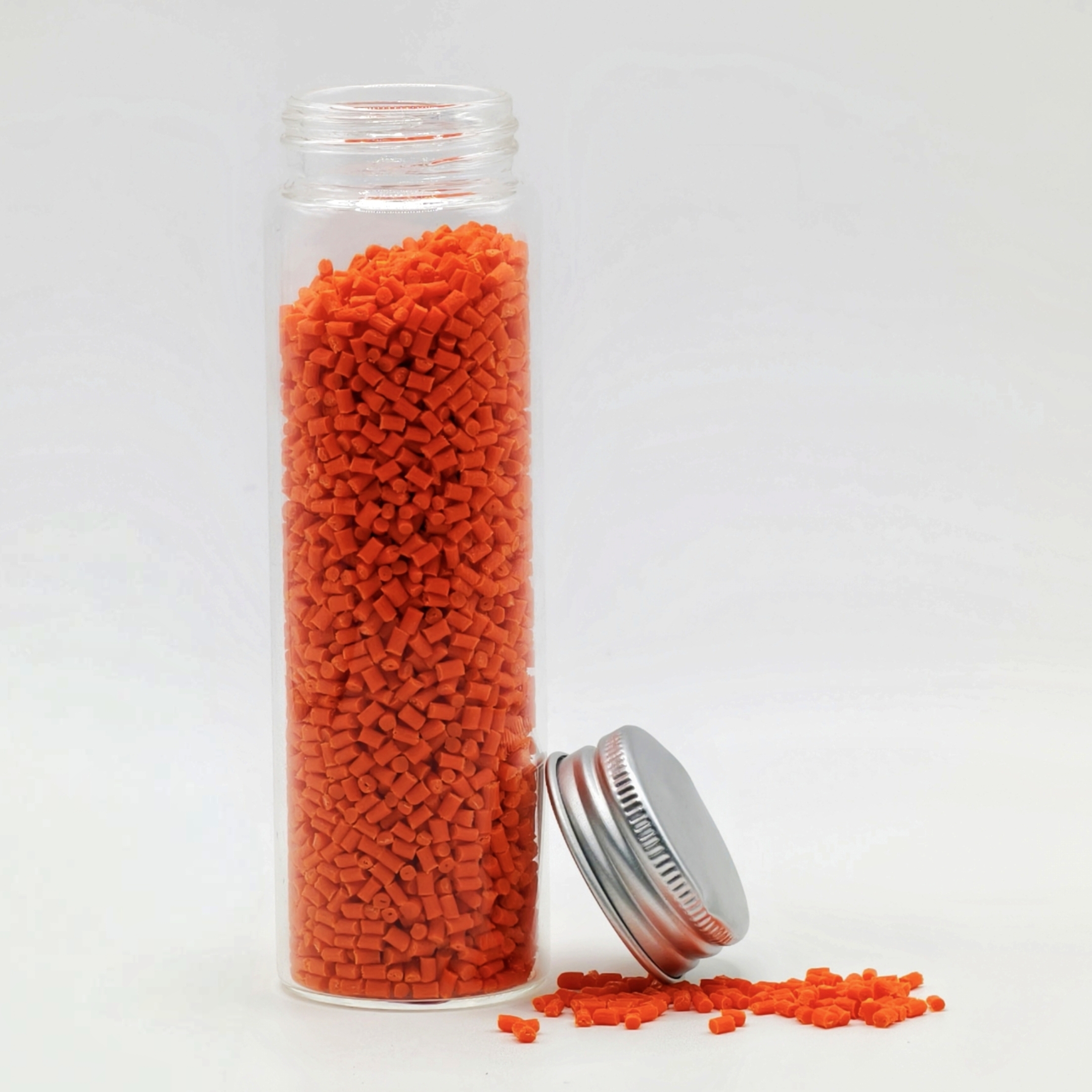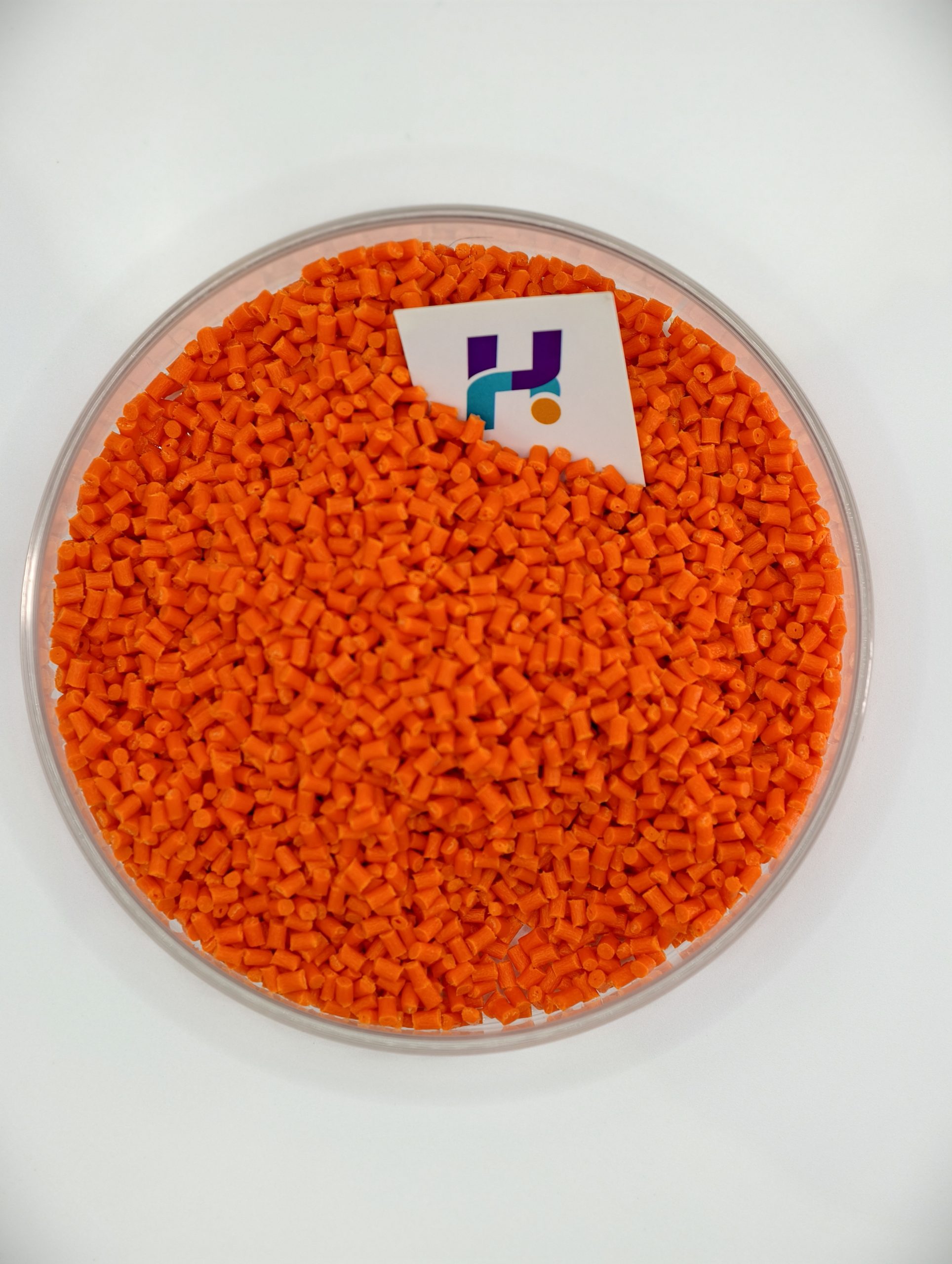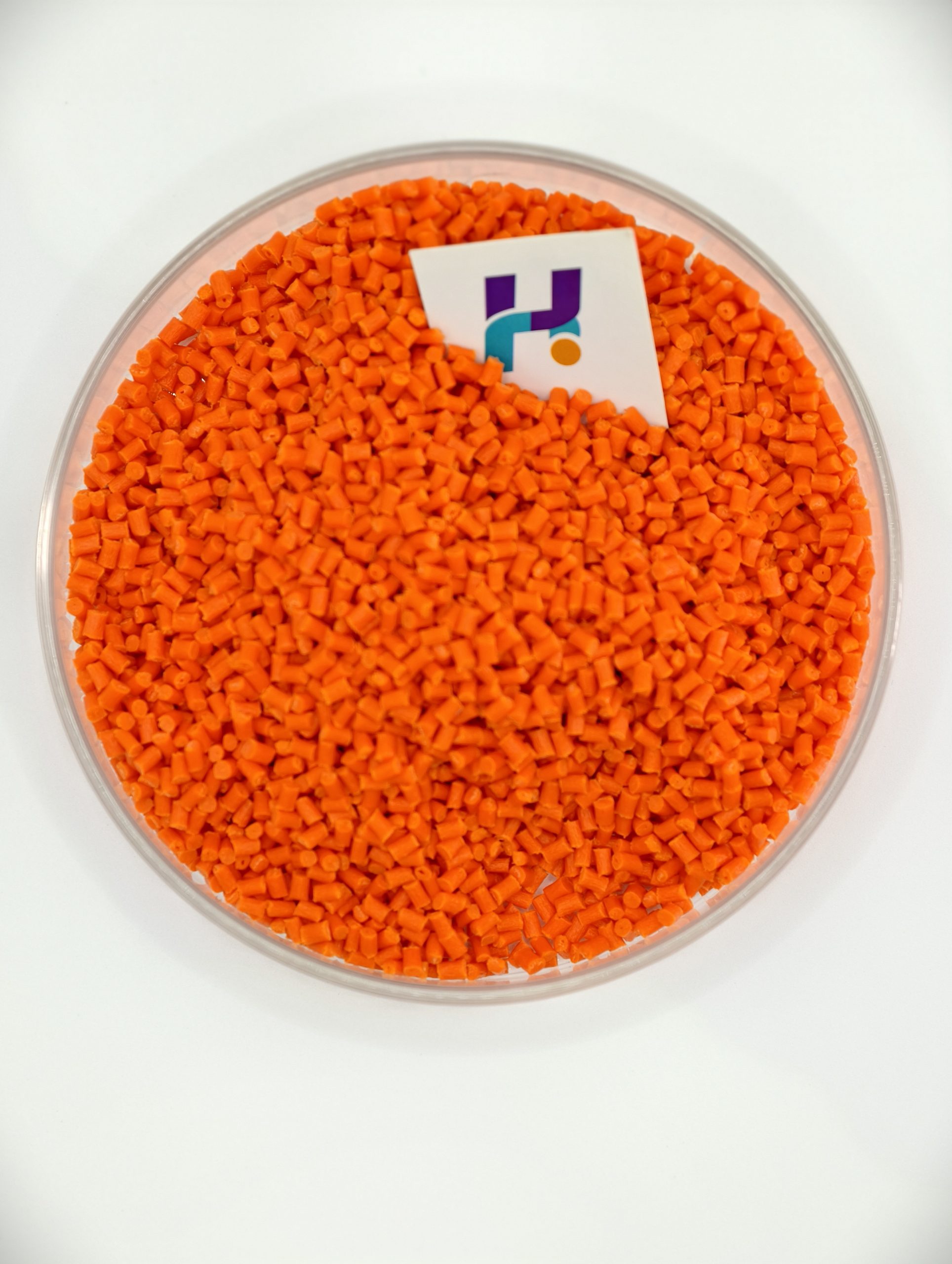
High rigidity + heat stability, tuned for dimensional control—when GF20 is not enough and GF30 is too sensitive.
If you’re launching an ABS GF series, GF25 is the grade that often converts buyers who say:
-
“GF20 improved it, but the part still flexes.”
-
“We want more stiffness, but GF30 scares us on warpage and surface.”
-
“Hot-soak passes in trials, then the gap shifts in mass production.”
ABS GF25 is made for those “in-between” programs—where you need structural behavior, but still want a workable molding window.
Yongjinhong ABS GF25
ABS GF25 is an ABS base matrix reinforced with ~25% glass fiber, compounded for injection molding with dispersion control and a stability package that targets rigidity + heat performance + dimensional repeatability.
Default design intent:
-
Higher stiffness than GF20 for reduced deflection and better support
-
Better hot-soak shape retention for stable gaps and assembly fit
-
More controllable than GF30 in many long-flow or ribbed designs (with proper gate/cooling strategy)
Think of GF25 as a “structural upgrade” that keeps the project manageable.
Yongjinhong ABS GF35 Raw Material
1) “No-flex” rigidity without jumping straight to GF30
Engineering: 25% GF pushes modulus and creep resistance further than GF20, improving long-term dimensional hold.
Buyer value: fewer squeak/rattle risks, tighter assembly feel, less tolerance drift after aging.
2) Heat stability that targets real hot-soak pain points
Engineering: reinforcement and stabilizer packages support resistance to heat deformation (design- and test-dependent).
Buyer value: fewer heat-cycle surprises, less sorting for fit issues, easier long-term program stability.
3) Dimensional control that protects mass production
Engineering: controlled fiber dispersion and shrink-balance focus help reduce variation.
Buyer value: less parameter chasing, fewer mold re-tunes, higher yield across lots.
Best-Fit Applications
|
|
|
|


Automotive Structural Brackets & Carriers
GF25 fits when a bracket or carrier needs structural stiffness and stable geometry—especially under vibration and thermal cycling.
Reinforced Trim Backbones / Support Frames
For longer parts where you want the stiffness benefit but don’t want to pay the full warpage/appearance penalty of GF30.
Precision Structural Frames (including mechanical skeletons)
When consistent geometry is the “feel and function” of the product—GF25 helps reduce long-term drift.
If your part is appearance-first (high-gloss, Class-A), GF25 may still work but typically needs texture/paint strategy or a surface-optimized option.
Performance Target Map
Actual values vary by formulation, color, fiber type, and test standard. Use this as a selection compass.
| Property | ABS GF20 | ABS GF25 | ABS GF30 | What changes for you |
|---|---|---|---|---|
| Rigidity / Modulus | Higher | High++ | Very High | Less flex, more support |
| Heat deformation resistance | More improved | Further improved | Highest | Better hot-soak hold |
| Creep resistance | Better | Better++ | Best | Less long-term drift |
| Warpage sensitivity | Med–High | High (manageable) | Higher | Needs gate/cooling discipline |
| Surface fiber signature | Med–High | Higher | Higher | Surface strategy helps |
Positioning in Your ABS GF Series (GF15 / 20 / 25 / 30)
If you want a clean series story on your site:
-
GF15: balanced upgrade, friendlier molding & appearance
-
GF20: stiffness upgrade with controlled risk (high-demand middle)
-
GF25: bridge grade for structural needs without GF30 sensitivity shock
-
GF30: structural maximum stiffness, most sensitive to anisotropic shrink
This makes GF25 a very “sellable” SKU because it answers a real buyer objection:
“We need more stiffness than GF20, but we don’t want GF30 headaches.”
Injection Molding Guidance
GF25 molds well, but you need repeatability. Warpage is less about pressure and more about orientation + cooling.
Practical starting setup:
-
Drying: recommended for stable appearance and flow
-
Melt temperature: ~230–270°C (optimize for flow vs fiber integrity)
-
Mold temperature: ~70–100°C (stabilizes shrink + weld-line quality)
-
Injection speed: medium-to-high (avoid hesitation; improve knit lines)
-
Packing/holding: stable and repeatable to control shrink without over-stressing
Warpage control checklist:
-
Gate location controls fiber orientation → warpage direction often follows flow
-
Uniform cooling reduces differential shrink more than “higher pack”
-
Avoid sharp thickness transitions; ribs and bosses need disciplined design
-
Proper venting prevents burn and uneven shrink from trapped gas
OEM Customization
focus on 4 practical knobs:
-
Low warpage for long parts (shrink-balance emphasis)
-
Heat-aging stability (hot-soak + thermal cycling)
-
Impact-boost (snap/boss cracking prevention if needed)
-
Color & appearance control (black/gray/custom; lot stability)
What you should provide
No sensitive customer info needed:
-
part name + function (bracket/carrier/trim support/frame)
-
wall thickness range + flow length direction
-
main failure mode: flex, creep, hot-soak drift, warpage, weld-line cracks
-
surface requirement (paint/texture vs visible)
-
gate constraints (fixed gate or adjustable)
If you can share wall thickness + failure mode + a part photo, that’s enough to start.