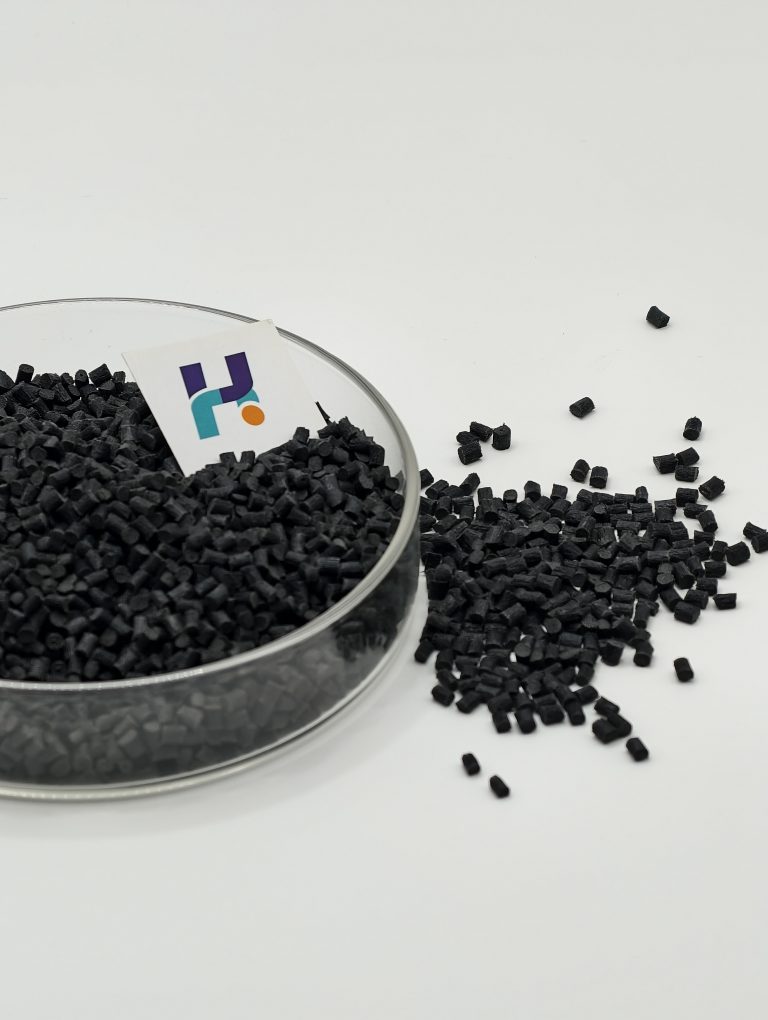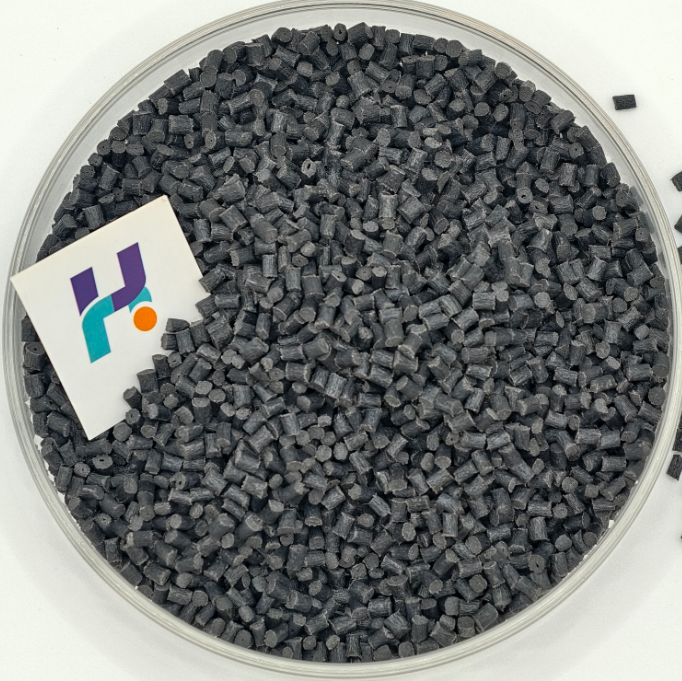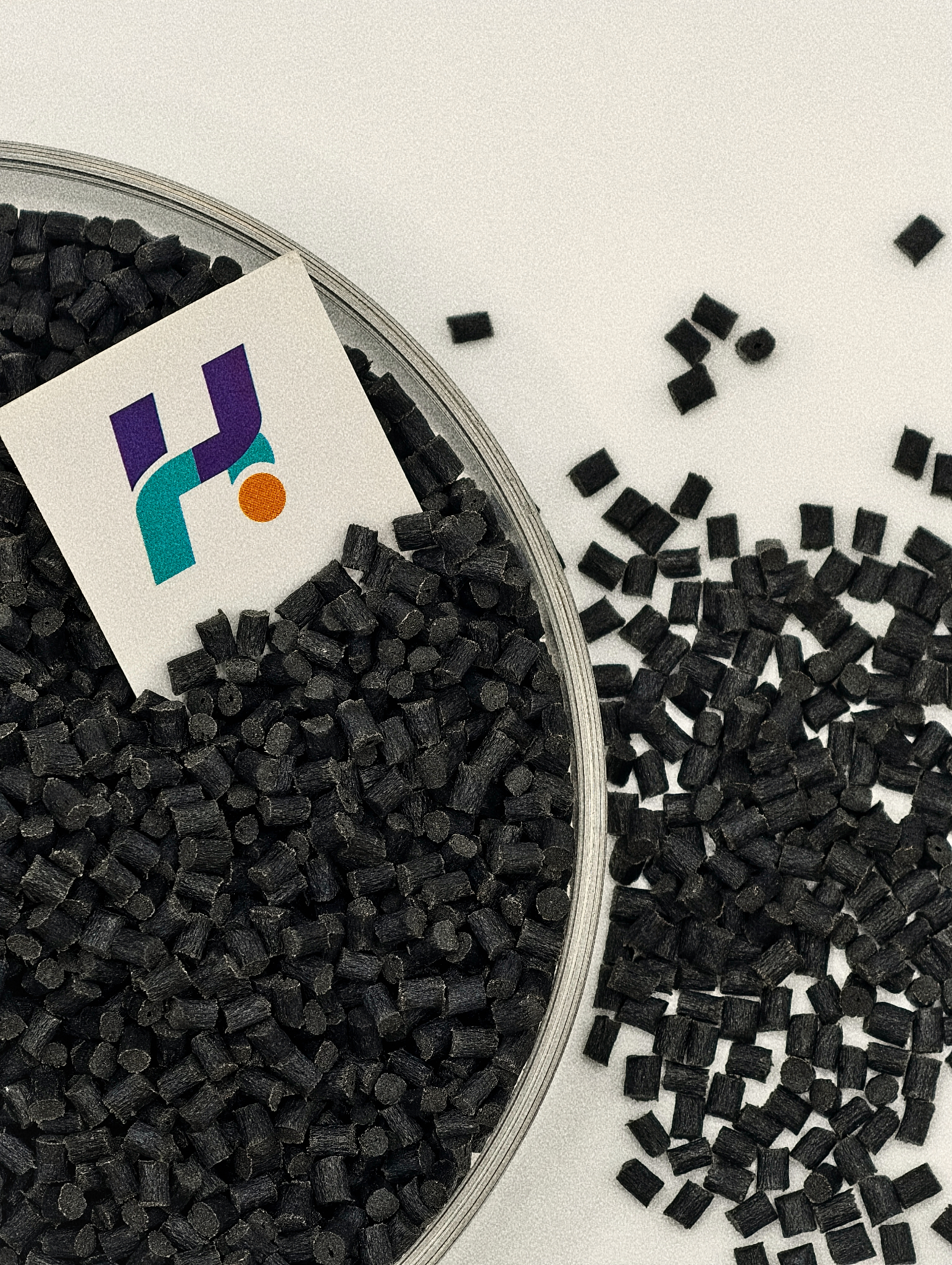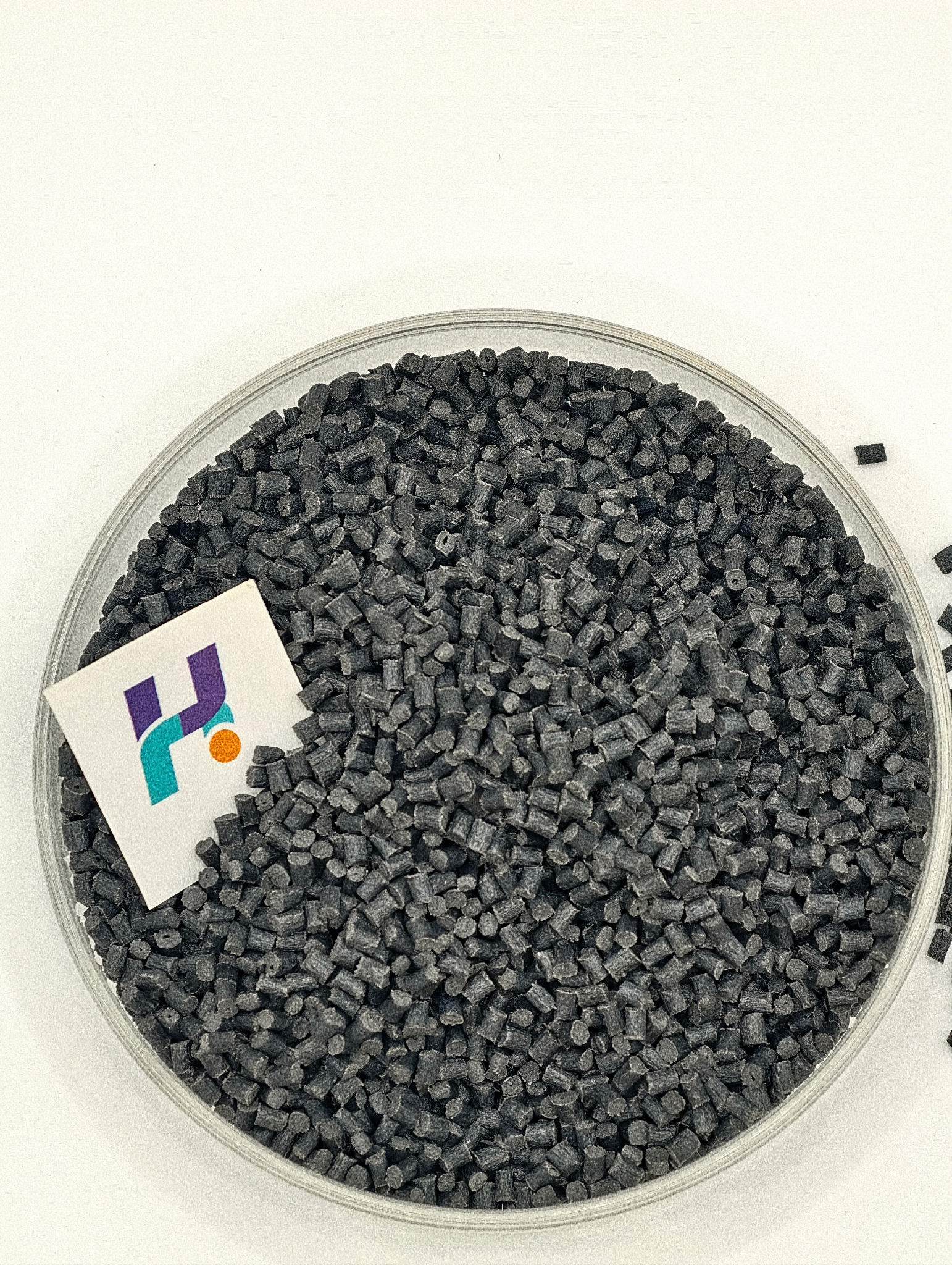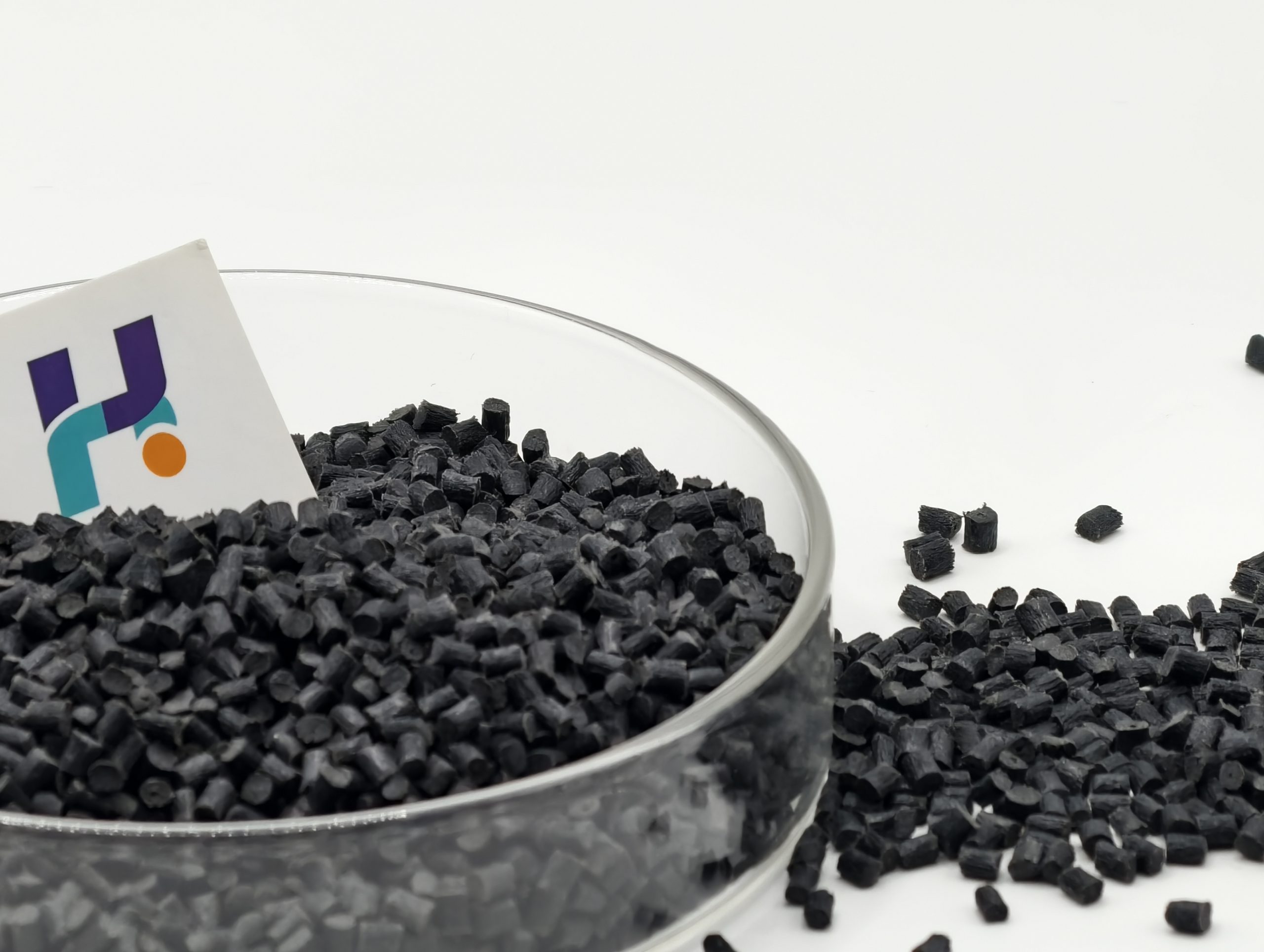
High rigidity. Better heat resistance. Low-warpage-oriented formulation for stable mass production.
When a part looks perfect in trial shots but starts drifting in mass production, it’s usually not “the mold.” It’s a system problem: stiffness vs. heat, shrink balance, fiber orientation, and lot-to-lot consistency. ABS GF20 is built for that middle zone where unfilled ABS is too soft, and GF30 is overkill (or too sensitive).
Typical wins customers chase with GF20:
-
reduce flex and micro-movement → tighter assembly feel, less squeak/rattle risk
-
improve hot-soak shape retention → fewer gap shifts after heat cycles
-
stabilize dimensions → less sorting, less rework, faster ramp-up
Materials & Compounding Options
ABS GF20 is an ABS matrix reinforced with ~20% glass fiber, compounded for injection molding with controlled dispersion and stabilizer packages.
OEM customization knobs (choose what matters for your part):
-
Low warpage package (shrink-balance focus for long parts / rib-heavy geometry)
-
Heat-aging package (better hot-soak dimensional hold)
-
Impact-boost option (when snap features / bosses show cracking)
-
Surface & appearance strategy (matte/low gloss, reduced fiber read-through—application dependent)
-
Color system (black/gray/custom; lot-to-lot color stability targets)
-
Weathering/UV option (for exposed trim scenarios, if required)
Your ABS GF series logic: GF15 = balanced & friendlier surface, GF20 = stiffness upgrade with controlled risk, GF30 = structural-grade stiffness.
Yongjinhong ABS GF20
1) High rigidity where GF15 is “almost enough”
Engineering: GF20 boosts modulus and creep resistance noticeably vs GF15, helping parts resist deflection.
Value: less assembly “give,” better torque retention, improved fit stability.
2) Heat resistance that targets real hot-soak problems
Engineering: reinforcement + thermal stability packages improve resistance to heat deformation (grade- and design-dependent).
Value: fewer heat-cycle-induced gap shifts, reduced revalidation headaches.
3) Low-warpage-oriented behavior (when designed and processed correctly)
Engineering: GF20 can be formulated with shrink-balance control to reduce “banana warpage” in long-flow or asymmetrical rib designs.
Value: less mold tuning time, higher first-pass yield, more predictable mass production.
Application Fit
|
|
|
|


Automotive Sunroof Brackets / Structural Supports
Sunroof structures punish materials through hot-soak cycles + vibration + tight assembly fit. ABS GF20 helps maintain bracket geometry and reduce micro-movement that can translate into noise or misalignment.
C-Pillar Exterior Trim Structure (reinforced trim / backing)
Longer trim parts often fight warpage and fit stack issues. ABS GF20 is used when you need stiffer support and better shape retention than GF15, while keeping warpage risk more manageable than GF30.
Piano Key Skeleton Frame / Keybed Structure
Key structures need repeatability: stable alignment, consistent mechanical feel, and low long-term drift. ABS GF20 supports higher rigidity and improved dimensional hold for precision frames.
Performance Target Map (reference guide, customizable)
Actual values depend on formulation, color, fiber type, and test standard. Use this as a selection compass.
| Property | ABS (Unfilled) | ABS GF15 | ABS GF20 | What it means in production |
|---|---|---|---|---|
| Rigidity / Modulus | Medium | High | Higher | Less flex, tighter fit feel |
| Heat deformation resistance | Medium | Improved | More improved | Better hot-soak shape hold |
| Creep resistance | Medium | Improved | Better | Less long-term drift |
| Warpage sensitivity | Low–Med | Med | Med–High | Needs gate/cooling discipline |
| Surface fiber signature | Low | Med | Med–High | Texture/paint strategy helps |
Quick Comparison: GF15 vs GF20 vs GF30 (small, practical)
If you’re deciding which GF level to release as a series, GF20 is often the “high-demand middle.”
| Best choice when… | Recommend |
|---|---|
| You need balanced stiffness + easier molding | GF15 |
| You need a clear stiffness/heat upgrade without going “too sensitive” | GF20 |
| You need minimum flex + highest creep control (structural feel) | GF30 |
Processing Notes
ABS GF20 is moldable and stable—but the win comes from repeatability, not brute force.
Practical trial setup (starting points):
-
Drying: recommended to stabilize appearance and reduce splay risk
-
Melt temperature: ~230–270°C (optimize for flow vs fiber integrity)
-
Mold temperature: ~70–100°C (helps shrink stability and weld-line quality)
-
Injection speed: medium-to-high (avoid hesitation; protect weld-line strength)
-
Packing/holding: consistent; tune for shrink control without over-stressing the part
Low-warpage checklist (the “quiet killers”):
-
gate location controls fiber orientation → warpage direction often follows flow
-
uniform cooling beats “higher packing pressure”
-
avoid extreme thickness jumps; rib design matters more with GF levels
-
venting prevents burn and uneven shrink from trapped gas
OEM Customization
-
Low warpage for long parts (trim structures, asymmetrical ribs)
-
Heat-aging stability (hot-soak + thermal cycling)
-
Impact-boost for snaps/bosses (assembly cracking prevention)
-
Color & appearance control (black/gray, tight lot matching)
What you should provide
no sensitive info needed:
-
Part name + function (sunroof bracket / C-pillar trim structure / key skeleton)
-
Wall thickness range + whether it’s long-flow / rib-heavy
-
Main failure mode today: warpage, flex, heat sag, weld-line cracks, appearance marks
-
Surface requirement: visible matte/texture/paint vs hidden structural
-
Gate constraints (fixed gate or still adjustable)
If you send only wall thickness + failure mode + a part photo, that’s enough to start.
FAQ
Q1: What is ABS GF20?
A1: ABS GF20 is an injection molding compound made from ABS reinforced with approximately 20% glass fiber to increase rigidity, improve heat deformation resistance, and enhance dimensional stability for structural and precision frames.
Q2: Why choose ABS GF20 instead of ABS GF15?
A2: ABS GF20 is selected when GF15 is “almost enough” but the part still shows deflection, gap drift, or hot-soak dimensional change. GF20 provides a clearer stiffness and creep-resistance upgrade while remaining more controllable than GF30 in many designs.
Q3: Will ABS GF20 reduce warpage?
A3: ABS GF20 can be formulated for low-warpage-oriented behavior, but warpage is also influenced by gate location, fiber orientation, packing stability, and cooling balance. A shrink-balance grade plus proper molding discipline delivers the best results.
Q4: Which parts are best suited for ABS GF20?
A4: Typical applications include automotive sunroof brackets, C-pillar exterior trim structures or reinforcements, and piano key skeleton frames where rigidity and dimensional repeatability are important.
Q5: Can ABS GF20 be customized (OEM)?
A5: Yes. OEM compounding options may include low-warpage packages, heat-aging stability, impact-boost for snaps/bosses, UV/weathering options, and custom color matching with lot-to-lot control targets.
Q6: What information should I provide for a quick grade recommendation?
A6: Provide the part function, wall thickness range, main failure mode (warpage, flex, heat sag, weld-line cracks), surface requirement, and any gate constraints. With just 2–3 of these items, a recommendation can be made efficiently.