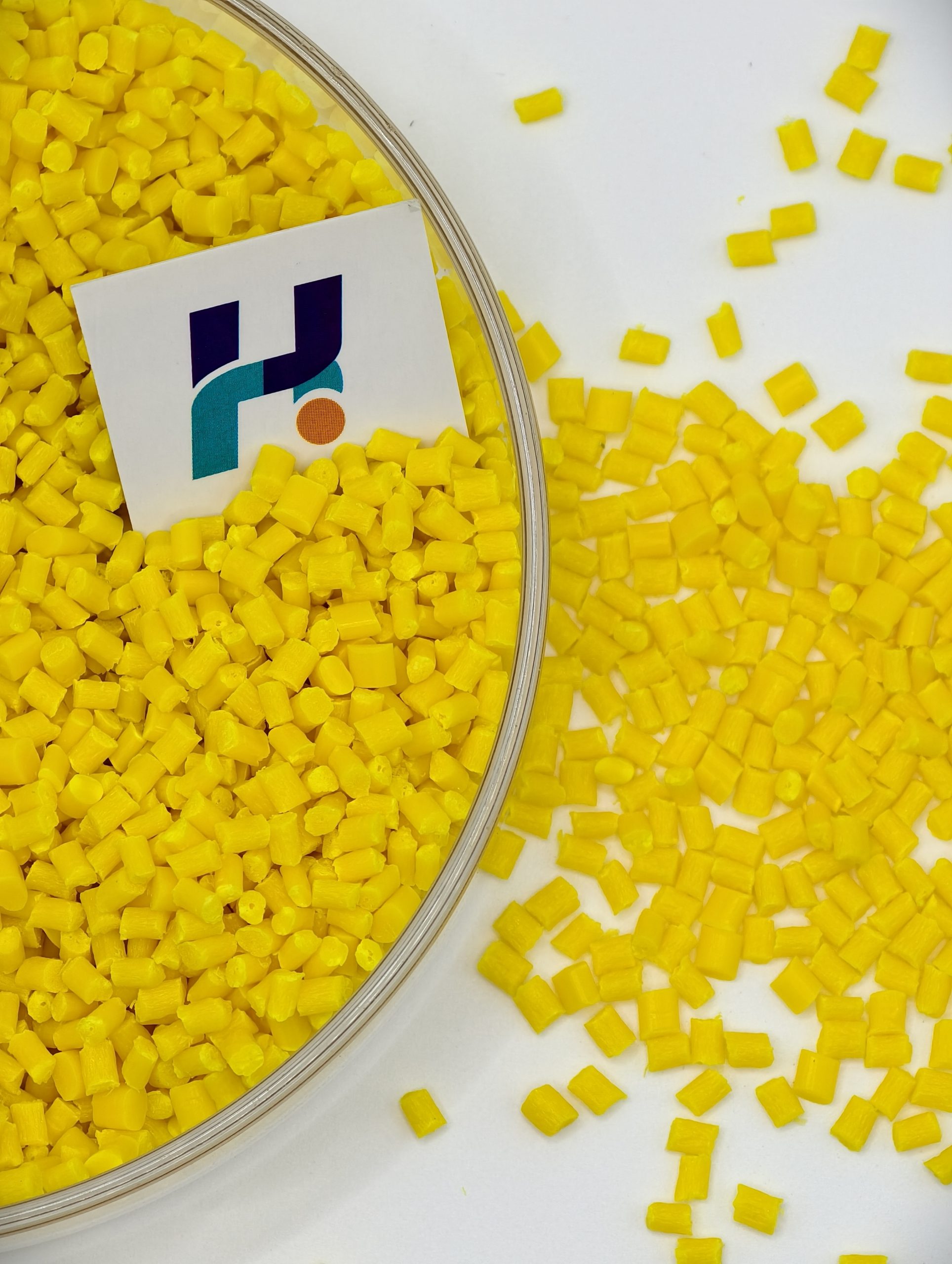
Maximum rigidity for injection-molded structural parts—engineered for heat stability and dimensional control.
When buyers move from ABS GF15 to GF30, it’s rarely because they want “stronger.” It’s because their part is failing in very specific ways:
- the bracket creeps under load and the gap grows,
- the carrier softens after repeated hot-soak,
- the assembly needs stiffness to stop vibration/noise,
- the tolerance stack becomes too tight for unfilled or low-GF materials.
ABS GF30 is designed for those “hard-mode” parts—where stiffness and stability are the real cost drivers.
Yongjinhong ABS GF30
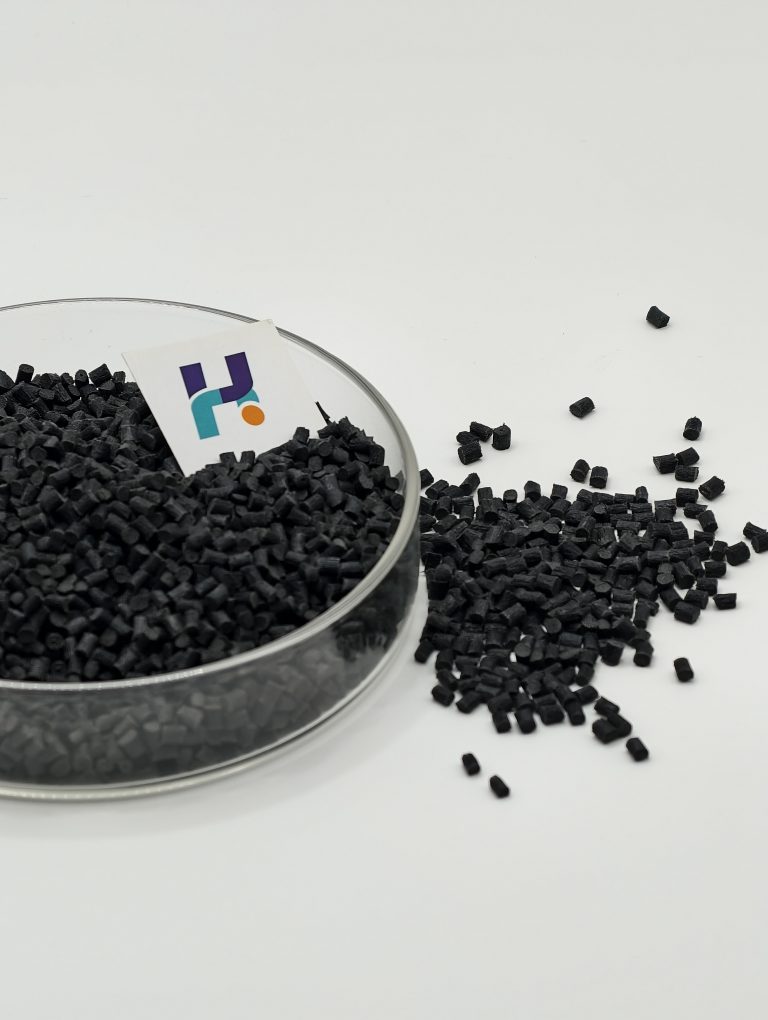
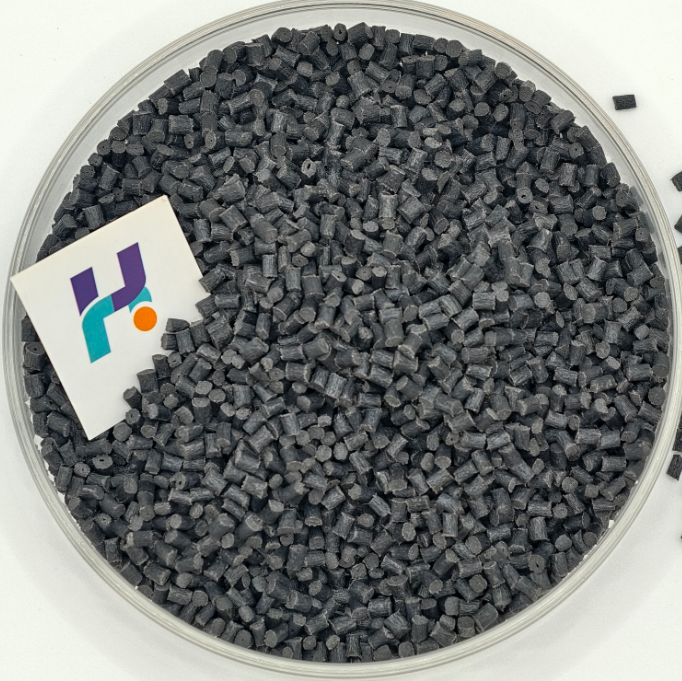
ABS GF30 is an ABS base matrix reinforced with ~30% glass fiber, compounded for injection molding. The reinforcement level is high enough that parts behave more like “engineering structures” than “plastic skins.”
Default design intent:
- Very high stiffness / modulus (reduce deflection, improve support)
- Improved heat deformation resistance (better shape retention after hot cycles)
- High dimensional stability (tighter fit capability, better creep control)
Important reality check (what GF30 changes):
- Higher fiber content can increase anisotropy (directional shrink), meaning warpage control becomes a design + processing system, not just a resin choice.
- Surface appearance may show more fiber read-through depending on thickness, texture, and color.
- Impact performance typically trades off vs lower GF grades (tunable by formulation).
That’s why a good GF30 grade isn’t only “more fiber”—it’s dispersion quality + shrink balance + processing tolerance.
Where ABS GF30 fits best
|
|
|


ABS GF30 is most valuable where the part must remain rigid and dimensionally stable:
1) Automotive structural brackets & carriers
- Sunroof mechanism brackets / reinforcement frames
- Interior carriers (instrument panel support elements, module brackets)
- Mounting structures where torque retention and vibration control matter
Why it works: GF30 helps prevent flexing that causes squeak/rattle, misalignment, and long-term creep.
2) Exterior or semi-exterior structural trim components
- Reinforced trim backbones
- C-pillar outer/inner reinforcement pieces (when stiffness dominates over surface perfection)
Why it works: high stiffness reduces flutter and improves assembly consistency—especially in longer geometries.
3) Precision frames requiring stable geometry
- Structural skeletons for keys/actuators (e.g., piano key frames where stiffness matters more than soft-touch impact)
Why it works: higher rigidity supports repeatable motion geometry and reduces long-term deformation.
If your part is “appearance-first” (Class-A surface, high gloss), GF30 may not be the first pick unless the surface strategy (texture/paint) is defined. For mixed demands, we often propose a GF20 or a surface-optimized GF30 variant.
Key Selling Points
- A) Ultra-high rigidity
Engineering: 30% glass fiber significantly increases modulus and reduces deflection under load.
Value: fewer assembly fit shifts, less NVH risk (squeak/rattle), better “solid feel” in structures.
- B) Better heat stability
Engineering: reinforcement improves resistance to heat-related deformation; performance depends on grade design and part geometry.
Value: fewer summertime returns, less rework after heat aging tests, improved dimensional hold after thermal cycling.
- C) Higher dimensional stability & creep resistance
Engineering: fiber reinforcement reduces shrink variability and creep under load when dispersion is stable.
Value: tighter tolerance capability, better screw/boss stability, less “slow drift” in assemblies.
- D) Production stability
Engineering: a stable GF30 grade is controlled for fiber dispersion, MFR window, and shrink balance.
Value: less time “chasing warpage,” fewer mold adjustments per batch, faster ramp to mass production.
Performance Target Map
Actual values depend on formulation, color system, fiber type, and test standard. Use this as a decision guide.
| Attribute | ABS (Unfilled) | ABS GF15 | ABS GF30 | Practical meaning |
| Rigidity / Modulus | Medium | High | Very High | Less flex, stronger support |
| Heat deformation resistance | Medium | Improved | Higher | Better hot-soak retention |
| Creep resistance | Medium | Improved | High | Holds load over time |
| Warpage risk (anisotropy) | Low–Medium | Medium | Medium–High | Needs gate/packing control |
| Surface fiber signature | Low | Medium | Higher | Texture/paint strategy helps |
| Impact toughness | High | Moderate–Good | Moderate | Can be tuned if required |
OEM / Custom Compounding Options
ABS GF30 is a powerful base, but you get the best results when the formulation matches the failure mode.
Common OEM options:
- Low-warpage GF30 (shrink balance / fiber orientation control strategy)
- Impact-modified GF30 (for parts prone to crack initiation at ribs/bosses)
- Heat-aging package (long hot-soak stability)
- UV/weathering package (for exterior exposure designs)
- Color matching (black/gray/custom) with lot-to-lot stability targets
- Process window tuning (flow improvement for thin-wall or long-flow designs)
- Low odor / low VOC route (based on your target automotive requirement)
What we need from you :
- Part name + function (bracket/carrier/trim reinforcement/frame)
- Geometry notes: wall thickness, rib density, gate location constraint
- Biggest headache: warpage direction, crack, heat sag, weld-line weakness, surface issue
- Customer requirements: odor/VOC, weathering, compliance docs
- Current resin + what failed (even a simple “warps after hot soak” helps)
Injection Molding Guidance
GF30 demands more control than GF15. The goal is not “high pressure,” but stable pressure and stable cooling.
Typical processing starting points:
- Drying: recommended for consistent appearance and flow stability
- Melt temperature: ~230–270°C (balance flow vs fiber integrity)
- Mold temperature: ~70–100°C (helps shrink stability and weld-line quality)
- Injection speed: medium-to-high (avoid hesitation; prevent weak weld lines)
- Packing/holding: consistent, repeatable; tune to control shrink without over-stressing the part
Warpage-control checklist (practical):
- Gate strategy to manage fiber orientation (warpage direction often follows flow)
- Balanced runner and proper venting to avoid burn/short shots that create uneven shrink
- Uniform cooling to reduce differential shrink (especially on long carriers)
- Avoid extreme thickness transitions; rib-to-wall ratio matters more at GF30
- Use texture/paint if surface fiber read is sensitive
Choosing between ABS GF15 / GF20 / GF30
- Choose GF15 when you need a balanced upgrade with friendlier warpage/surface behavior.
- Choose GF20 when stiffness must increase but appearance and molding stability still matter a lot.
- Choose GF30 when the part must behave like a structural component—minimum flex and maximum stability.
If your part is failing after heat cycling, or you’re chasing deflection that causes noise/fit issues, GF30 is often the cleanest fix—as long as warpage is managed as a system.