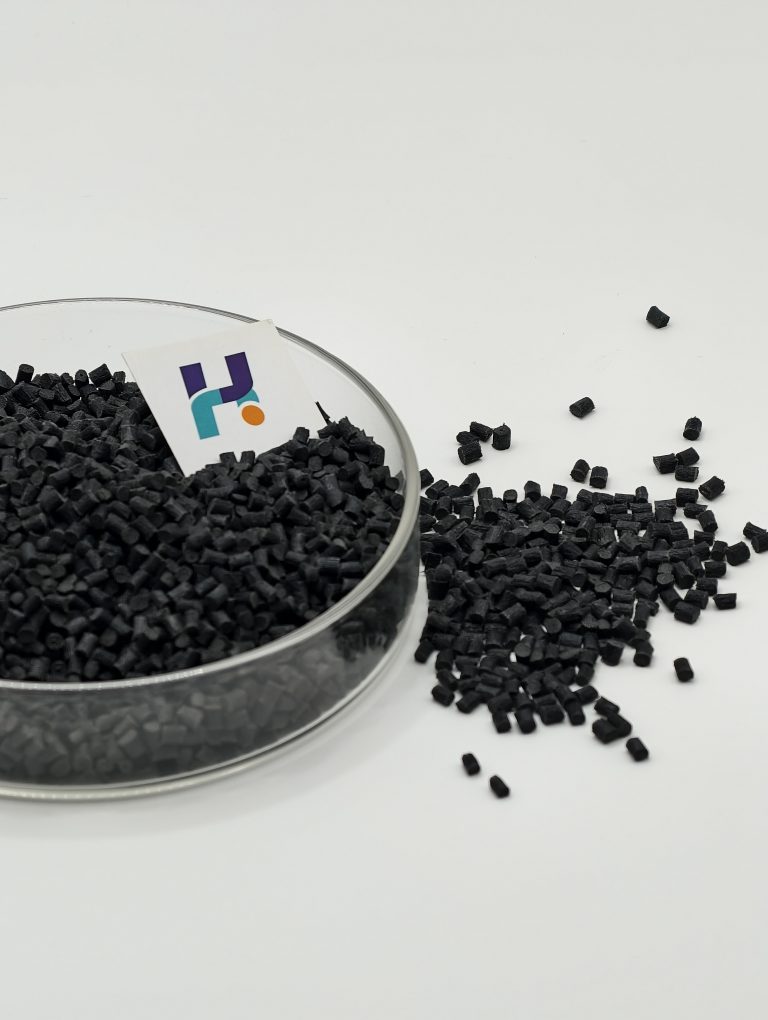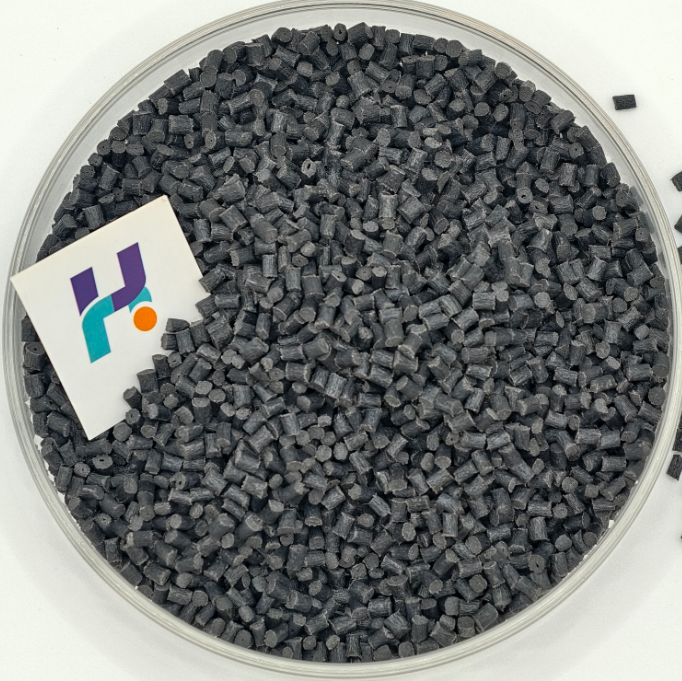
Flame Retardant Reinforced PA66
Circuit breaker housings and EV charging connectors operate under dual stress conditions:
-
Electrical heat and potential arcing
-
Mechanical load from terminals and fastening
-
Repeated plug-in / pull-out cycles (connectors)
-
Vibration and installation stress
-
Thin-wall designs with high safety requirements
Standard flame-retardant PA66 provides fire safety, but mechanical deformation, creep, or stress cracking can still occur under load.
Flame-retardant reinforced PA66 exists to close this gap.
This material is selected when fire resistance alone is not enough.
Functional Requirements of Breaker Housings & Charging Connectors
Critical Material Demands
-
UL94 V-0 flame retardancy
-
High mechanical stiffness and strength
-
Dimensional stability under load & heat
-
Resistance to creep at elevated temperatures
-
Electrical insulation reliability
-
Thin-wall moldability with reinforcement
Flame-retardant reinforced PA66 is engineered for structural electrical safety, not cosmetic housings.
 |
 |
How Reinforced FR PA66 Differs from Standard FR PA66
Key Structural Differences
Higher Load-Bearing Capability
Glass fiber reinforcement significantly increases rigidity and tensile strength.
Reduced Long-Term Creep
Maintains geometry under continuous mechanical stress and thermal aging.
Improved Screw & Terminal Retention
Critical for connectors and breaker fastening zones.
Greater Dimensional Stability
Less deformation near heat-generating electrical contacts.
Fire Safety Maintained
UL94 V-0 performance retained even with reinforcement.
Reinforcement is added for structure, not to improve flame rating.
Typical Reinforcement & Flame-Retardant Systems
Common configurations include:
-
Glass fiber (20–30%) + halogen-free FR system
-
Thin-wall V-0 reinforced formulations
-
Heat-stabilized reinforced FR grades

Material design balances:
-
Fiber content
-
Flame retardant efficiency
-
Processing window
-
Impact tolerance
Recommended Use Areas by Component
| Component | Recommended Material | Engineering Reason |
|---|---|---|
| Circuit breaker outer housing | FR PA66 GF | Fire containment + rigidity |
| Internal support frames | FR PA66 GF | Load stability |
| EV charging connector shell | FR PA66 GF | Plug-in stress + heat |
| Terminal carrier | FR PA66 GF | Creep & retention control |
⚠️ Using unreinforced FR PA66 here often leads to deformation over time.
Material Selection Logic
Step 1 — Is flame retardancy mandatory?
→ Yes
Step 2 — Is the component mechanically loaded or stressed?
→ Yes → Reinforced Flame Retardant PA66
→ No → Standard Flame Retardant PA66
Step 3 — Is long-term dimensional stability critical?
→ Yes → Reinforced Flame Retardant PA66
Processing Considerations for Reinforced FR PA66
Processing Focus Points
-
Strict drying to prevent hydrolysis
-
Controlled melt temperature to protect FR system
-
Gate design to manage fiber orientation
-
Uniform cooling to minimize warpage
Typical Processing Range
-
Melt temperature: 280–310 °C
-
Mold temperature: 90–120 °C
-
Drying: 80–90 °C / 4–6 hours
-
Shrinkage: 0.3–0.6% (directional)
Reinforced Flame Retardant PA66 vs Standard Flame Retardant PA66
| Property | Flame Retardant PA66 | Reinforced Flame Retardant PA66 |
|---|---|---|
| Flame retardancy | UL94 V-0 | UL94 V-0 |
| Mechanical strength | Medium | High |
| Creep resistance | Medium | Excellent |
| Dimensional stability | Medium | High |
| Connector durability | Limited | Excellent |
Reinforcement upgrades mechanical reliability, not fire rating.