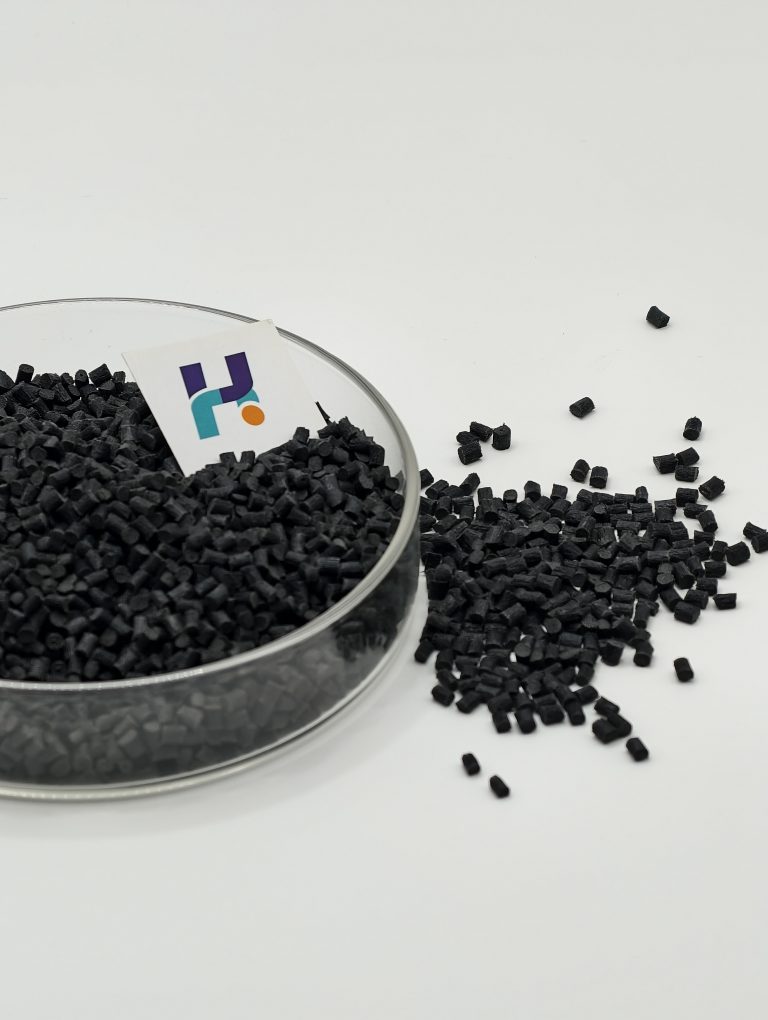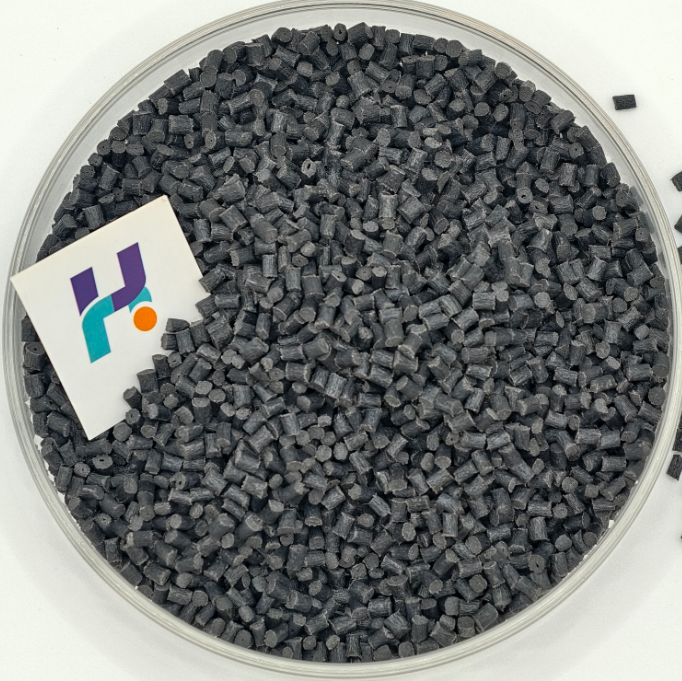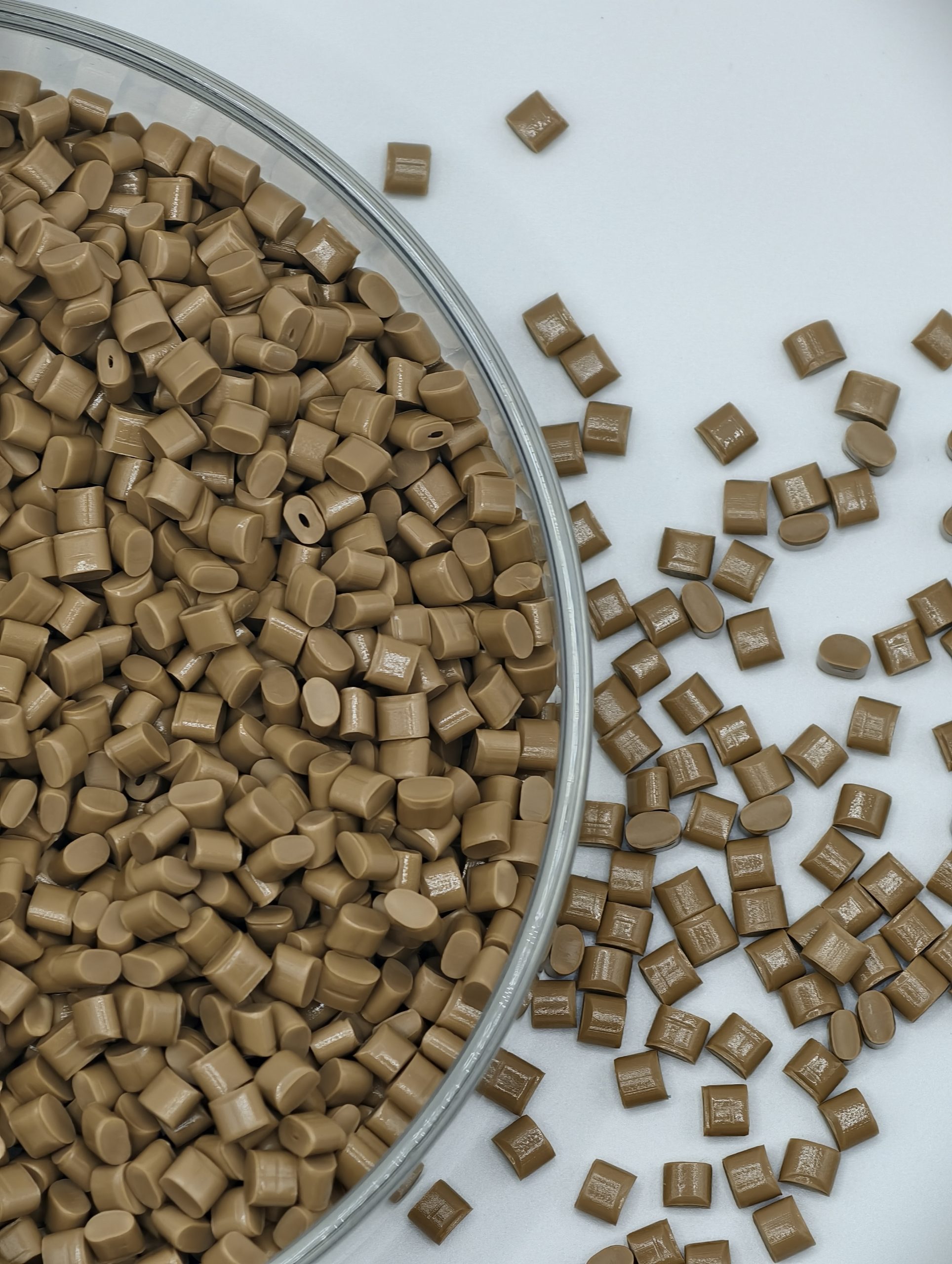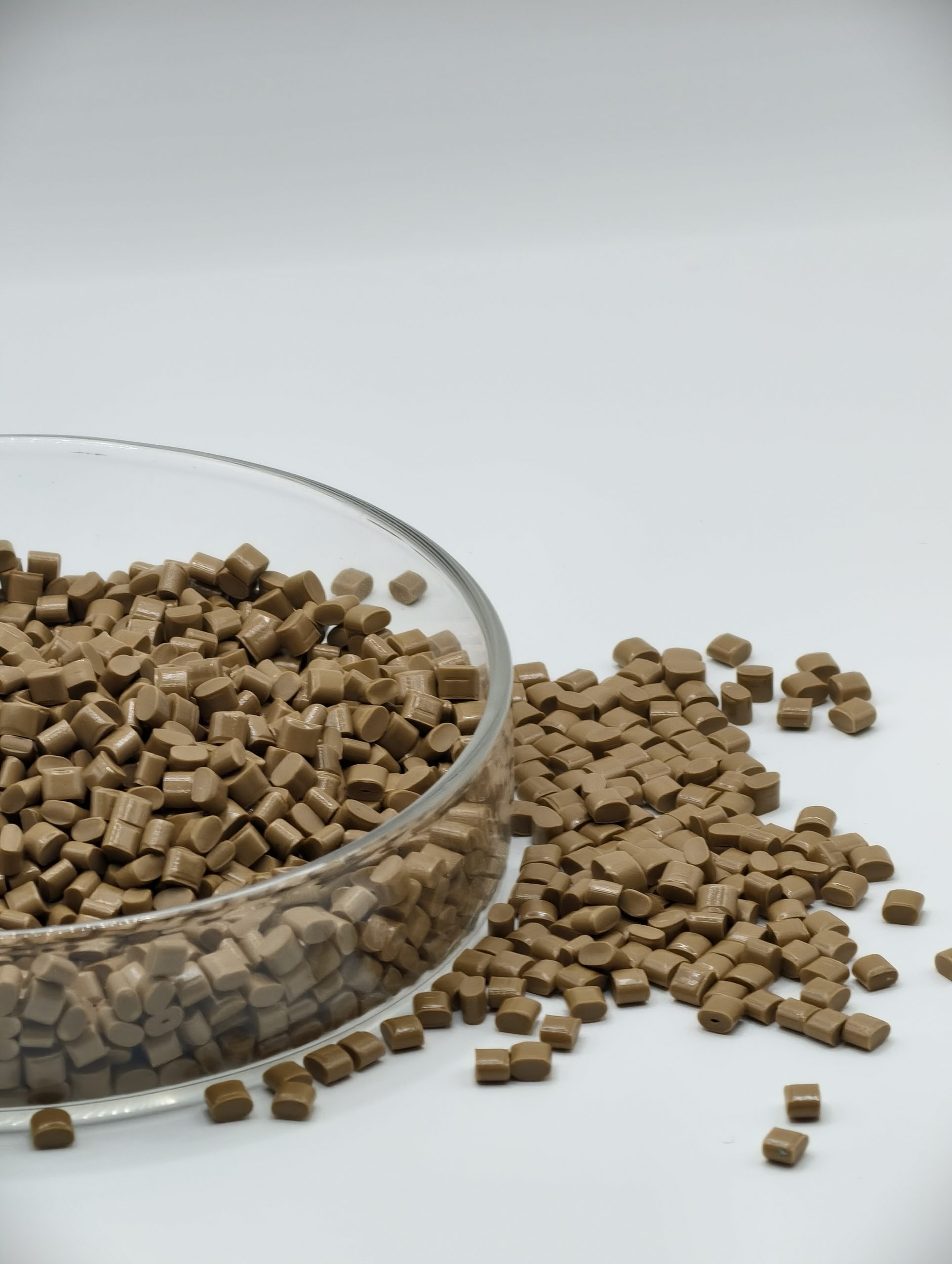
Flame-retardant glass-reinforced PBT pellets engineered for reliable relay insulation parts—stable terminals, stable molding, stable compliance.
Relays are small, but the requirements are not. You’re balancing flame safety, electrical insulation reliability, tight terminal alignment, multi-cavity productivity, and cost. In real projects, the pain rarely comes from “not strong enough.” It comes from:
-
V-0 passes in lab, but production varies (flow, burn, warpage)
-
terminal datums drift → assembly issues and creepage/clearance risk
-
snaps and bosses crack at weld lines
-
thin walls short-shot or burn in high-cavity tooling
-
heat aging causes fit drift around the coil/terminal area
That’s why a relay-grade FR reinforced PBT should be positioned as a “production-safe” material—not only a flame-rated one.
FR Reinforced PBT Means
For relay parts, “reinforced flame-retardant PBT” usually means:
-
PBT resin as the base polymer (excellent dimensional & electrical stability)
-
flame retardant package aimed at UL94 targets (thickness-dependent)
-
glass fiber reinforcement (commonly 10–30% depending on part needs) for stiffness and creep control
-
stabilizers for processing and long-term reliability
PBT is a relay favorite
-
Low moisture-driven dimensional change vs many nylons → stable terminal geometry
-
Strong electrical insulation behavior for housing/base parts
-
Good heat resistance for electrical environments (grade dependent)
-
Chemical resistance useful in industrial/automotive conditions
-
Good fit for multi-cavity, high-volume injection molding
YONGJINHONG FR Reinforced PBT
1) UL94-ready flame performance (thickness-target driven)
Engineering: FR system designed for relay housing scenarios and thickness targets.
Buyer value: faster compliance path and fewer late-stage surprises.
2) High rigidity for stable terminal geometry
Engineering: reinforcement improves stiffness and creep resistance.
Buyer value: stable terminal spacing, fewer assembly issues, less sorting.
3) Dimensional stability with low moisture influence
Engineering: PBT typically drifts less with humidity than hygroscopic nylons.
Buyer value: fewer “warehouse-to-line” fit surprises, more consistent output.
4) Production stability in multi-cavity tools
Engineering: controlled flow + shrink behavior reduces cavity-to-cavity variation.
Buyer value: higher yield, less parameter chasing, calmer mass production.
Typical Relay Applications
-
relay housings (shells and covers)
-
relay bases / terminal frames
-
insulation partitions and structural supports
-
coil-adjacent insulating components (design-dependent)


Performance Target Map
Actual values depend on FR system, GF content, color, and test standard.
| Attribute (relay needs) | Standard PBT | FR Reinforced PBT (This Grade) | Why it matters |
|---|---|---|---|
| Flame performance | Not FR | Designed for UL94 targets | compliance |
| Rigidity / modulus | Medium | High | terminal geometry stability |
| Creep resistance | Medium | Improved | screw/insert stability |
| Dimensional stability (humidity) | Good | Very good | low drift |
| Warpage sensitivity | Medium | Medium–High | gate/cooling control |
| Weld-line durability | Medium | Tunable | snaps and corners |
Engineering Notes That Decide Relay Yield
A) UL94 is thickness-dependent—spec it correctly
If your relay has thin walls, the grade must be selected/tuned to your real thickness. “V-0” without thickness context is not a production spec.
B) Gate and cooling strategy control warpage
At reinforced levels, fiber orientation drives shrink direction. For relay bases:
-
avoid placing knit lines at snap roots or high-stress corners
-
balance flow to reduce one-direction shrink dominance
-
uniform cooling > aggressive packing
C) Weld-line toughness matters more than “high stiffness”
Relays often fail at snaps and bosses. A grade that’s slightly less stiff but much stronger at weld lines can produce higher real yield.
Processing Notes
Practical manufacturing checklist:
-
Drying: required for stable flow and surface quality
-
Mold temperature: keep stable for consistent shrink and crystallization behavior
-
Injection speed: medium-to-high to avoid hesitation and weak knit zones
-
Venting: crucial for thin-wall relay shells to prevent burn marks
-
Packing: consistent and repeatable to control shrink without locking stress
QC checks that matter:
-
terminal datum dimensions and flatness fixtures
-
snap/boss screening after assembly torque
-
knit-line strength checks at critical corners
-
lot-to-lot: flow index + shrink indicators
OEM Customization Options
For relay programs, these are the options buyers actually want:
-
UL94 thickness-target route (V-0 at your real wall thickness, project-defined)
-
Thin-wall flow tuning (high-cavity relay molds, complex flow paths)
-
Low warpage route (terminal alignment and flatness focus)
-
Weld-line durability focus (snaps, bosses, corners)
-
Heat-aging stability (coil/terminal heat exposure confidence)
-
Color control (black/gray; lot stability targets)
Product Details
| Item | Description |
|---|---|
| Product name | FR Reinforced PBT for Relays |
| Material type | Flame-retardant PBT + reinforcement (commonly GF) |
| Form | Pellets for injection molding |
| Key strengths | UL94-ready flame performance, rigidity, dimensional stability, electrical insulation reliability |
| Optional focus | thin-wall flow, low warpage, weld-line durability, heat-aging, color control |
| Typical parts | relay housings, bases, terminal frames, insulation partitions |
| Supply model | standard grade + OEM custom compounding |
What you should provide
No sensitive info needed—send any 3–6 items:
-
UL94 target + wall thickness (critical)
-
relay type and part size (housing vs base vs terminal frame)
-
key datums: terminal alignment/flatness requirements
-
stress zones: snaps, bosses, insert areas
-
current failure mode: warpage, burn marks, short shots, snap cracks
-
heat exposure notes (temperature rise / cycling scenario)
-
color requirement
If you only provide UL94 thickness target + wall thickness + failure mode + photo, that’s enough to start.