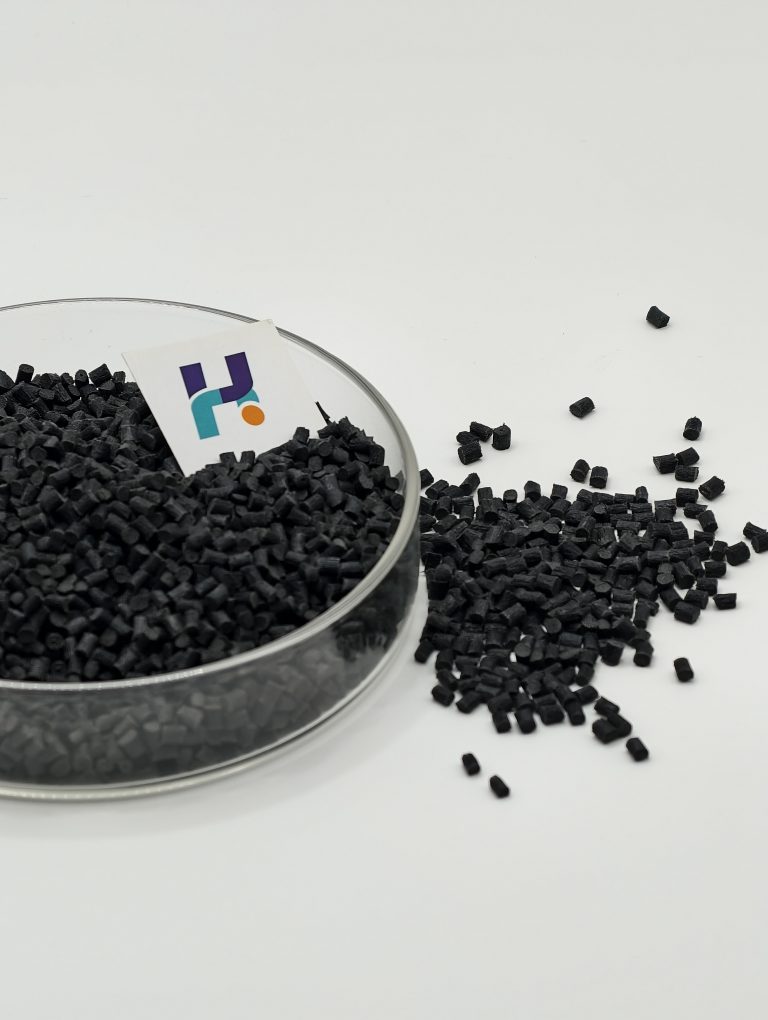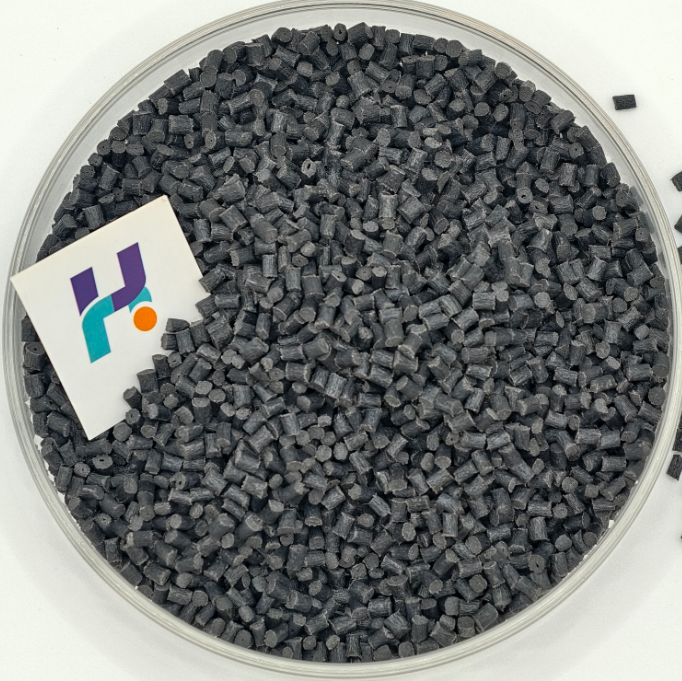
YONGJINHONG PA66 GF20 Exists (Engineering Positioning)
PA66 GF20 is selected when GF15 reaches its mechanical limit.
While PA66 GF15 focuses on correcting elastic deflection and improving basic rigidity, GF20 moves the material into a true structural reliability zone, where long-term deformation and load retention become primary concerns.
PA66 GF20 is chosen when:
-
Parts remain under continuous stress
-
Dimensional drift over time is unacceptable
-
Elevated service temperatures accelerate creep
GF20 is not an incremental upgrade — it is a functional shift toward load-stable design.
Material Composition & Reinforcement Strategy
Material Overview
-
Base Polymer: Polyamide 66 (Nylon 66)
-
Glass Fiber Content: 20%
-
Fiber Type: Short glass fiber
-
Optional Additives:
-
Heat stabilizers
-
Hydrolysis resistance packages
-
Impact modifiers (limited)
-
Color concentrates
-
-
Colors: Natural, black, customized
This formulation prioritizes creep resistance and long-term dimensional stability, not flexibility.
PA66 GF20 Core Performance Advantages
Engineering Advantages
Higher Structural Stiffness
Noticeably higher flexural modulus than GF15, reducing bending under load.
Improved Creep Resistance
Maintains geometry during prolonged mechanical stress and elevated temperature exposure.
Better Load Retention
Supports fasteners, inserts, and structural interfaces more reliably than GF15.
Thermal Stability
PA66 base maintains strength at higher operating temperatures.
Moisture-Resistant Design Behavior
Glass fiber reinforcement limits dimensional change caused by humidity.
Manufacturing & Production Advantages
Predictable Structural Behavior
More consistent part performance across batches compared with GF15.
Balanced Processing Window
More demanding than GF15, but still suitable for standard PA66 tooling.
Controlled Anisotropy
Fiber orientation effects increase versus GF15 but remain manageable with proper gate design.
Designed for Serial Production
Well-suited for long-term, load-bearing components.
PA66 GF20 Typical Application Areas
Automotive Components
-
Structural brackets
-
Load-bearing housings
-
Under-hood supports
Selected when GF15 shows gradual deformation over time.
 |
 |
 |
Industrial Equipment
-
Mechanical frames
-
Structural covers under continuous stress
-
Precision support components
Used where shape retention defines functional reliability.
Electrical & Mechanical Assemblies
-
Structural carriers
-
Components requiring stable alignment
-
Load-bearing internal supports
Ideal for medium-to-high structural demand applications.
PA66 GF20 Processing Guidelines (Injection Molding)
Typical Processing Parameters
-
Melt Temperature: 270–300 °C
-
Mold Temperature: 80–110 °C
-
Drying: 80–90 °C / 4–6 hours
-
Injection Speed: Medium
-
Shrinkage: ~0.6–0.9% (directional)
Gate placement should align with principal load directions to maximize reinforcement efficiency.
OEM / Customization Capabilities
Customization Options
-
Heat-stabilized grades
-
Enhanced hydrolysis resistance
-
Impact-balanced formulations
-
Color and surface finish tuning
OEM Support
-
GF15 vs GF20 vs GF30 selection guidance
-
Load and creep performance evaluation
-
Prototype sampling
-
Long-term supply consistency
Typical Technical Data (Reference Values)
| Property | Test Standard | Typical Value |
|---|---|---|
| Density | ISO 1183 | 1.32–1.36 g/cm³ |
| Tensile Strength | ISO 527 | 110–130 MPa |
| Flexural Strength | ISO 178 | 160–190 MPa |
| Flexural Modulus | ISO 178 | 6,000–7,500 MPa |
| Notched Izod Impact | ISO 180 | 6–9 kJ/m² |
| Heat Deflection Temp. | ISO 75 | 250–265 °C |
| Moisture Absorption | — | Moderate |
FAQ
Q1: When should PA66 GF20 be selected instead of GF15?
When parts are under continuous load and GF15 shows time-dependent deformation or creep.
Q2: How does GF20 differ from GF30?
GF20 balances stiffness and processability, while GF30 prioritizes maximum rigidity.
Q3: Is PA66 GF20 suitable for thin-wall parts?
Yes, with proper mold design and moisture control.
Q4: Does GF20 significantly increase mold wear?
Moderately more than GF15, but manageable with standard hardened tooling.
Q5: Can PA66 GF20 replace metal components?
In many medium-load applications, yes — with significant weight reduction benefits.