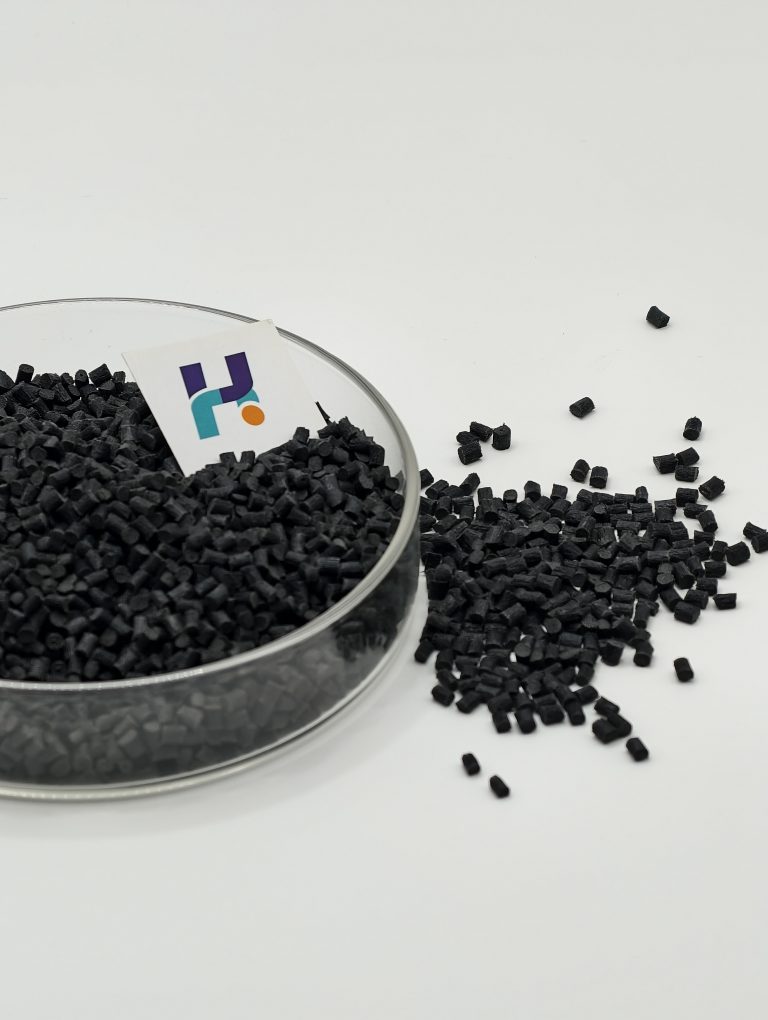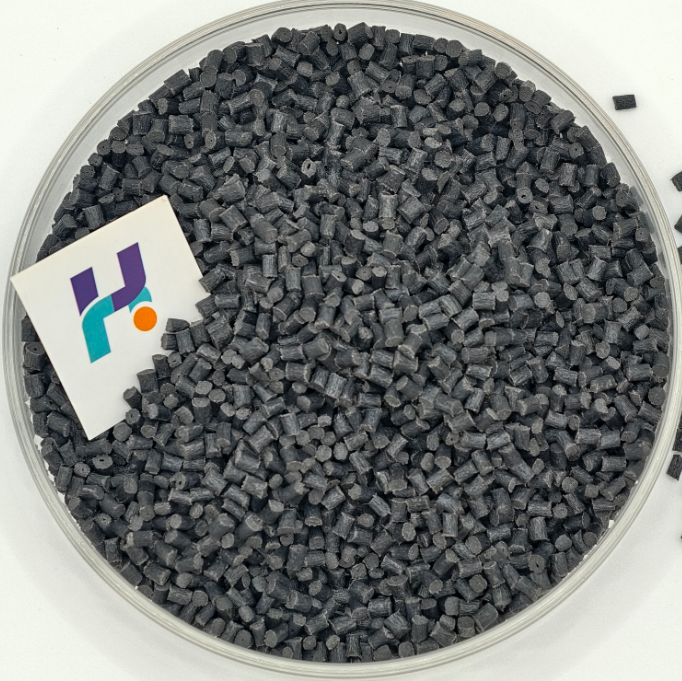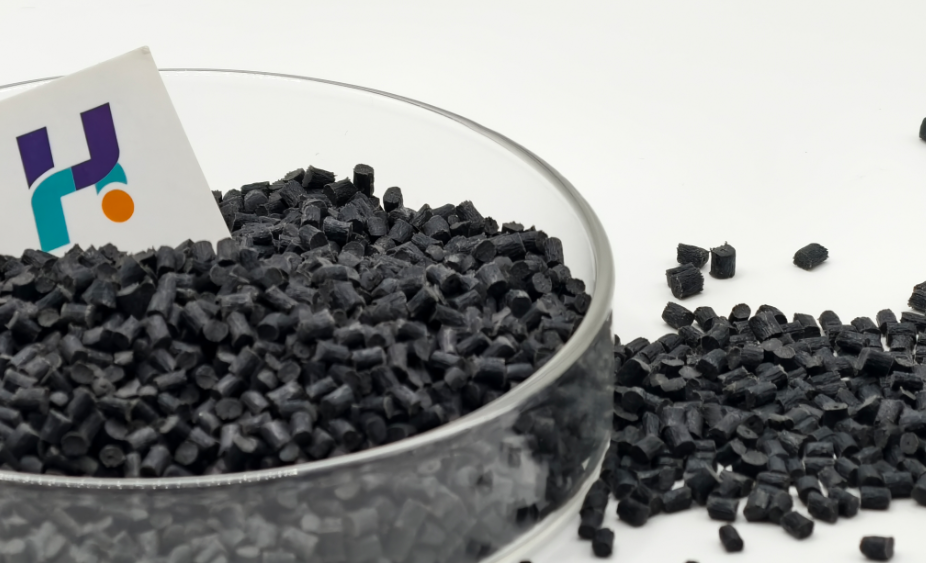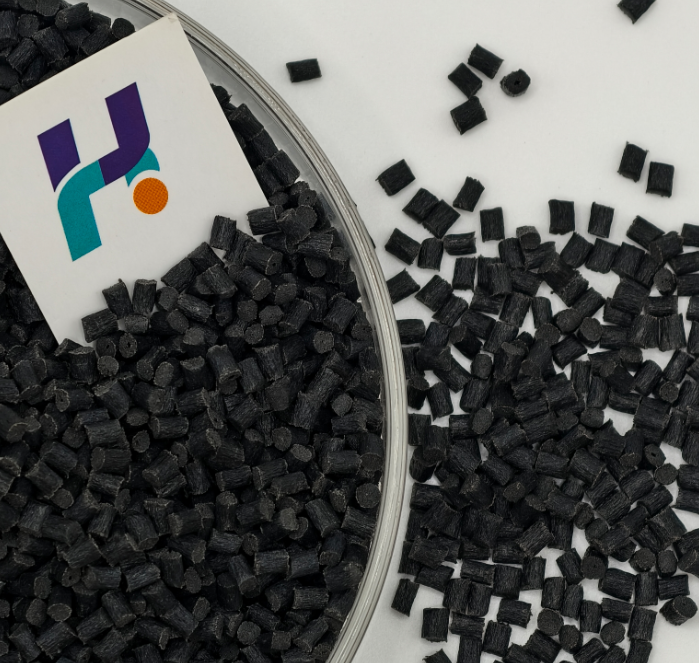
Glass Fiber Reinforced PBT – GF25
Structural Strength and Thermal Stability for Demanding Applications

PBT GF25 is engineered for applications requiring high stiffness, mechanical durability, and long-term dimensional stability under heat. By reinforcing the PBT matrix with 25% high-strength glass fibers, this material significantly enhances load-bearing capability while retaining the inherent advantages of PBT—excellent electrical insulation, chemical resistance, and processing stability.
Compared to mineral reinforced grades, PBT GF25 focuses on structural strength and thermal endurance, making it particularly suitable for components exposed to mechanical stress, elevated temperatures, or long service cycles. It represents a widely adopted balance point between cost, performance, and manufacturability within the glass fiber reinforced PBT family.
Material Composition & Glass Fiber Reinforcement Structure
PBT GF25 is formulated by uniformly dispersing chopped glass fibers within the PBT polymer matrix through controlled compounding processes. The glass fibers form a continuous load-bearing network that dramatically improves stiffness and strength.
Material Composition Overview
-
Base Polymer: Polybutylene Terephthalate (PBT)
-
Reinforcement: 25% chopped glass fiber
-
Fiber Type: High-modulus E-glass
-
Optional Additives:
-
Heat stabilizer
-
Flame retardant (UL94 V2 / V0)
-
UV stabilizer
-
Impact modifier
-
-
Color Options: Natural, black, custom colors
The oriented fiber structure contributes to exceptional mechanical performance, making GF25 an ideal choice for structural engineering parts.
Key Material Advantages: Engineering Strength with Commercial Reliability
Engineering Advantages
High Mechanical Strength & Rigidity
The 25% glass fiber content significantly increases tensile and flexural strength, enabling components to withstand high mechanical loads.
Excellent Heat Resistance
PBT GF25 exhibits a high heat deflection temperature, allowing stable operation in high-temperature environments such as automotive engine compartments and electrical systems.
Dimensional Stability Under Load
Glass fiber reinforcement reduces creep and deformation under long-term stress.
Good Electrical Insulation
Despite high fiber loading, PBT GF25 maintains reliable dielectric properties, suitable for electrical and electronic components.
Chemical & Hydrolysis Resistance
The PBT base polymer ensures resistance to oils, fuels, and automotive fluids.
Manufacturing & Commercial Advantages
Reliable Structural Performance
Widely accepted as a standard grade for structural PBT applications.
Cost-Effective Strength Upgrade
Provides substantial strength improvement compared to unfilled or mineral-filled PBT without moving to higher GF contents.
Stable Injection Molding Behavior
Well-balanced flow and fiber distribution enable consistent mass production.
Proven Industry Acceptance
Commonly specified by automotive and electrical OEMs worldwide.
Typical Application Areas
|
|
|
|


Automotive Applications
-
Wiper system components
-
Air intake and HVAC housings
-
Sensor and actuator housings
-
Structural brackets and supports
PBT GF25 is frequently used in automotive environments where heat, vibration, and mechanical stress coexist.
Electrical & Electronics
-
Contactor housings
-
Relay bases
-
Switch components
-
Electrical connectors
The combination of rigidity and insulation stability makes GF25 suitable for precision electrical parts.
Industrial & Mechanical Components
-
Structural frames
-
Pump housings
-
Mechanical covers
-
Load-bearing plastic parts
Where metal replacement is desired, GF25 offers an excellent strength-to-weight ratio.
Processing Performance & Injection Molding Guidelines
PBT GF25 is optimized for injection molding processes with stable flow characteristics despite its high reinforcement level.
Typical Processing Parameters
-
Melt Temperature: 250–270°C
-
Mold Temperature: 80–120°C
-
Drying: 120°C for 3–4 hours
-
Injection Speed: Medium to high
-
Shrinkage: 0.2–0.4% (directional)
Proper gate design is recommended to manage fiber orientation and optimize part performance.
OEM / ODM Customization Capabilities
PBT GF25 can be tailored to meet specific industry requirements.
Customization Options
-
Glass fiber content: GF20 / GF25 / GF30 / GF40
-
Flame retardant grades (UL94 V2 / V0)
-
Heat-stabilized formulations
-
Improved impact resistance
-
UV-resistant outdoor grades
-
Color matching
OEM Support Services
-
Application-based grade recommendation
-
Material benchmarking and replacement support
-
Prototype sampling and validation
-
Long-term supply consistency
Technical Specification – PBT GF25
| Property | Test Standard | Typical Value |
|---|---|---|
| Density | ISO 1183 | 1.55–1.65 g/cm³ |
| Tensile Strength | ISO 527 | 110–130 MPa |
| Flexural Strength | ISO 178 | 160–190 MPa |
| Flexural Modulus | ISO 178 | 7,000–9,000 MPa |
| Notched Izod Impact | ISO 180 | 6–9 kJ/m² |
| Heat Deflection Temp. | ISO 75 | 210–230°C |
| Shrinkage | — | 0.2–0.4% |
| Electrical Insulation | — | Excellent |
FAQ
Q1: What is the main advantage of PBT GF25?
It provides high rigidity, strength, and heat resistance for structural applications.
Q2: How does PBT GF25 compare to mineral reinforced PBT?
GF25 focuses on mechanical strength and load-bearing performance, while mineral reinforced grades prioritize dimensional stability and surface quality.
Q3: Is PBT GF25 suitable for automotive applications?
Yes. It is widely used in automotive structural and under-hood components.
Q4: Can flame-retardant versions be supplied?
Yes. UL94 V2 and V0 grades are available upon request.
Q5: Can the glass fiber content be customized?
Yes. GF content can be adjusted to meet specific performance requirements.