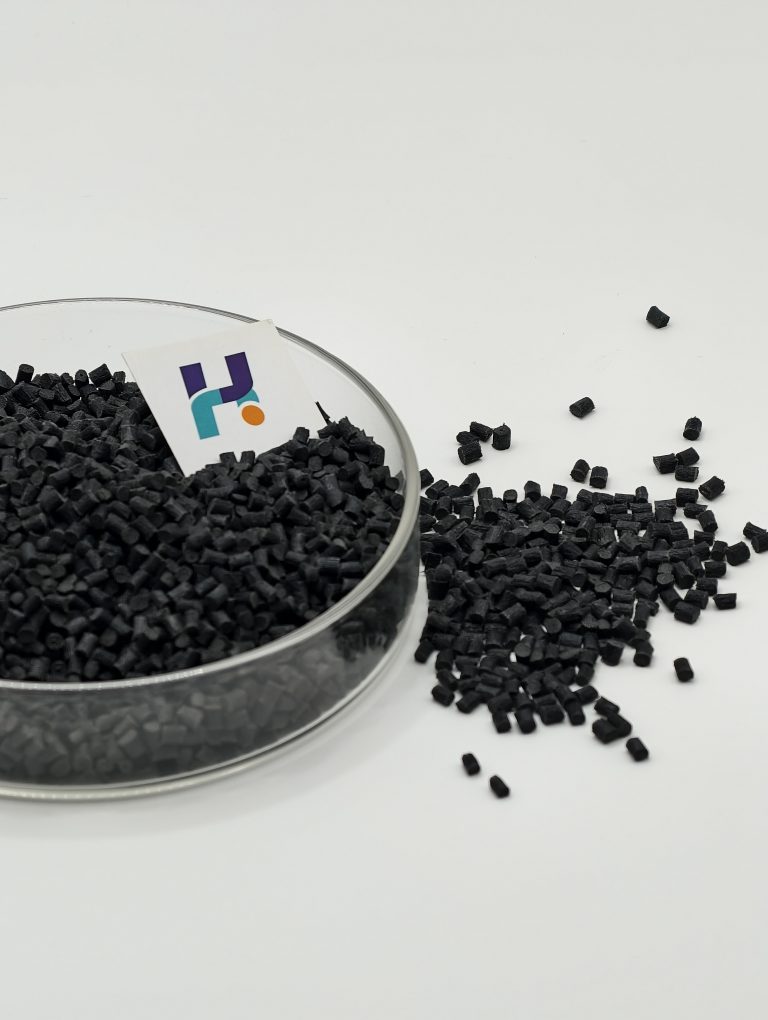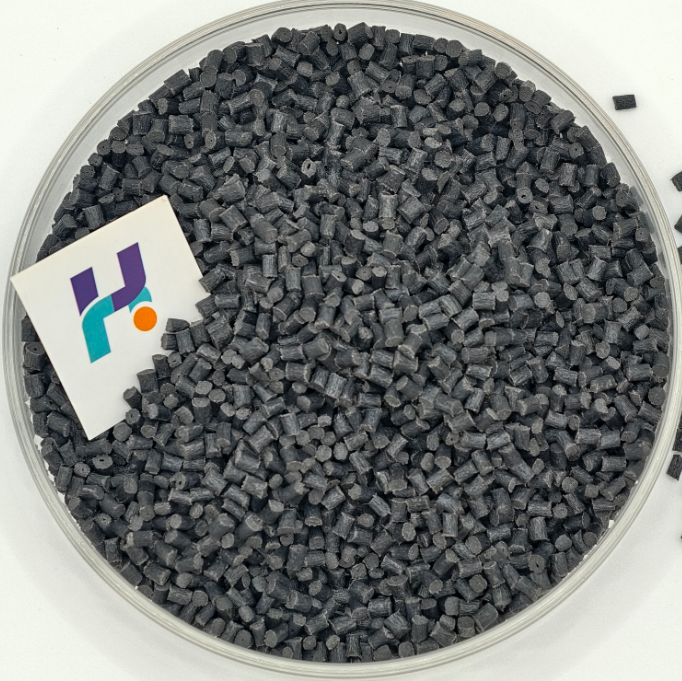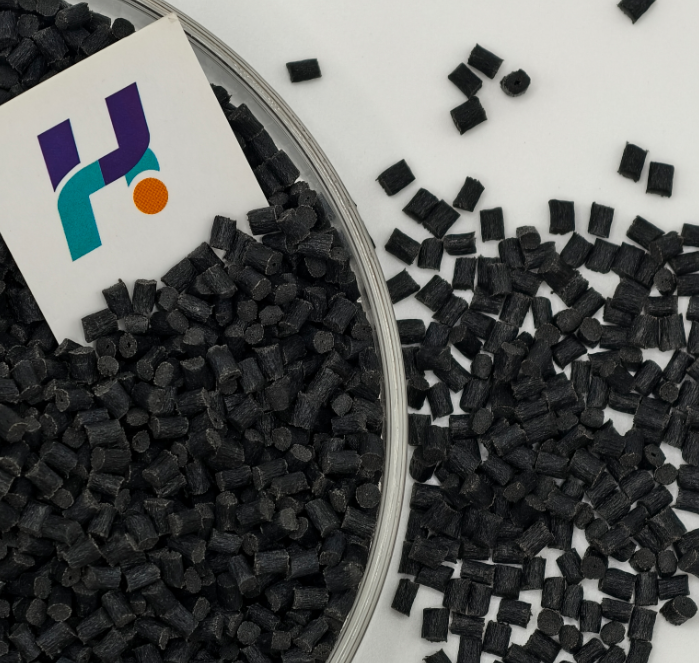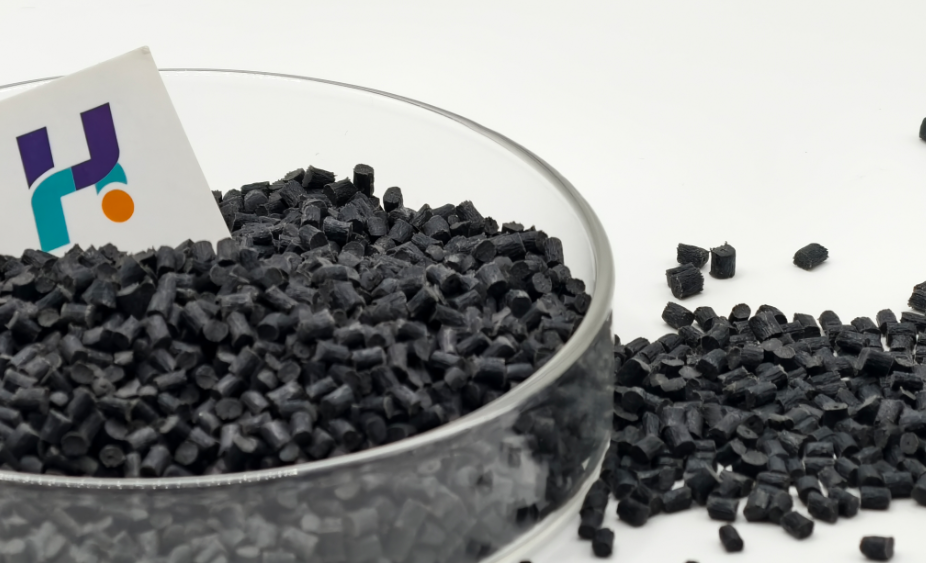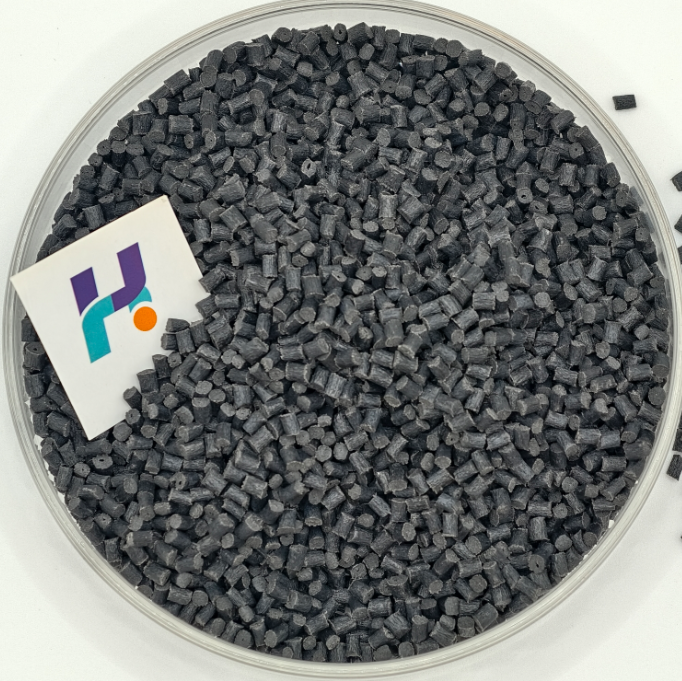
Glass Fiber Reinforced PC
Structural Polycarbonate for High-Stiffness Applications

Glass Fiber Reinforced PC is engineered for applications where standard polycarbonate lacks sufficient rigidity or dimensional stability. Through controlled glass fiber reinforcement, PC GF significantly enhances stiffness and mechanical strength while maintaining PC’s excellent heat resistance, electrical insulation, and transparency-free structural reliability.
Compared with unfilled PC, glass fiber reinforced grades are better suited for load-bearing structures, precision housings, and parts requiring long-term dimensional accuracy.
Material Composition & Glass Fiber Reinforcement Structure
PC GF is produced using advanced compounding technology to ensure uniform glass fiber dispersion within the polycarbonate matrix. The reinforced fiber network effectively restricts polymer chain movement, resulting in higher rigidity and reduced creep.
Material Composition Overview
-
Base Polymer: Polycarbonate (PC)
-
Reinforcement: Glass fiber (typically 10–30%)
-
Fiber Type: E-glass
-
Optional Additives:
-
Heat stabilizer
-
Impact modifier
-
Flame retardant (UL94 V2 / V0)
-
UV stabilizer
-
-
Color Options: Natural, black, customized
This formulation transforms PC from an impact-focused material into a structural engineering plastic.
Core Advantages: Rigidity, Stability & Structural Performance
Engineering Advantages
High Rigidity & Stiffness
Glass fiber reinforcement dramatically increases flexural modulus, enabling PC to support structural loads.
Improved Dimensional Stability
Reduced shrinkage and warpage compared to unfilled PC.
Enhanced Creep Resistance
Maintains shape and strength under long-term mechanical stress.
Good Heat Resistance
Retains PC’s inherent thermal performance for elevated-temperature environments.
Electrical Insulation Reliability
Suitable for electrical and electronic structural components.
Manufacturing & Commercial Advantages
Structural Upgrade of Standard PC
Provides strength enhancement without switching to other polymers.
Design Precision
Better tolerances for complex or tight-fit components.
Stable Injection Molding
Predictable processing with proper mold design.
OEM-Friendly Material Platform
Widely accepted in automotive and electrical industries.
Typical Application Areas

Automotive Components
-
Structural housings
-
Instrument panel supports
-
Interior load-bearing parts
Electrical & Electronics

-
Power supply housings
- Electrical enclosures
-
Structural electronic components
Balances strength and insulation performance.
Industrial & Equipment Parts
-
Machine housings
-
Structural frames
-
Precision mechanical components
Ideal for long-term mechanical stability.
Processing Performance & Injection Molding Guidelines
Glass Fiber Reinforced PC requires controlled processing to ensure optimal fiber orientation and surface quality.
Typical Processing Parameters
-
Melt Temperature: 260–300°C
-
Mold Temperature: 90–120°C
-
Drying: 120°C for 3–4 hours
-
Injection Speed: Medium
-
Shrinkage: 0.2–0.5% (directional)
Proper drying and gate design are essential for consistent performance.
OEM / ODM Customization Capabilities
PC GF grades can be customized to meet specific application requirements.
Customization Options
-
Glass fiber content: GF10 / GF20 / GF30
-
Flame retardant grades (UL94 V2 / V0)
-
Heat-stabilized formulations
-
Improved surface appearance
-
Color matching
OEM Support Services
-
Material selection consulting
-
Structural performance optimization
-
Prototype sampling
-
Long-term supply stability
Technical Specification – Glass Fiber Reinforced PC (Typical)

| Property | Test Standard | Typical Value |
|---|---|---|
| Density | ISO 1183 | 1.30–1.45 g/cm³ |
| Tensile Strength | ISO 527 | 90–120 MPa |
| Flexural Strength | ISO 178 | 130–170 MPa |
| Flexural Modulus | ISO 178 | 5,000–8,000 MPa |
| Notched Izod Impact | ISO 180 | 5–8 kJ/m² |
| Heat Deflection Temp. | ISO 75 | 130–150°C |
| Shrinkage | — | 0.2–0.5% |
| Electrical Insulation | — | Excellent |
FAQ
Q1: What is the main benefit of Glass Fiber Reinforced PC?
It significantly improves rigidity and dimensional stability compared to standard PC.
Q2: How does PC GF compare to unfilled PC?
PC GF offers higher stiffness and lower creep, while unfilled PC provides better impact resistance.
Q3: Is PC GF suitable for structural applications?
Yes. It is designed specifically for load-bearing and structural components.
Q4: Are flame-retardant versions available?
Yes. UL94 V2 and V0 grades can be supplied.
Q5: Can PC GF be customized for OEM use?
Yes. Fiber content and performance characteristics can be tailored.