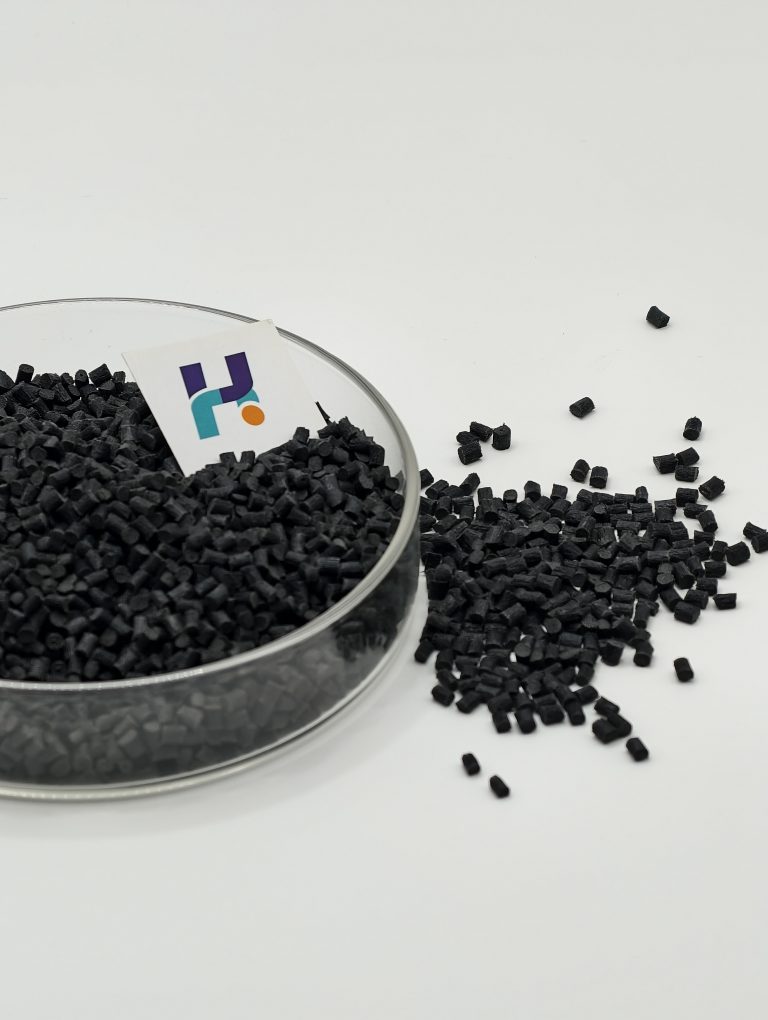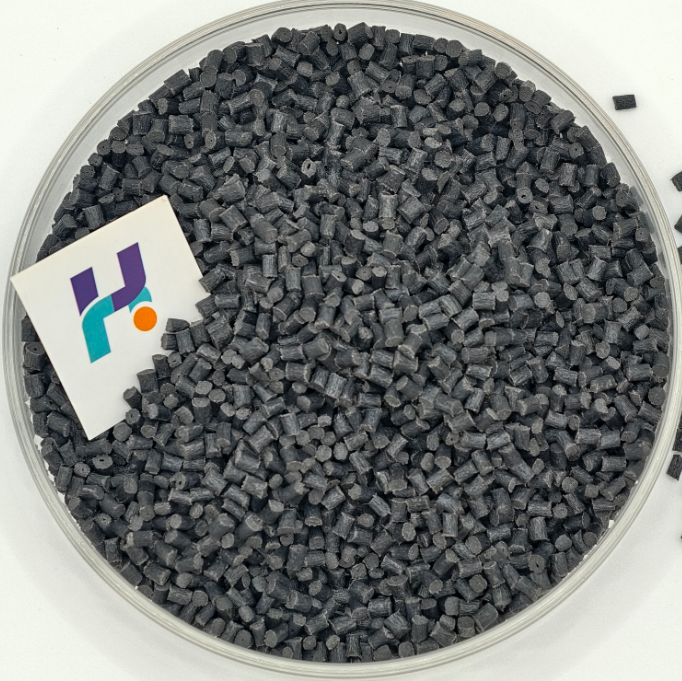
YongJinHong POM GF30 Exists (Engineering Positioning)
POM GF30 is selected only after GF25 reaches its mechanical limit.
At 30% glass fiber content, acetal transitions into a near-rigid structural composite, where:
-
Elastic deformation is tightly suppressed
-
Creep is minimized under long-term load
-
Geometry dominates over toughness
Unlike GF25, which balances rigidity and manufacturability, GF30 prioritizes stiffness above all else.
GF30 is chosen when deformation tolerance is essentially zero.
Material Composition & Maximum Reinforcement Strategy
Material Overview
-
Base Polymer: Polyoxymethylene (POM / Acetal)
-
Glass Fiber Content: 30%
-
Reinforcement Type: Short glass fiber (high density)
-
Optional Additives:
-
Heat stabilizers
-
Processing lubricants
-
Limited impact modifiers
-
UV stabilizers
-
-
Color Options: Natural, black, customized
This formulation is engineered for structural dominance, not flexibility.
Core Performance Advantages
Engineering Advantages
Maximum Structural Stiffness
Highest flexural modulus achievable in POM-based materials.
Extremely Low Creep
Geometry remains stable under continuous static or dynamic load.
Near-Zero Dimensional Drift
Ideal for alignment-critical and tolerance-sensitive components.
Low Moisture Absorption
Dimensional stability unaffected by humidity or water exposure.
Chemical Resistance
Resistant to fuels, oils, greases, and industrial cleaning agents.
Manufacturing & Production Implications
Highly Predictable Structural Behavior
Once stabilized, mechanical response is extremely consistent.
Narrow Processing Window
Requires disciplined mold design and process control.
High Tooling Demand
Hardened molds and controlled flow paths recommended.
Designed for Load-Critical Production
Used where failure is not an option.
Typical Application Areas
Automotive Applications
-
Structural carriers
-
Alignment-critical brackets
-
Components exposed to vibration and heat
Industrial Equipment
-
Structural frames
-
Precision alignment components
-
Load-bearing supports under constant stress
Mechanical & Electrical Assemblies
-
Structural elements in precision systems
-
Components where stiffness directly affects accuracy

Structural supports 
Precision alignment components 
Electrical Assemblies
Processing Guidelines (Injection Molding)
Typical Processing Parameters
-
Melt Temperature: 205–230 °C
-
Mold Temperature: 90–120 °C
-
Drying: 80 °C for 2–4 hours
-
Injection Speed: Medium
-
Shrinkage: ~1.0–1.4% (highly directional)
Fiber orientation control is critical — gate placement directly influences mechanical performance.
OEM / Customization Capabilities
Customization Options
-
Heat-stabilized grades for elevated temperatures
-
Enhanced creep-resistant formulations
-
Surface-optimized versions
-
Color customization
OEM Support
-
GF25 vs GF30 structural decision guidance
-
Deformation & creep simulation support
-
Prototype sampling and validation
-
Long-term supply assurance
Typical Technical Data (Reference Values)
| Property | Test Standard | Typical Value |
|---|---|---|
| Density | ISO 1183 | 1.55–1.60 g/cm³ |
| Tensile Strength | ISO 527 | 90–110 MPa |
| Flexural Strength | ISO 178 | 140–170 MPa |
| Flexural Modulus | ISO 178 | 7,200–9,000 MPa |
| Notched Izod Impact | ISO 180 | 2–4 kJ/m² |
| Heat Deflection Temp. | ISO 75 | 170–190 °C |
| Moisture Absorption | — | Very Low |
FAQ
Q1: When should POM GF30 be selected instead of GF25?
When deformation tolerance is extremely tight and GF25 cannot maintain geometry under sustained load.
Q2: How does GF30 differ from GF25 in practice?
GF30 delivers higher stiffness but requires stricter mold design and process control.
Q3: Is POM GF30 suitable for moving parts?
Only for minimally moving or static structural components.
Q4: Does GF30 significantly increase mold wear?
Yes. Hardened tooling and wear-resistant surfaces are strongly recommended.
Q5: Can POM GF30 replace metal components?
Yes, in applications where stiffness, weight reduction, and corrosion resistance are required without elastic deformation.