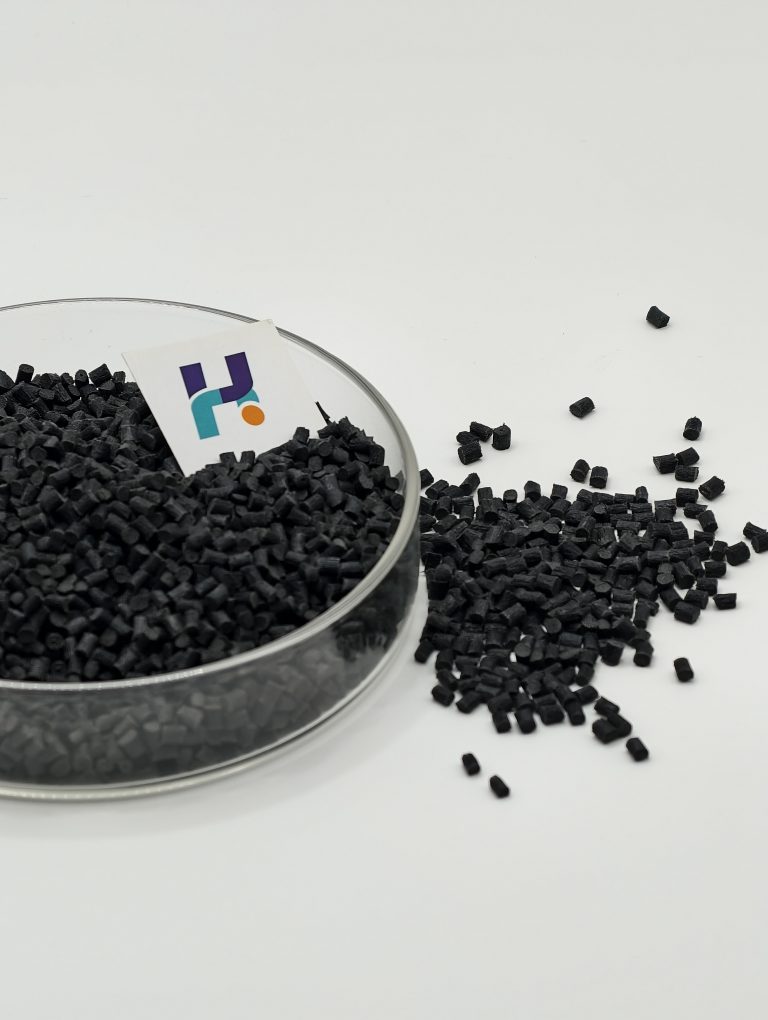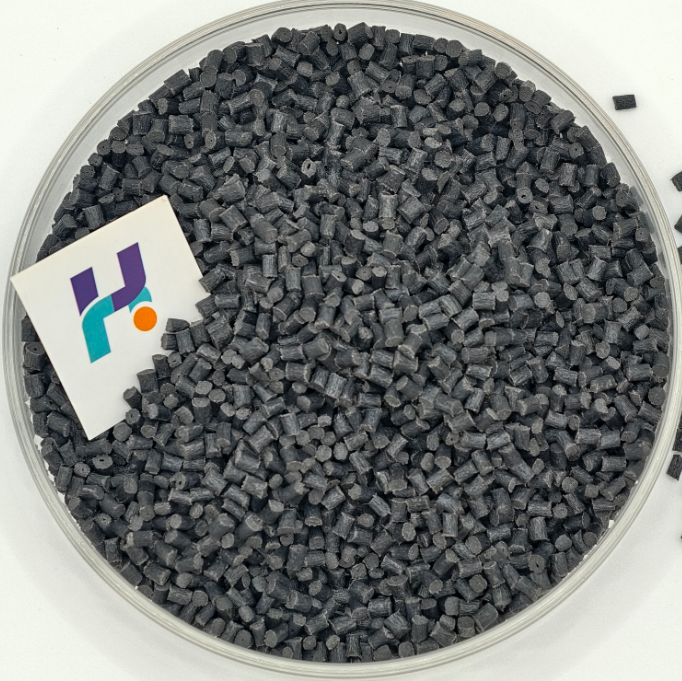
Heat Resistant Polyoxymethylene (POM)
High-Temperature Acetal for Precision & Moving Parts
Heat Resistant POM is developed for applications where standard POM begins to lose stiffness, creep resistance, or dimensional stability due to heat exposure. Through thermal stabilization and molecular structure optimization, this grade extends the usable temperature range of acetal while retaining its core advantages: low friction, excellent wear resistance, and high precision.
Compared with standard POM, this material shows lower deformation under continuous heat. Compared with heat-resistant PA, it offers lower moisture absorption and more predictable tolerances, making it ideal for tight-clearance mechanical systems.
Material Composition & Thermal Stabilization Strategy
Material Composition Overview
-
Base Polymer: Polyoxymethylene (POM / Acetal)
-
Thermal Stabilization: Heat-resistant stabilizer system
-
Continuous Use Temperature: Higher than standard POM (grade dependent)
-
Optional Additives:
-
Lubrication modifiers
-
Wear-resistant additives
-
Impact modifiers
-
UV stabilizers
-
-
Color Options: Natural, black, customized
This formulation focuses on thermal endurance rather than flame resistance.
Core Advantages: Thermal Endurance & Precision Stability
Engineering Advantages
Improved Heat Resistance
Maintains stiffness and strength at elevated temperatures where standard POM softens.
Reduced Thermal Creep
Better resistance to deformation under load during continuous heat exposure.
Excellent Dimensional Stability
Low moisture absorption ensures stable tolerances even in hot, humid environments.
Low Friction & Wear Resistance
Preserves smooth sliding behavior in high-temperature motion systems.
Chemical Resistance
Resistant to fuels, oils, greases, and industrial chemicals.
Manufacturing & Commercial Advantages
Predictable Performance in High-Temperature Cycles
Stable mechanical behavior during repeated heating and cooling.
Extended Service Life
Reduced thermal aging improves long-term reliability.
Precision Injection Molding
Maintains tight dimensional control despite elevated processing and service temperatures.
Cost-Effective vs High-Temperature Polymers
Offers a practical alternative to more expensive high-temperature engineering plastics.
Typical Application Areas
Automotive Applications
-
Under-hood mechanical components
-
Gear wheels and actuators
-
Precision brackets
Electrical & Industrial Equipment
-
Mechanical transmission components
-
Moving parts near heat sources
-
Precision functional elements
Consumer & Appliance Products
-
High-temperature operating mechanisms
-
Internal moving assemblies
|
|
|
|


Processing Performance & Injection Molding Guidelines
Typical Processing Parameters
-
Melt Temperature: 200–225°C
-
Mold Temperature: 80–110°C
-
Drying: 80°C for 2–4 hours
-
Injection Speed: Medium
-
Shrinkage: 1.8–2.1%
Careful temperature control prevents thermal degradation during molding.
OEM / ODM Customization Capabilities
Customization Options
-
Enhanced heat resistance levels
-
Lubricated or self-lubricating grades
-
Improved creep resistance formulations
-
Color customization
OEM Support Services
-
Thermal performance evaluation
-
High-temperature lifetime assessment
-
Prototype sampling
-
Long-term supply assurance
Technical Specification – Heat Resistant POM (Typical)
| Property | Test Standard | Typical Value |
|---|---|---|
| Density | ISO 1183 | 1.40–1.45 g/cm³ |
| Tensile Strength | ISO 527 | 60–70 MPa |
| Flexural Strength | ISO 178 | 90–105 MPa |
| Flexural Modulus | ISO 178 | 2,500–3,000 MPa |
| Notched Izod Impact | ISO 180 | 5–8 kJ/m² |
| Heat Deflection Temp. | ISO 75 | 165–180°C |
| Continuous Use Temp. | — | Elevated vs standard POM |
| Coefficient of Friction | — | Low |
FAQ
Q1: How does heat resistant POM differ from standard POM?
It maintains mechanical and dimensional stability at higher continuous temperatures.
Q2: Is heat resistant POM flame retardant?
No. It is optimized for thermal endurance, not fire resistance.
Q3: Can it replace heat-resistant PA?
In precision applications where moisture stability is critical, yes.
Q4: Is it suitable for moving parts under heat?
Yes. It retains low friction and wear resistance at elevated temperatures.
Q5: Can heat resistant POM be customized?
Yes. Thermal stability, wear behavior, and lubrication can be tailored.