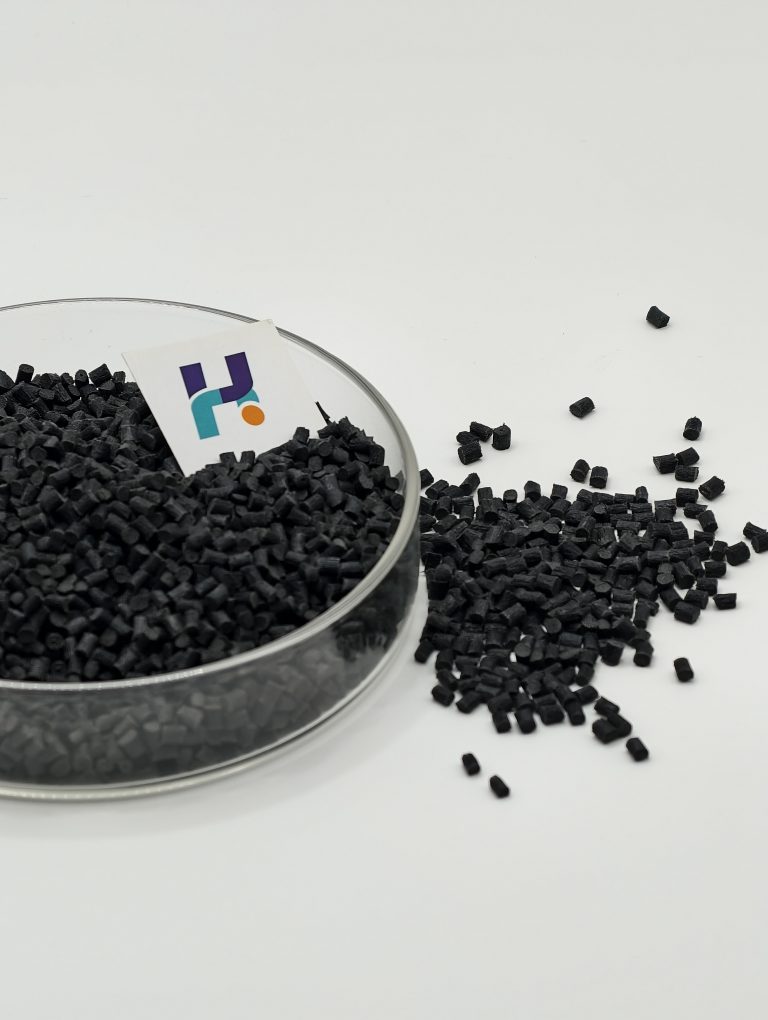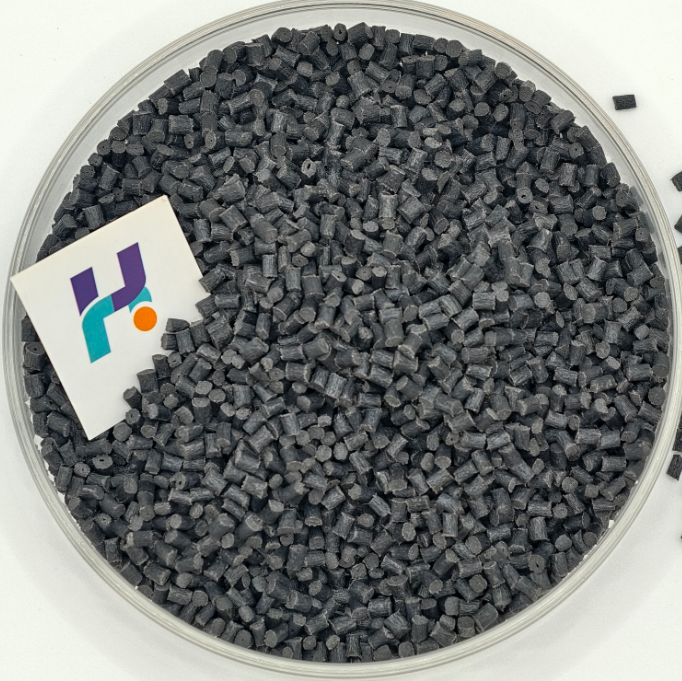
Battery Trays Need Mineral-Filled PP (Not Glass Fiber PP)
Battery trays operate under static and environmental stress, not rotational or impact-driven loads.
Key operating conditions include:

-
Continuous weight from battery modules
-
Large part size with flatness requirements
-
Thermal cycling during charging/discharging
-
Exposure to electrolytes, moisture, road chemicals
-
Assembly tolerance and sealing requirements
Glass fiber reinforced PP delivers stiffness but introduces anisotropy and warpage risk in large, flat parts.
Mineral-filled PP is chosen because geometry stability matters more than stiffness.
Battery tray failure is rarely breakage —
it is warpage, sealing loss, misalignment, or assembly stress.
Structural Requirements of Automotive Battery Trays
Critical Material Demands
-
Low and predictable shrinkage
-
Excellent flatness over large surface areas
-
Long-term load stability (creep resistance)
-
Chemical resistance to battery fluids
-
Cost control for high-volume production
-
Good weldability and insert compatibility
Mineral-filled PP is engineered specifically for large structural panels.
Mineral-Filled PP Outperforms Glass Fiber PP in Battery Trays
Engineering Advantages

Excellent Flatness Control
Mineral fillers reduce differential shrinkage across large surfaces.
Low Anisotropy
Mechanical properties remain more isotropic than glass fiber systems.
Reduced Warpage Risk
Ideal for sealing surfaces and gasket interfaces.
Stable Creep Behavior Under Static Load
Supports battery mass over long service life.
Chemical & Electrolyte Resistance
Compatible with automotive battery environments.
Typical Mineral Fillers Used in PP Battery Trays
Common mineral systems include:
-
Talc → Shrinkage control, stiffness tuning
-
Calcium Carbonate (CaCO₃) → Cost optimization, dimensional stability
-
Hybrid Mineral Systems → Balance of stiffness and flatness
Filler selection is driven by tray size, thickness, and sealing tolerance.
Material Selection Logic for Battery Trays
Step 1 — Is flatness critical?
-
Yes → Mineral-Filled PP
-
No → Evaluate PP GF
Step 2 — Is the part large and thin-walled?
-
Yes → Mineral-Filled PP
-
No → Hybrid reinforcement possible
Step 3 — Is cost sensitivity high?
-
Yes → Mineral-Filled PP
-
No → Evaluate structural alternatives
Processing Considerations for Large Battery Tray Molding
Processing Focus Points
-
Balanced gate layout to reduce internal stress
-
Moderate injection speed to prevent sink marks
-
Controlled cooling to minimize residual stress
-
Stable shrinkage for sealing surfaces
Typical Processing Range
-
Melt temperature: 200–230 °C
-
Mold temperature: 40–70 °C
-
Drying: Not required
-
Shrinkage: 0.4–0.8% (uniform)
Mineral-Filled PP vs Alternative Materials
| Material | Flatness | Warpage Risk | Cost | Weight |
|---|---|---|---|---|
| Mineral-Filled PP | ★★★★★ | Very Low | Low | Low |
| PP GF | ★★☆☆ | High | Medium | Low |
| PA GF | ★★★☆ | Medium | High | Medium |
| Metal | ★★★★★ | Very Low | High | High |
For battery trays, flatness and sealing stability outweigh stiffness.
FAQ
Q1: Why is mineral-filled PP preferred for automotive battery trays instead of glass fiber reinforced PP?
Mineral-filled PP provides lower anisotropy and more uniform shrinkage than glass fiber reinforced PP. This results in superior flatness and reduced warpage, which are critical for large battery trays with sealing surfaces and tight assembly tolerances.
Q2: What type of loads do battery trays experience, and how does mineral-filled PP handle them?
Battery trays mainly experience long-term static loads from battery modules rather than impact or dynamic loads. Mineral-filled PP offers stable creep resistance and structural support under continuous load without introducing excessive stiffness that could cause warpage.
Q3: Is mineral-filled PP suitable for EV battery trays exposed to thermal cycling?
Yes. Mineral-filled PP maintains dimensional stability during repeated heating and cooling cycles associated with charging and discharging, helping prevent deformation that could affect sealing and mounting accuracy.
Q4: Does mineral-filled PP provide enough structural strength for battery tray applications?
Yes. While mineral-filled PP is not designed for high impact strength, it provides sufficient rigidity and load-bearing capability for battery trays where flatness and long-term shape retention are more critical than high tensile strength.
Q5: What mineral fillers are commonly used in PP battery tray compounds?
Typical fillers include talc, calcium carbonate, or hybrid mineral systems. The specific filler type and loading level are selected based on tray size, wall thickness, flatness requirements, and cost targets.
Q6: How does mineral-filled PP affect injection molding of large battery trays?
Mineral-filled PP offers more predictable flow behavior and shrinkage than fiber-reinforced systems, reducing internal stress and simplifying mold design for large, flat parts. This helps improve yield and dimensional consistency in mass production.
Q7: Can mineral-filled PP replace metal battery trays?
In many EV and hybrid vehicle designs, mineral-filled PP can replace metal trays by providing adequate structural support with significantly reduced weight, corrosion resistance, and lower overall system cost.