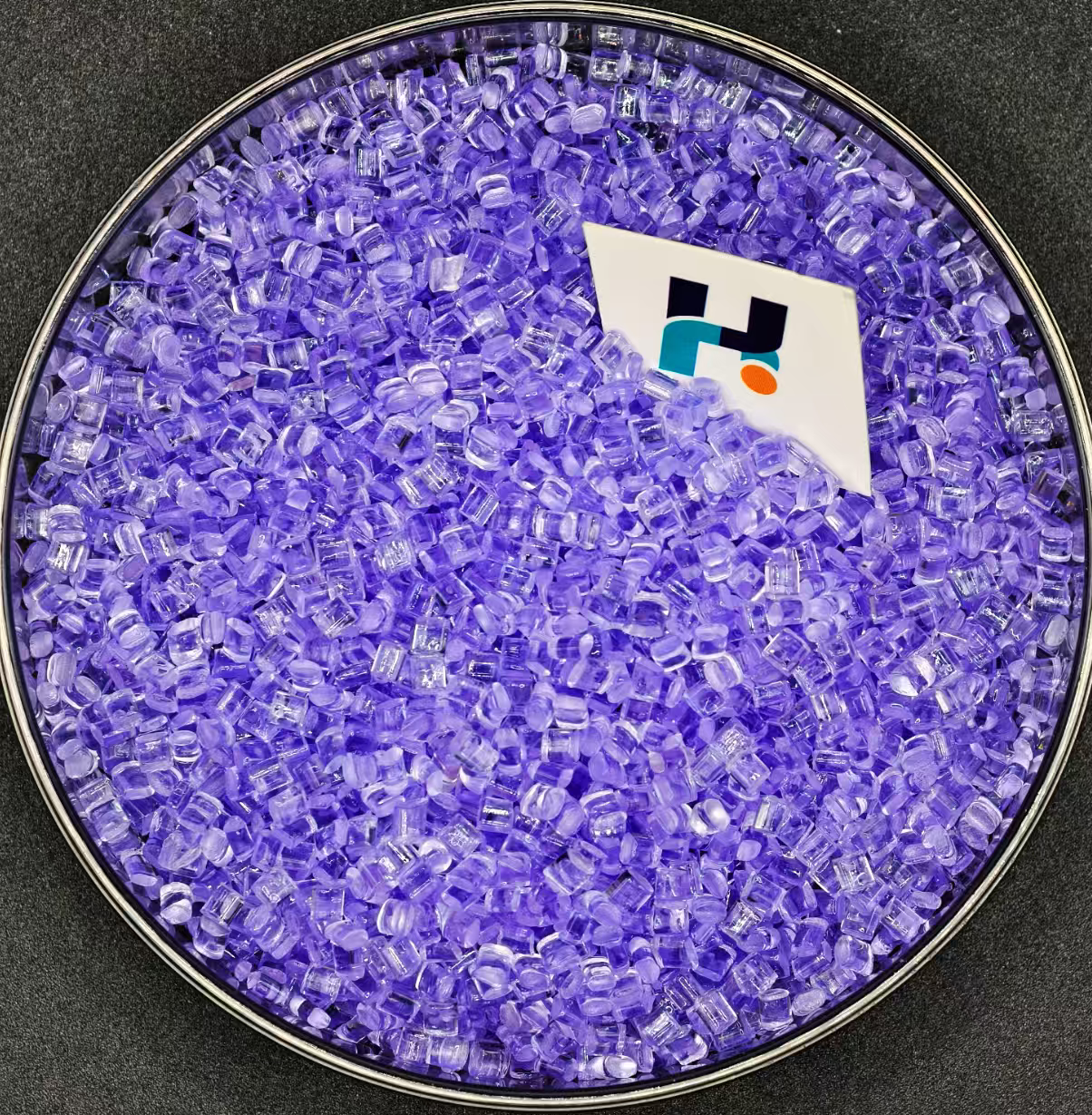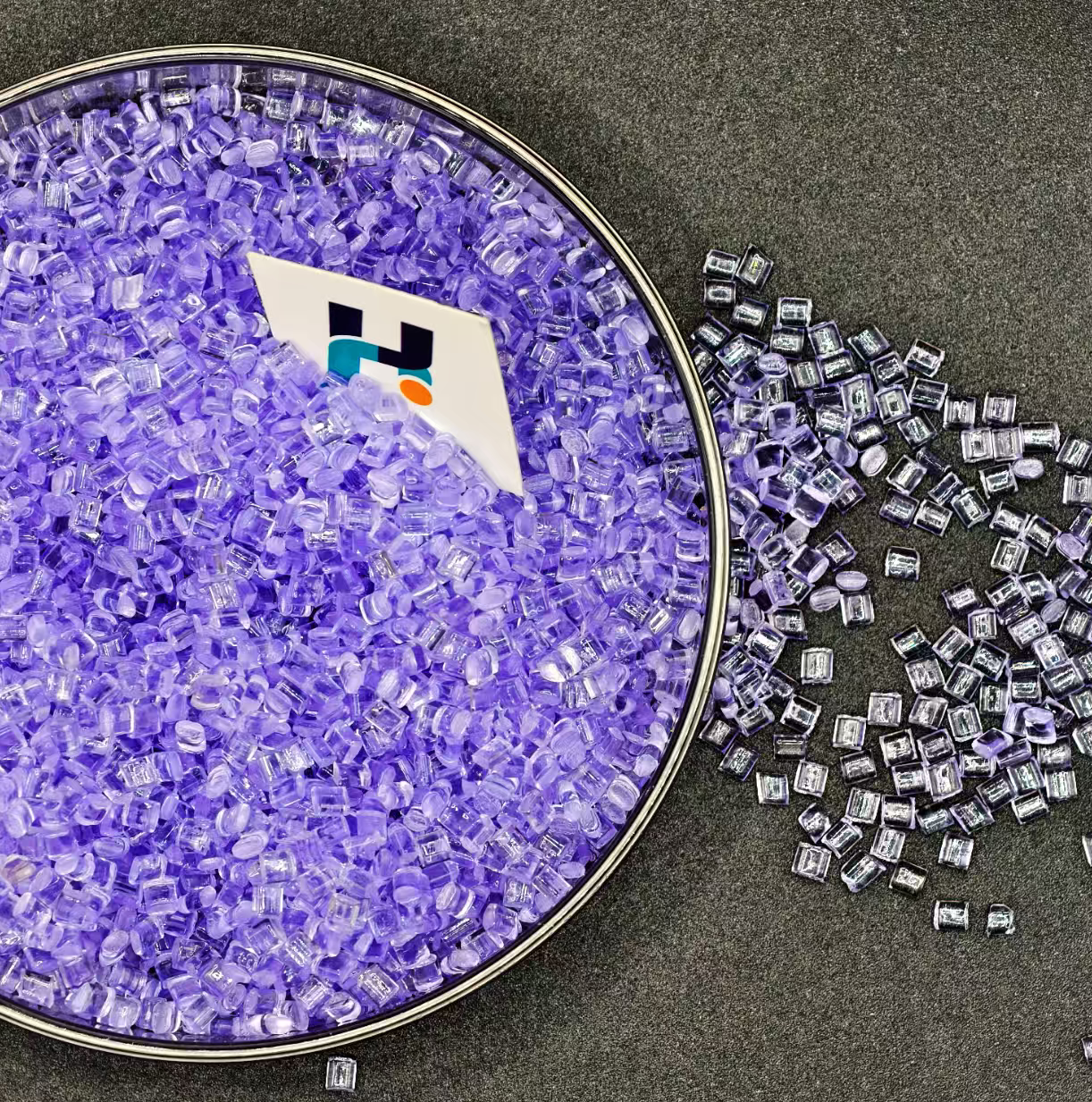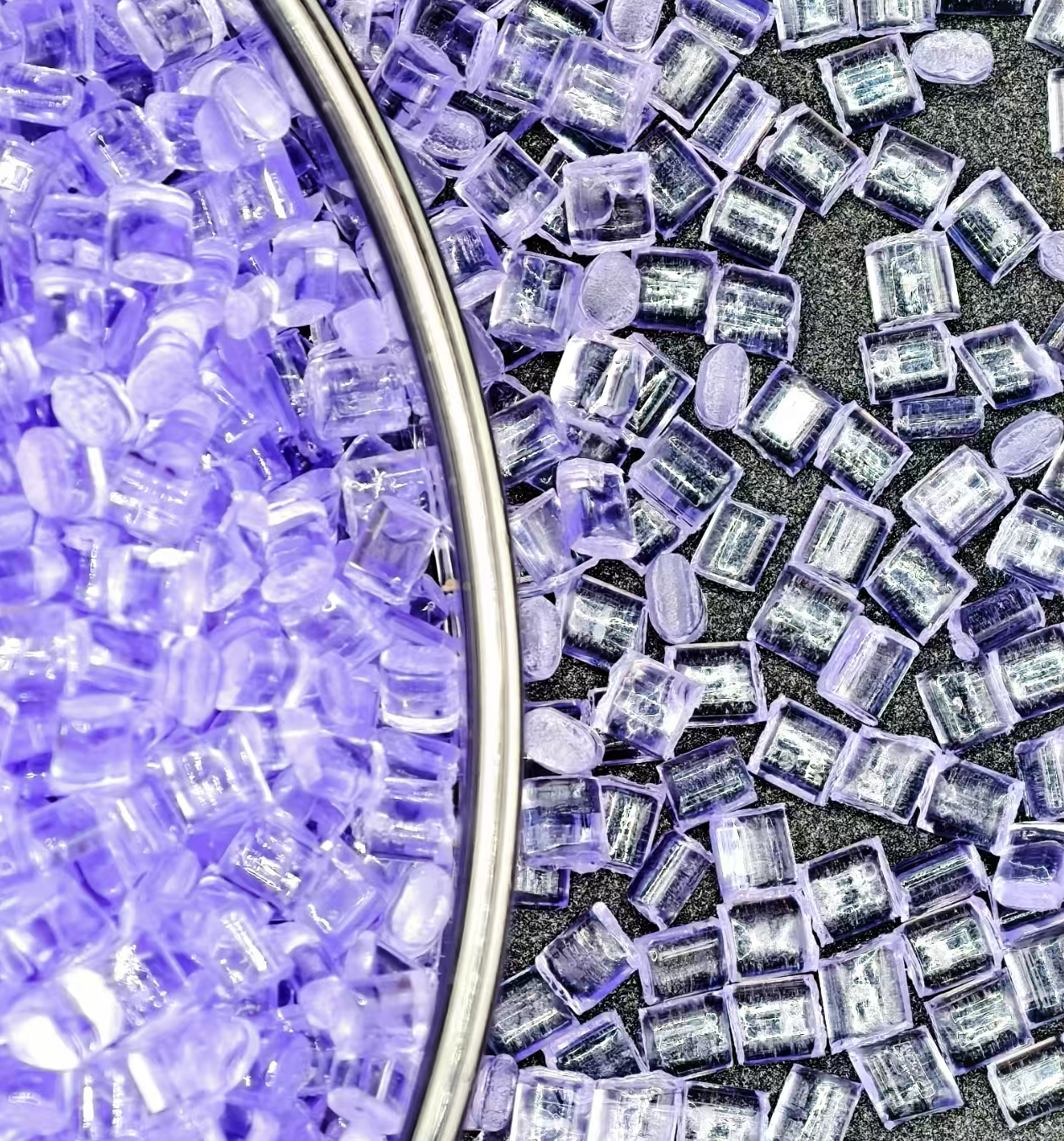
Optical Transmission Polycarbonate (PC)
High-Transmittance PC for Precision Optical Components
Optical Transmission PC is formulated specifically to optimize light propagation, clarity, and minimal signal loss in optical paths. Unlike Light Diffusion PC, which scatters light for uniform coverage, this material retains high optical transmission with low haze and is suitable where optical
precision and clarity are paramount.
Optical Property Focus & Mechanism
Optical Transmission PC achieves performance through careful control of:
-
Polymer purity to reduce internal scattering
-
Molecular structure to minimize color shift
-
Surface texture optimized for optical components
-
Control of haze < 10% with transmission > 90% (typical targets)
This creates a material that transmits light efficiently, ideal for light guide paths, lenses, and clear protective optical covers.
Core Advantages: High Clarity & Light Path Control
Optical Advantages
-
High Light Transmission
≥ 90% direct transmission with minimal loss. -
Low Haze & Scatter
Ensures optical fidelity without unwanted diffusion. -
Color Neutrality
Minimal tint or color shift across visible spectrum. -
Surface Uniformity
Excellent mold replication preserves optical surfaces.
Mechanical & Thermal Advantages
- Impact Resistance
- Heat Stability
- Dimensional Accuracy
- Process Compatibility
Typical Application Fields
A. Transparent Protective Optics
B. Precision Lenses & Optical Elements
C. LED Light Guide Plates (LGP)
D. Automotive & Instrumentation Optics
|
|
|
|
|


Processing & Injection Molding Guidelines
Typical Processing Conditions
-
Drying: 120°C for 3–4 hours
-
Melt Temperature: 260–290°C
-
Mold Temperature: 90–120°C
-
Injection Speed: Medium
-
Surface Finish: Mirror or precision polish
Technical Specification – Optical Transmission PC
| Property | Test Standard | Typical Value |
|---|---|---|
| Light Transmission | ASTM D1003 | ≥90% |
| Haze | ASTM D1003 | ≤10% |
| Tensile Strength | ISO 527 | 60–70 MPa |
| Impact Resistance | ISO 180 | 7–10 kJ/m² |
| Heat Deflection Temp. | ISO 75 | 130–145°C |
OEM / ODM Customization Options
Customization Available
-
Transmission Level Tuning
-
Haze Control
-
UV Stability
-
Surface Micro-texture
Support Services
-
Optical performance evaluation
-
Precision mold flow simulation
-
Prototype & optical testing
-
Long-term batch consistency
FAQ
Q1: How is Optical Transmission PC different from Light Diffusion PC?
Optical Transmission PC prioritizes high clarity and controlled transmission, while Light Diffusion PC is designed to scatter light for uniform illumination.
Q2: Is Optical Transmission PC suitable for LED light guide plates (LGP)?
Yes. Its high light transmission and low haze make it ideal for LGP and backlight systems.
Q3: Can Optical Transmission PC be polished to optical quality?
Yes. With mirror-grade mold surfaces, this PC can achieve high optical clarity.
Q4: Does thickness affect optical transmission?
Yes, part thickness and uniformity directly influence transmission and haze performance.
Q5: Can this material be used in outdoor optical systems?
Yes, with appropriate UV stabilization for outdoor exposure.