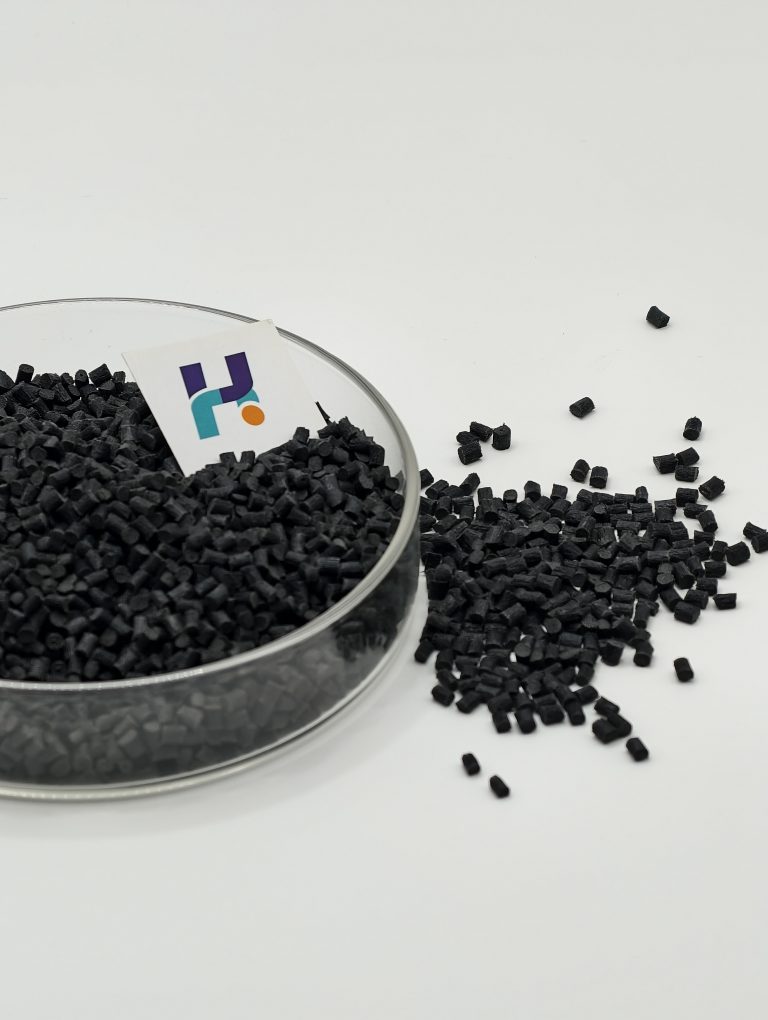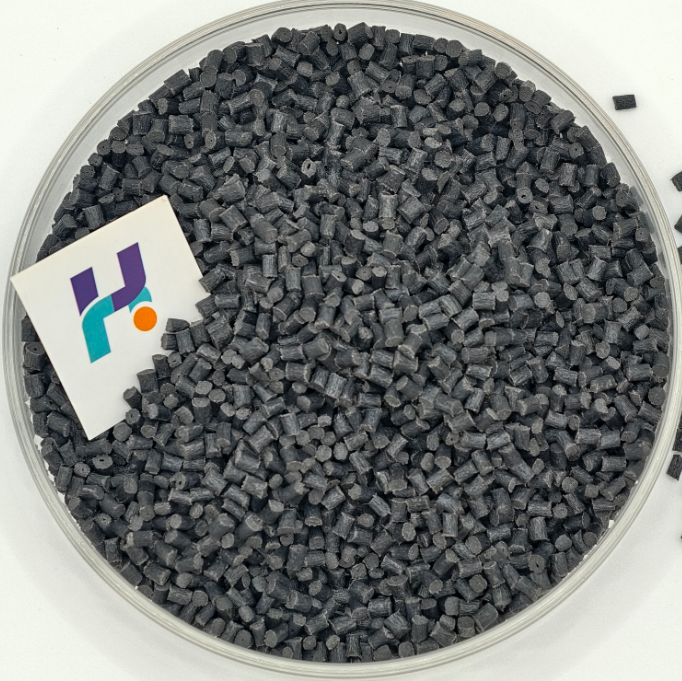
YongJinHong Compare PC GF25, PC GF30, and PC GF45?
Glass fiber reinforced polycarbonate grades vary significantly in mechanical behavior, thermal performance, and processability depending on the fiber content:
-
PC GF25 (25%) – Balanced structure with good stiffness and surface quality
-
PC GF30 (30%) – Mid-range structural performance and manufacturability
-
PC GF45 (45%) – High rigidity and load-bearing capability
Selecting the right grade avoids over-design, under-performance, or unnecessary cost increases.
Performance Comparison Table
| Property | PC GF25 | PC GF30 | PC GF45 |
|---|---|---|---|
| Glass Fiber Content | 25% | 30% | 45% |
| Tensile Strength | 100–120 MPa | 120–140 MPa | 170–200 MPa |
| Flexural Modulus | 6,000–8,000 MPa | 9,000–11,000 MPa | 14,000–18,000 MPa |
| Heat Deflection Temp. | 140–155°C | 180–200°C | 250–270°C |
| Impact Resistance | Good | Balanced | Moderate |
| Dimensional Stability | Good | Very Good | Excellent |
| Processability | Easiest | Balanced | Most Demanding |
Grade Positioning & Practical Engineering Insight
PC GF25 – Balanced Structural Upgrade
-
Why choose: When standard PC rigidity isn’t enough, but ease of processing and surface quality still matter.
-
Typical uses: Electronic housings, structural supports, frames that don’t require extreme rigidity.
PC GF30 – Mid-Range Structural Balance
-
Why choose: Best balance of rigidity, heat resistance, and manufacturability.
-
Typical uses: Brackets, automotive interior supports, mechanical components requiring stronger performance.
PC GF45 – High Rigidity and Thermal Original
-
Why choose: When stiffness, dimensional stability, and thermal endurance cannot be compromised.
-
Typical uses: Heavy load-bearing housings, structural industrial frames, components needing high thermal performance.
How to Choose the Right Glass Fiber Content
🔹 Step 1: Start with load conditions
-
Moderate loads → PC GF25
-
High loads → PC GF30 & higher
🔹 Step 2: Consider thermal environment
-
Up to ~150°C → PC GF25 / GF30
-
200°C+ → PC GF45
🔹 Step 3: Look at manufacturing complexity
-
Simple molds & surfaces → PC GF25
-
Precision molds & dimensional control → PC GF30
-
High precision + load → PC GF45
Application Recommendations by Industry
|
|
|
|


Automotive
-
GF25: Interior structural supports
-
GF30: Dashboard frames, mounting supports
-
GF45: Load-bearing interior/engine compartment parts
Electrical & Electronics
-
GF25: Functional enclosures, power housings
-
GF30: Structural electronic supports
-
GF45: High heat / long life structural housings
Industrial & Mechanical
-
GF25: Load-rated covers
-
GF30: Frame structures
-
GF45: Heavy machine supports
FAQ
Q1: How does fiber content affect surface appearance?
Increasing glass fiber improves stiffness but can slightly roughen surface finish. Optimized mold design and surface polish help.
Q2: Can all grades be flame-retardant?
Yes. HB and UL94 V0 flame-retardant versions are available for all PC GF grades.
Q3: Which grade is easiest to process?
PC GF25 is the most forgiving during injection molding; higher fiber content requires more precise control.
Q4: Which grade has the best thermal endurance?
PC GF45 offers the highest heat deflection and long-term dimension stability.
Q5: Can PC GF45 replace metal in structural parts?
In many cases, yes—particularly where weight reduction and high rigidity are required.