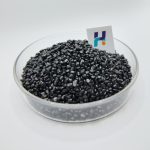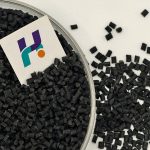
ABS-GF means glass fiber reinforced ABS. “ABS” refers to acrylonitrile-butadiene-styrene, while “GF” indicates that chopped glass fiber has been added as a reinforcement.
In practice, ABS-GF is used when engineers need higher stiffness, better dimensional stability, and reduced creep compared with standard ABS—accepting trade-offs in surface appearance and impact toughness.
Unlike fillers that mainly reduce cost or tune shrinkage, glass fiber in ABS-GF acts as a structural reinforcement, carrying load and restricting deformation under stress.
What “GF” Specifically Means in ABS-GF
In ABS-GF, “GF” usually implies:
-
- E-glass chopped strand as the reinforcement type
- Short fiber form suitable for injection molding
- Polymer-matched sizing to promote adhesion between ABS and glass fiber
The number following GF (e.g., GF20) typically indicates the weight percentage of glass fiber in the compound.

Why Engineers Use ABS-GF Instead of Standard ABS
Standard ABS is tough and easy to mold, but it has limits in stiffness and creep resistance. ABS-GF exists to address these limits.
Typical reasons for selecting ABS-GF include:
- higher flexural and tensile modulus
- improved dimensional stability under load
- reduced deformation at elevated service temperatures
- better screw boss and structural rib performance
ABS-GF is therefore often used for semi-structural housings and frames where plain ABS may feel “too soft.”
How ABS-GF Changes Material Behavior
Stiffness and Strength
Glass fiber significantly increases stiffness. Parts deflect less under load, which is critical for maintaining tolerances in assemblies.
Impact Resistance
Compared with unfilled ABS, ABS-GF usually shows lower impact toughness, especially at weld lines or low temperatures. Impact-modified ABS-GF grades can partially mitigate this.
Warpage and Anisotropy
Fiber orientation during molding introduces anisotropic shrinkage. Without careful gate and cooling design, ABS-GF parts may warp more than unfilled ABS.
ABS-GF vs ABS vs Other Reinforced Plastics
| Material | Main Advantage | Main Limitation |
|---|---|---|
| ABS | Good toughness, surface quality, easy molding | Low stiffness, creep under load |
| ABS-GF | Higher stiffness and dimensional stability | Reduced impact, warpage risk, fiber read-through |
| PC-ABS | Balanced impact and heat performance | Lower stiffness than ABS-GF |
For applications requiring both toughness and stiffness, engineers often compare ABS-GF with PC-ABS or glass-fiber reinforced PA, depending on temperature and load requirements.
Typical Applications of ABS-GF
- industrial equipment housings
- structural appliance components
- frames, brackets, and load-bearing covers
- parts requiring screw retention and rigidity
ABS-GF is most suitable where stiffness and shape retention matter more than cosmetic surface perfection.
Material Selection Notes (Internal References)
ABS-GF is part of the broader modified ABS family. For alternative solutions, engineers often evaluate:
For application-specific guidance, contact our engineering team:
https://www.yjhxm.com/contact/
Frequently Asked Questions (FAQ)
Q1: What does ABS-GF stand for?
ABS-GF stands for glass fiber reinforced ABS plastic.
Q2: Does ABS-GF mean stronger than ABS?
It means stiffer and better at holding shape under load, but not necessarily tougher in impact.
Q3: Is ABS-GF harder to injection mold?
It requires more attention to gate design, fiber orientation, and warpage control, but is widely moldable in standard equipment.
Q4: Can ABS-GF replace metal parts?
In some low-load structural applications, yes—but metal replacement requires careful creep and temperature evaluation.
Q5: Why do ABS-GF parts sometimes look rougher?
Glass fibers near the surface can cause fiber read-through and reduced gloss compared with unfilled ABS.
Conclusion
ABS-GF does not mean “better ABS” in every direction. It means reinforced ABS, chosen to control deformation and stiffness rather than to maximize impact toughness or surface finish. Understanding what the glass fiber contributes—and what trade-offs it introduces—allows engineers to use ABS-GF confidently and appropriately.
Learn more about our modified plastics portfolio:
https://www.yjhxm.com/ ·
About Us ·
Contact